
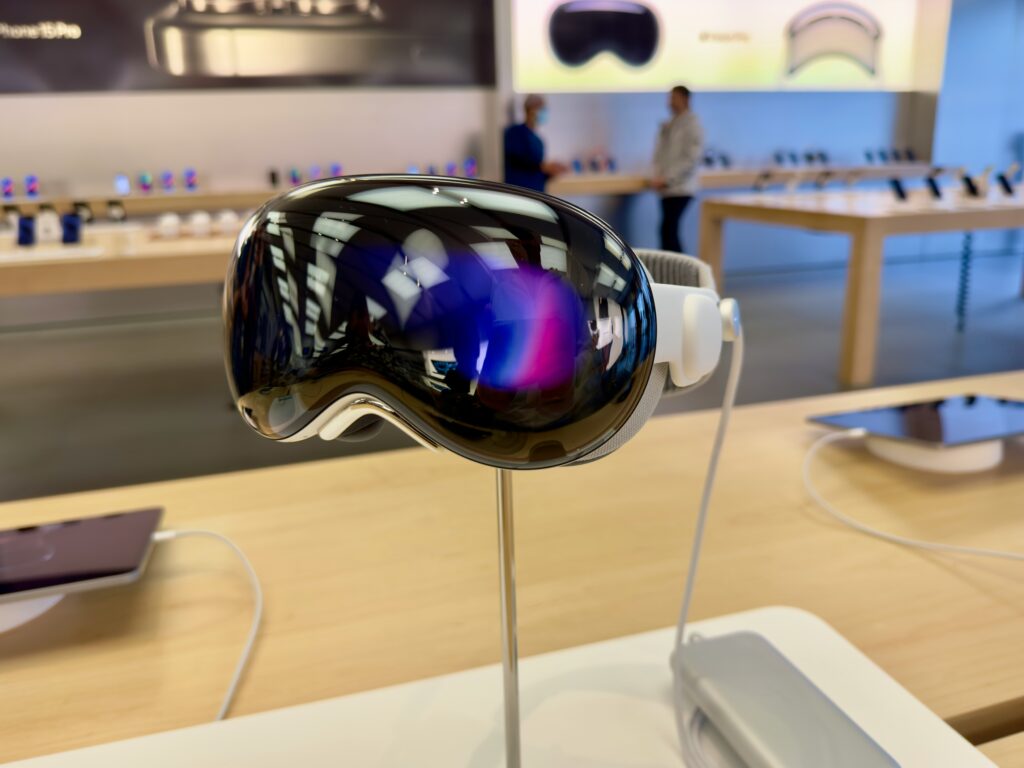
Apple’s Bold Leap into Spatial Computing
The highly anticipated Apple Vision Pro officially hit the market on February 2, 2024, marking a pivotal moment in the evolution of personal technology. Dubbed Apple’s first ‘spatial computer’, the device integrates digital content seamlessly with the physical world, offering a unique mixed-reality experience. Early adopters and tech reviewers have lauded its incredibly crisp display, intuitive eye and hand tracking, and the revolutionary visionOS operating system. This launch signifies Apple’s serious commitment to a new computing paradigm, moving beyond traditional screens to an infinite canvas that blends reality with virtual elements.
Early Impressions and Market Responses
Initial reviews, such as detailed review by The Verge, have highlighted the Vision Pro’s unprecedented technological prowess, particularly its stunning micro-OLED displays which deliver an unparalleled visual fidelity. The user interface, navigable purely by eyes, hands, and voice, has been praised for its natural and intuitive feel. However, the initial feedback also points to challenges, including its significant weight, external battery pack, and the premium price tag starting at $3,499. Despite these considerations, market analysts, including those from Counterpoint Research, predict that while initial sales might be modest due to the price, the Vision Pro will lay crucial groundwork for future iterations and broader adoption in the spatial computing landscape.
Transforming Industries and User Experiences
The impact of the Apple Vision Pro extends far beyond individual entertainment. In the enterprise sector, its potential for revolutionizing collaboration, design, and training is immense. Imagine architects walking through virtual blueprints, medical students performing realistic simulations, or remote teams collaborating in shared 3D environments. For consumers, it promises an entirely new dimension of entertainment, from immersive movies and games to unique photographic and video experiences through its ‘spatial photos and videos’ feature. Developers are already diving into the visionOS SDK, creating a new wave of applications that leverage the device’s unique capabilities, signaling a paradigm shift in how digital workflows are conceptualized and executed. This represents a significant step towards more intuitive and integrated digital transformation strategies for businesses worldwide.
The Future of Mixed Reality and Beyond
The Apple Vision Pro is not just a product; it’s a statement about the future of computing. Industry experts anticipate that while the first generation might serve as a foundation for enthusiasts and professional users, subsequent versions will become lighter, more affordable, and integrate more seamlessly into daily life. Challenges such as battery life, comfort for extended use, and building a robust app ecosystem will be key to its long-term success. Analysts at Bloomberg Tech suggest that Apple’s entry legitimizes the mixed reality space, pushing competitors to innovate further and accelerating the overall development of spatial computing technology. As we explore the evolving landscape of augmented reality devices, the Vision Pro undoubtedly serves as a powerful catalyst for what lies ahead, shaping the way we live, work, and connect in the digital era.
A New Chapter for Tech Innovation
The Apple Vision Pro marks a fascinating new chapter for technological innovation. Its launch, while met with both awe and critique, undeniably sets a new benchmark for mixed reality devices. As the technology matures and the developer community expands its possibilities, we can expect spatial computing to become an increasingly integral part of our digital existence, unlocking unprecedented potential for interaction and immersion.