AI & Machine Learning

OpenAI’s o1 Reasoning Model: A Game-Changer for Intelligent Automation

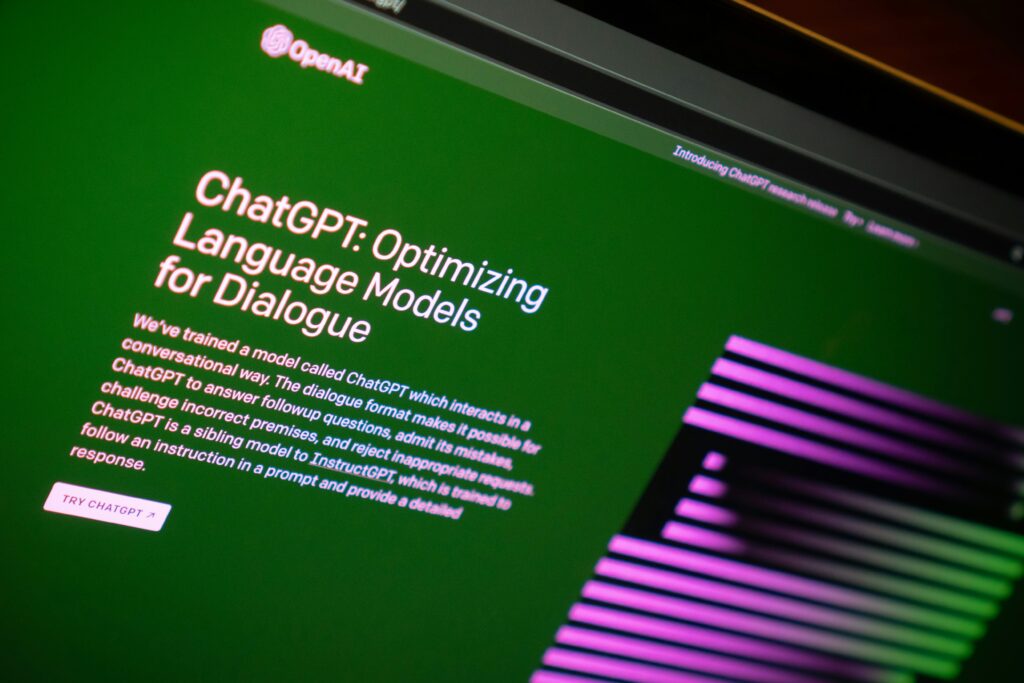
OpenAI launched the o1 series, focusing on chain-of-thought reasoning over rapid generation. The model excels in complex tasks, reaching Ph.D.-level performance in science and engineering. Enterprise workflows will transition from simple automation to autonomous, reasoning-based agents. Reduced hallucinations make this technology viable for high-stakes professional sectors like finance and legal.

OpenAI’s o1 Reasoning Model: A Game-Changer for Intelligent Automation Read More »
Nvidia Blackwell Architecture: A Revolutionary Leap for AI Systems

Nvidia’s Blackwell architecture features a dual-die GPU design to significantly enhance processing power for AI workloads. The second-generation Transformer Engine optimizes data throughput, making complex model training more energy-efficient. Blackwell is poised to decrease operational costs for enterprises utilizing large-scale machine learning and inference. The architecture marks a critical shift towards higher-density, lower-latency data centers required for the next decade of AI innovation.

Nvidia Blackwell Architecture: A Revolutionary Leap for AI Systems Read More »

OpenAI’s Operator: A Revolutionary Shift in Autonomous AI Agents

OpenAI is developing ‘Operator,’ an autonomous agent designed to control computer interfaces to execute complex tasks. The transition to agentic AI marks a shift from generative chatbots to actionable, intelligent systems. This technology aims to automate end-to-end workflows, reducing human overhead in repetitive digital tasks. Industry analysts emphasize that security and human-in-the-loop oversight remain the primary challenges for mass adoption.

OpenAI’s Operator: A Revolutionary Shift in Autonomous AI Agents Read More »

OpenAI’s Operator: A Revolutionary Shift in Autonomous AI Agents

OpenAI is developing ‘Operator,’ an autonomous agent capable of performing tasks directly on user computers. The technology aims to bridge the gap between conversational AI and active workflow execution. Agentic systems are expected to significantly boost productivity by handling repetitive, multi-step digital tasks. Security, privacy, and system reliability remain key areas for development before a broad market launch. The integration of AI agents is set to redefine the traditional enterprise workflow and human-machine collaboration.

OpenAI’s Operator: A Revolutionary Shift in Autonomous AI Agents Read More »

OpenAI O1 Unveiled: The Future of Reasoning in Intelligent Systems

OpenAI launched the o1 series, focusing on deliberate reasoning and chain-of-thought processing. The model shows a massive jump in capability for mathematics, coding, and complex scientific analysis. Unlike previous models, o1 uses reinforcement learning to self-correct and verify its logic before outputting a result. Industries such as software development and complex scientific research are expected to see the fastest integration. Future iterations are expected to balance reasoning power with reduced latency for real-time enterprise utility.

OpenAI O1 Unveiled: The Future of Reasoning in Intelligent Systems Read More »

Microsoft 365 Copilot Agents: A Game-Changer for Automated Workflows

Microsoft 365 Copilot agents enable autonomous task execution across enterprise software ecosystems. The agents are built via Copilot Studio, allowing for low-code customization. Integration with Microsoft Graph allows for context-aware decision-making. The shift represents a move toward agentic workflows rather than simple, rule-based automation.

Microsoft 365 Copilot Agents: A Game-Changer for Automated Workflows Read More »

OpenAI O1 Unveiled: The Reasoning Model Redefining Enterprise Workflows

OpenAI o1 introduces a ‘reasoning-first’ architecture that prioritizes logic over instantaneous response. The model’s chain-of-thought process significantly reduces hallucinations in complex, multi-step tasks. Enterprises can leverage this for high-stakes workflows, including complex coding and deep analytical synthesis. The shift marks a transition from generative AI to agentic, verifiable AI systems in industry environments.

OpenAI O1 Unveiled: The Reasoning Model Redefining Enterprise Workflows Read More »

OpenAI’s Operator: A Revolutionary Shift in Autonomous AI Workflows

OpenAI is developing ‘Operator’ to autonomously handle web-based tasks, reducing human intervention in repetitive workflows. The shift moves from passive, conversational AI to proactive agentic systems that navigate browser interfaces. Enterprises must prioritize governance and secure data architecture to safely deploy autonomous AI agents. This technology promises to shift human roles from manual execution to strategic oversight in operational workflows.

OpenAI’s Operator: A Revolutionary Shift in Autonomous AI Workflows Read More »

OpenAI’s Operator: A Revolutionary Shift in Autonomous AI Agents

OpenAI is developing ‘Operator,’ an AI agent capable of controlling web browsers to perform multi-step tasks. The technology is designed to move beyond generative text to active, autonomous goal execution. Agentic AI is positioned to significantly increase operational efficiency by handling complex cross-platform workflows. Security and governance are expected to be the primary considerations for enterprises adopting agentic systems in 2025.

OpenAI’s Operator: A Revolutionary Shift in Autonomous AI Agents Read More »

Microsoft 365 Copilot Agents: A Revolutionary Leap in Workflow Automation

Microsoft has introduced autonomous agents for Microsoft 365 to handle complex business processes without constant human intervention. The agents integrate across major enterprise platforms like SAP and Salesforce, reducing departmental data silos. These tools represent a transition from productivity support to active process orchestration. Organizations should focus on setting clear guardrails and supervision strategies to maximize ROI from agentic workflows.

Microsoft 365 Copilot Agents: A Revolutionary Leap in Workflow Automation Read More »