
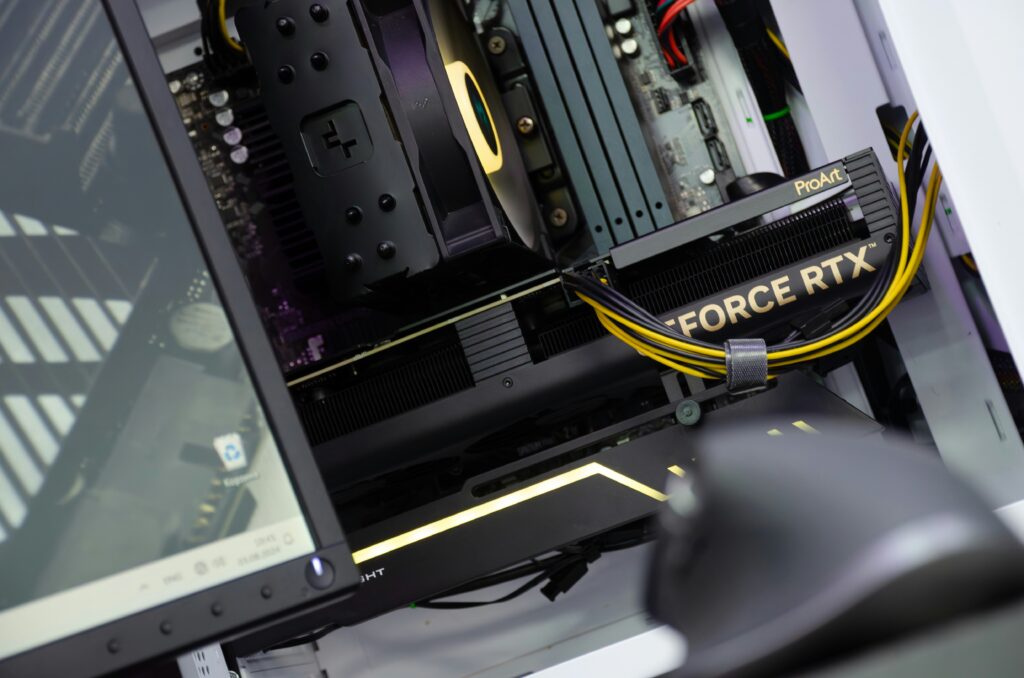
The Dawn of the Blackwell Era
In mid-2024, Nvidia officially pulled back the curtain on its Blackwell architecture, positioning it as the successor to the highly successful Hopper series. Designed specifically for the demands of generative AI and massive-scale data processing, Blackwell isn’t just an iterative update; it is a fundamental shift in how hardware accelerates intelligent workloads. According to The Verge, the architecture integrates two-die GPUs connected by a 10TB/s chip-to-chip link, creating a unified powerhouse that significantly lowers energy consumption while boosting performance.
Engineering for the Future of Compute
The core philosophy behind Blackwell is the reduction of total cost of ownership (TCO) while maximizing throughput. By utilizing a second-generation transformer engine, the platform accelerates inference for large language models, allowing businesses to deploy complex automated workflows with greater speed. For firms looking to refine their digital strategy, this hardware offers the backbone necessary to handle massive datasets without the traditional bottlenecks seen in legacy systems.
As we often discuss in our previous guide on optimizing workflow automation for enterprise, hardware efficiency is the silent partner of software performance. When the underlying silicon is optimized, the software stack—and by extension, the business process—becomes exponentially more responsive.
Industry Impact and Scalability
The shift to Blackwell is being felt across sectors, from financial modeling to autonomous systems. Industry analysts emphasize that the ability to perform real-time compute at this scale allows for the creation of “digital twins” of physical systems, accelerating R&D cycles. Furthermore, the architecture’s focus on liquid cooling and interconnected system design suggests that Nvidia is leaning into sustainable, high-density server configurations.
Expert Predictions
Looking ahead, the integration of Blackwell will likely normalize the use of trillion-parameter models in enterprise settings. Experts believe that the barrier to entry for training custom AI agents will drop as these GPUs become more widely available through cloud service providers. The challenge for modern organizations will no longer be the lack of computational power, but rather the strategic implementation of these resources into existing workflows.
Conclusion
Nvidia’s Blackwell architecture is more than just a hardware spec sheet; it is the engine for the next decade of digital innovation. While the sheer power is impressive, its true value lies in the efficiency it brings to complex data environments. Staying informed on these hardware advancements allows your business to stay ahead of the curve, ensuring that your technical foundation is built for the challenges of tomorrow.