
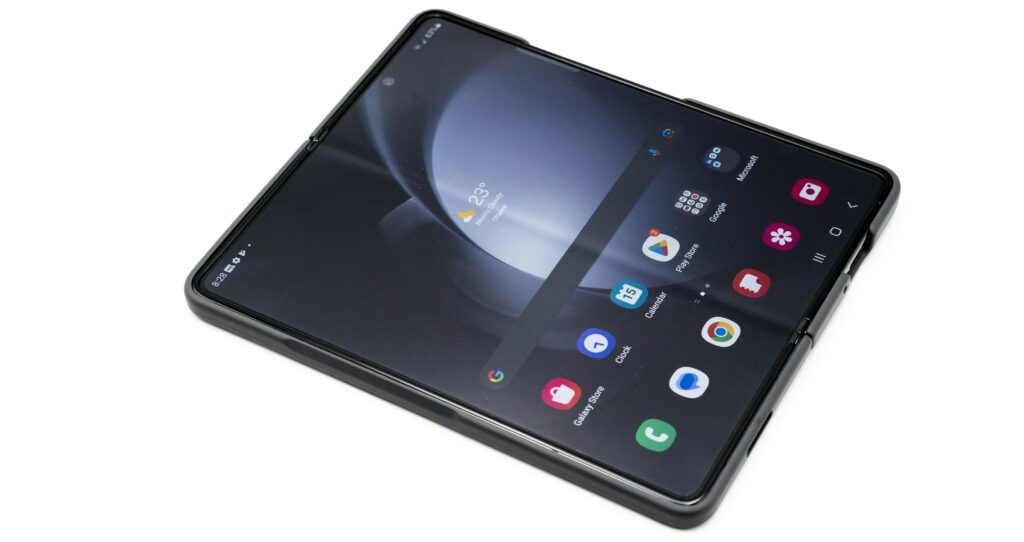
The journey of foldable smartphones has been one of continuous innovation, marked by both remarkable breakthroughs and initial challenges. Early devices faced durability concerns, visible creases, and high price points. However, the latest generation of foldable phones, and those teased for the near future, are addressing these issues head-on, promising a much more refined and reliable experience. Companies like Samsung, Honor, OnePlus, and Google are heavily investing in R&D, focusing on robust hinge mechanisms – such as waterdrop or multi-link designs that create less pronounced creases – flatter screens, and superior display materials. For instance, recent patent filings hint at future Samsung Galaxy Z Fold and Flip models featuring significantly improved crease reduction technology, enhanced water and dust resistance, and even lighter, thinner form factors, making them more practical for everyday use.
Recent market data unequivocally underlines the growing consumer interest and market maturity in this segment. According to a report by Counterpoint Research, the global foldable smartphone market is projected for explosive growth, potentially reaching over 100 million units shipped annually by 2027, a substantial leap from approximately 15 million in 2023. This growth is largely fueled by relentless technological advancements in flexible display panels. Innovations like Ultra-Thin Glass (UTG) are becoming thinner, more flexible, and significantly more resilient, offering a tactile experience closer to traditional glass. Furthermore, the introduction of new proprietary hinge designs, like those seen in the OnePlus Open, effectively minimizes the display crease by allowing the screen to fold into a tear-drop shape. Leading display manufacturers such as Samsung Display, LG Display, and BOE are pushing boundaries, exploring novel material compositions to create screens that can withstand tens of thousands of folds without degradation. TechCrunch recently highlighted how innovation in display technology, particularly in screen durability and crease management, is critical to the foldable market’s expansion, moving past initial quality control concerns.
The impact of these revolutionary foldable phones on both the technology industry and end-users is profound. For consumers, the ultimate promise is a single device offering the portability of a smartphone with the expansive screen real estate and productivity benefits of a tablet. Imagine seamlessly multitasking with multiple apps open, enjoying immersive video content, or capturing stunning photography using a versatile form factor that can act as its own tripod. These hardware advancements are already leading to greater app optimization for foldable interfaces, fostering a richer and more intuitive software ecosystem. For manufacturers, it represents a new frontier for industrial design and engineering, allowing for novel applications and enhanced user interactions that fixed-screen phones simply cannot achieve. This increasingly competitive landscape is also expected to drive down production costs and retail prices, making revolutionary foldable phones more accessible to a broader audience and challenging the traditional premium smartphone market.
Industry experts widely predict that the future of mobile technology will increasingly converge around flexible, adaptive, and multi-functional form factors. Analysts from IDC suggest that within the next few years, foldable phones will successfully move beyond early adopter status to become a significant and established segment of the premium smartphone market, eventually becoming as common as standard smartphones are today. While challenges like managing overall device thickness, optimizing battery life for larger displays, and ensuring consistent long-term software support still exist, the technological trajectory is unequivocally clear. As Dr. Anya Sharma, a leading materials scientist specializing in flexible electronics, recently stated, “The advancements in polymer science, hinge mechanics, and UI/UX design are reaching a critical inflection point where foldable devices will soon overcome their initial hurdles, paving the way for truly seamless integration into our daily lives.” We can anticipate further innovations beyond simple folding, including rollable and stretchable displays, pushing the boundaries of personal devices. For more insights on general tech advancements, check out ByteTechScope’s insights on smartphone evolution.
In conclusion, the rapid evolution of foldable phones stands as a powerful testament to the relentless pace of technological innovation. With each new iteration, these devices are not just shedding their experimental label but are actively transforming into highly desirable, practical, and incredibly versatile gadgets. The collective focus across the industry on improved displays, enhanced durability, more intuitive software, and refined user experiences marks a thrilling new chapter for mobile technology. As we look ahead, the continuous march towards more revolutionary foldable phones promises a future where our devices are not just smart, but also remarkably flexible, adaptable, and deeply integrated into the fabric of our digital lives.