
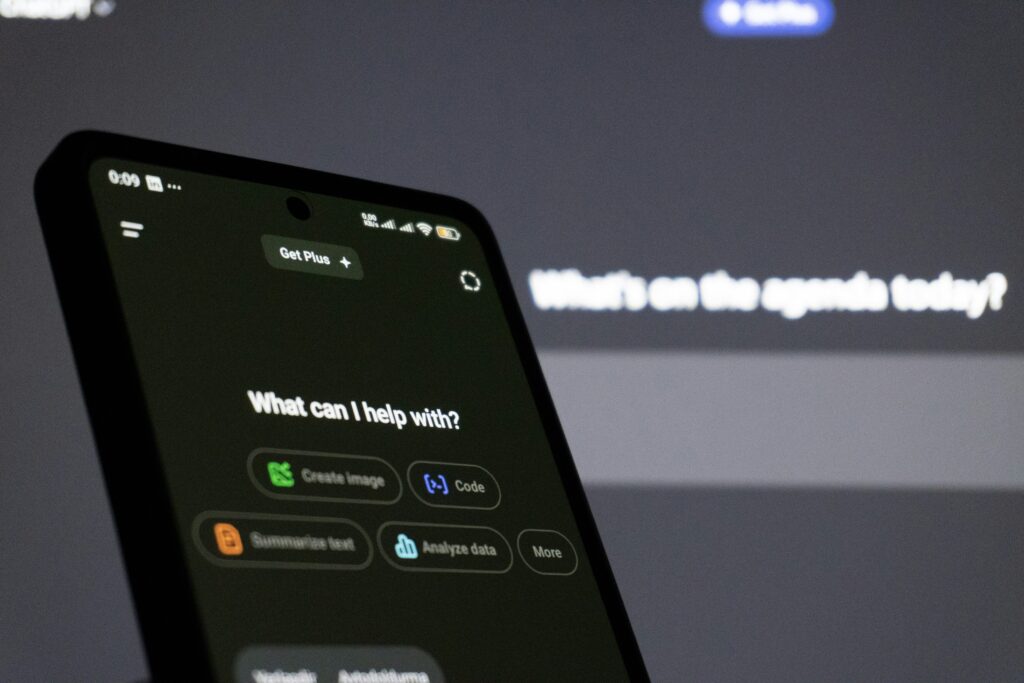
The innovation within the AI space continues at an unprecedented pace, with each major announcement pushing the boundaries of what intelligent systems can achieve. On May 13, 2024, OpenAI introduced GPT-4o (the ‘o’ stands for ‘omni’), a new flagship model that has quickly captured the attention of the tech world and beyond. This isn’t just another incremental update; GPT-4o is engineered for native multimodal capabilities, meaning it can reason across audio, vision, and text inputs and generate outputs in the same diverse formats, all with remarkable speed and fluidity. This launch signifies a critical inflection point, fundamentally altering our perception of what truly interactive and intelligent AI can be.
The Dawn of Truly Multimodal AI: What is GPT-4o?
At its core, GPT-4o is designed to be an ‘omnimodel,’ integrating processing across different data types seamlessly. Unlike previous models that might chain together separate components for voice or vision, GPT-4o was trained end-to-end across text, audio, and vision. This unified architecture is what allows it to perceive and respond to inputs with unprecedented speed – often as fast as a human response, at around 232 milliseconds, with an average of 320 milliseconds. This real-time capability is crucial; it means the AI can detect nuances in voice tone, interpret visual cues, and understand contextual information in a way that feels inherently more human and responsive.
During its live demonstration, OpenAI showcased GPT-4o’s ability to engage in natural, flowing conversations, identify emotions from voice, solve math problems by interpreting a handwritten note shown via camera, and even tell stories with varying tones. This level of multimodal understanding and generation represents a significant departure from earlier models, which often struggled with latency or required distinct, separate processing pipelines for each modality. The unified approach of GPT-4o not only enhances performance but also unlocks entirely new possibilities for practical applications, making AI systems more intuitive and integrated into our daily lives and professional workflows.
Beyond Text: GPT-4o’s Transformative Industry Impact
The implications of GPT-4o’s capabilities extend far beyond simple chatbots. Its real-time, multimodal processing power positions it as a game-changer for numerous industries, promising to redefine operational efficiencies and customer experiences.
Revolutionizing Customer Service and Support
One of the most immediate and impactful applications of GPT-4o is in customer service. Imagine a virtual assistant that not only understands spoken queries but can also interpret the customer’s tone of voice, recognize facial expressions (via video calls), and even analyze images or documents shared during a live interaction. This allows for a far more empathetic and effective support experience. Complex issues can be resolved more quickly, and personalized responses can be generated in real-time, reducing frustration for customers and improving resolution rates for businesses. Call centers could leverage GPT-4o to provide instant, intelligent support, freeing human agents to focus on more complex, high-value interactions.
Elevating Education and Personal Tutoring
GPT-4o holds immense potential to democratize and personalize education. Students could show the AI a complex math problem or a science experiment, and receive immediate, step-by-step guidance tailored to their learning style. Language learners could practice conversational skills with an AI tutor that corrects pronunciation, grammar, and even provides cultural context through real-time feedback. For educators, GPT-4o could assist in creating dynamic learning materials, translating lectures into multiple languages, or even providing interactive simulations that respond to student queries through voice and vision. This level of personalized, accessible tutoring can bridge learning gaps and foster deeper understanding across diverse student populations.
Driving Innovation in Content Creation and Media
For creative industries, GPT-4o offers unprecedented tools. Content creators could use it to brainstorm ideas, generate scripts or storyboards based on visual and textual prompts, or even provide real-time feedback on video edits. Translators could leverage its multimodal capabilities to not only translate text but also synchronize voiceovers with lip movements or interpret sign language, making content more accessible globally. Imagine an AI that can generate a detailed audio description of a video for visually impaired users, or translate a live speech into text and sign language simultaneously, pushing the boundaries of inclusive media production.
Enhancing Productivity and Workflow Automation
In the enterprise, GPT-4o can significantly enhance productivity and streamline workflow automation. During virtual meetings, the AI could provide real-time transcription, translate conversations for international participants, and generate comprehensive summaries or action items, all while interpreting visual cues like shared screens or whiteboards. For developers, GPT-4o could assist in debugging code by analyzing screenshots of error messages and providing verbal explanations and solutions. Its ability to process and synthesize information from multiple formats makes it an invaluable asset for data analysis, project management, and strategic decision-making, transforming how teams collaborate and operate.
Navigating the Future: Challenges and Ethical Considerations
While the capabilities of GPT-4o are undeniably exciting, its widespread adoption also brings forth crucial challenges and ethical considerations. Data privacy and security become even more complex when AI systems are processing sensitive audio and visual information. There’s also the ongoing concern about bias in AI models, which could be amplified when processing multimodal data, potentially leading to discriminatory outcomes if not carefully addressed during development and deployment.
Furthermore, the rapid advancement of such sophisticated AI models inevitably raises questions about job displacement. As AI takes on more complex tasks, industries must proactively plan for reskilling and upskilling their workforces. OpenAI has stated its commitment to responsible AI development, implementing safety measures and red-teaming efforts before public release. However, continuous oversight, transparent reporting, and robust ethical frameworks will be essential as these powerful tools become more deeply embedded in society. The conversation around ethical AI deployment, regulatory frameworks, and societal impact must evolve in lockstep with technological progress.
Expert Perspectives and Future Outlook
Industry experts universally acknowledge GPT-4o as a pivotal development. Many analysts, such as those covered by TechCrunch, highlight its real-time processing and multimodal integration as a critical step towards more natural and intuitive human-computer interaction. The sentiment is that this model moves beyond simply ‘understanding’ input to truly ‘perceiving’ and ‘interpreting’ context, a qualitative leap.
Looking ahead, the trajectory for multimodal AI points towards even greater sophistication. We can anticipate GPT-4o, or its successors, being integrated into an even wider array of devices and platforms, from augmented reality headsets to robotics. This could lead to AI systems that not only communicate with us but also physically interact with our environment, understanding and responding to the world around them in a more comprehensive way. The future likely involves AI becoming an almost invisible layer of intelligence, seamlessly augmenting human capabilities across all facets of life and work, blurring the lines between the digital and physical realms.
Conclusion: A New Era of Human-Computer Symbiosis
OpenAI’s GPT-4o is more than just a new model; it’s a testament to the relentless pursuit of more natural, intuitive, and powerful AI. By mastering multimodal interaction in real-time, it unlocks a myriad of possibilities for transforming industries, enhancing productivity, and enriching human experiences. While challenges pertaining to ethics and societal impact remain, the launch of GPT-4o unequivocally marks the beginning of a new era where human-computer symbiosis reaches unprecedented levels, promising a future where intelligent systems don’t just understand us, but truly connect with us across all sensory dimensions.