
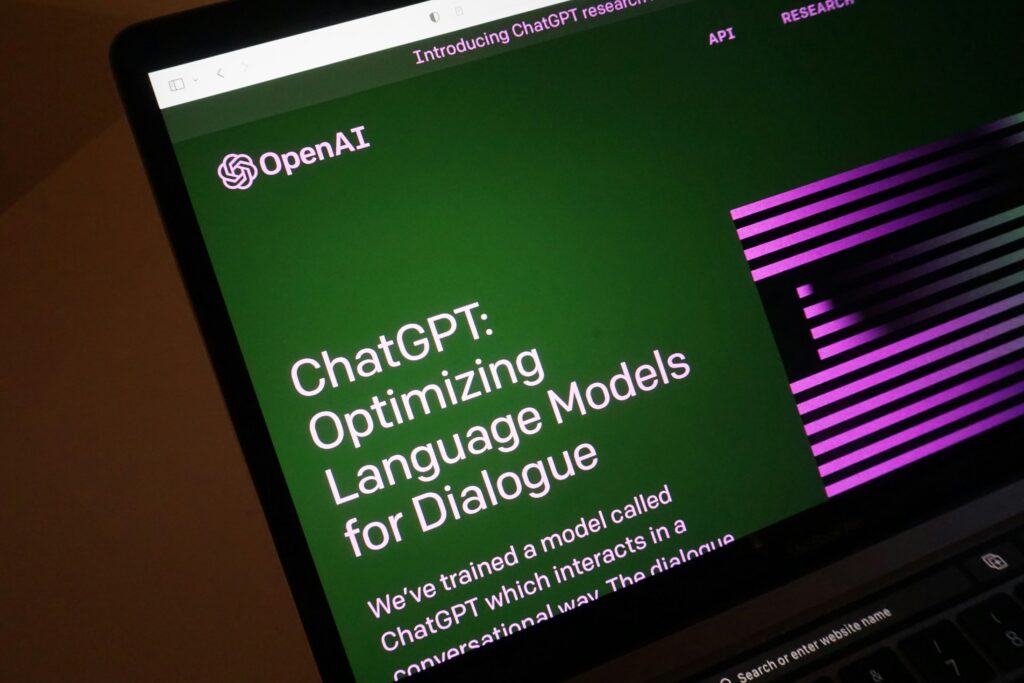
The Paradigm Shift: From Prediction to Reasoning
On September 12, 2024, OpenAI introduced the o1 series, a new class of AI models trained to spend more time thinking through problems before responding. This release is a departure from the rapid-fire generation we have seen in previous models. By training the system to use a ‘chain-of-thought’ process, the model learns to refine its strategy, recognize errors, and try different approaches, mirroring the cognitive processes of a human expert.
According to official announcements from OpenAI, these models demonstrate significantly enhanced performance in competitive programming and complex STEM benchmarks. For instance, in qualifying exams for the International Mathematics Olympiad (IMO), the previous model (GPT-4o) solved 13% of problems, while the reasoning-focused o1 model correctly solved 83%.
Impact on Industrial Workflow Automation
The integration of reasoning models into enterprise environments changes the landscape of automation. In sectors like software engineering, pharmaceutical research, and structural physics, the ability to ‘reason’ rather than merely ‘predict’ reduces the hallucinations often associated with generative AI. This provides a level of reliability that CTOs have been demanding for mission-critical operations.
Companies can now deploy intelligent agents that handle multi-step technical workflows without needing constant human intervention for validation. As discussed in our previous analysis of automating enterprise AI pipelines, the shift toward reasoning-based agents represents the next frontier in operational efficiency.
The Role of Chain-of-Thought Processing
By breaking down complex queries into sequential logic, the o1 model significantly lowers the error rate in coding tasks. Developers are already noting that the model provides more robust, secure, and production-ready code snippets. This efficiency is set to drastically reduce the ‘debug cycle’ in software development lifecycles (SDLC).
Expert Predictions and Future Outlook
Industry analysts, including those from major firms cited by The Verge, suggest that this is merely the beginning of the ‘reasoning’ era. The future of AI will not be measured by the speed of token generation, but by the depth of logical accuracy in a single response. We expect to see specialized versions of these models appearing in vertical industries—healthcare diagnostics, financial auditing, and advanced manufacturing—where logic and error-checking are paramount.
As these tools mature, the role of human workers will evolve from ‘doers’ to ‘architects’ of these reasoning systems. We are moving toward a period where the AI serves as a high-level consultant, capable of auditing its own logic before delivering a final solution.
Conclusion
The unveiling of OpenAI o1 is a landmark moment in machine learning. While we are still in the early stages of implementing these models, the potential for increasing technical accuracy and efficiency is unprecedented. Businesses that begin to explore reasoning-based AI today will be well-positioned to lead in an increasingly automated economy.