
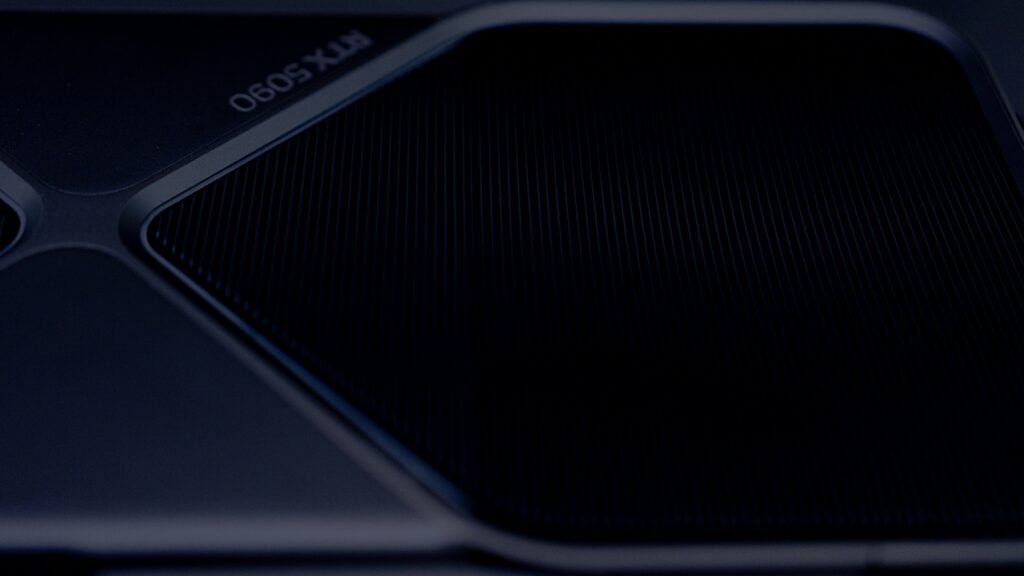
The Arrival of the Blackwell Architecture
Announced officially as the successor to the highly successful Hopper architecture, the NVIDIA Blackwell GPU is engineered specifically to tackle the most demanding computational challenges of the current era. Industry analysts and partners, including major cloud providers, have highlighted the platform’s potential to redefine data center capabilities. By integrating specialized accelerators, NVIDIA aims to reduce the energy cost of large-scale model training while simultaneously increasing throughput for real-time inference tasks.
Technical Advancements and Performance Benchmarks
Based on the latest technical disclosures, the Blackwell B200 GPU utilizes a multi-chip module design that connects two silicon dies into a single, unified GPU. According to recent data from The Verge, this architecture allows for a significant increase in memory bandwidth and floating-point operations per second (FLOPS). This is not merely a marginal improvement; it is a structural redesign intended to handle multi-trillion parameter models that are becoming the gold standard for enterprise-grade automation systems.
Impact on Industry Workflows
For organizations already optimizing their business processes through automated workflow solutions, the adoption of this hardware means faster iteration cycles. When data processing happens at an accelerated pace, the bottleneck often shifts from computational power to data integration and strategy. Our analysis suggests that businesses integrating this hardware into their existing tech stacks will see a reduction in training times for internal machine learning models, allowing for more frequent updates and smarter decision-making cycles.
Expert Predictions and Future Outlook
Looking ahead, the industry is closely monitoring how these chips will perform in real-world, high-density environments. While early benchmarks are promising, the true test will be the ease of integration with legacy software infrastructure. We anticipate a surge in demand for consulting services that bridge the gap between high-performance hardware and practical business applications. Experts predict that the focus will shift from simply ‘having the most power’ to ‘optimizing the cost-to-performance ratio’ as these units reach full scale in global data centers.
Conclusion
The NVIDIA Blackwell platform stands as a testament to the ongoing evolution of specialized hardware. For the modern enterprise, it offers a pathway to unlock deeper insights and more fluid automated operations. While the investment required is substantial, the efficiency gains appear to set a new benchmark for what is possible in enterprise-grade computing.