
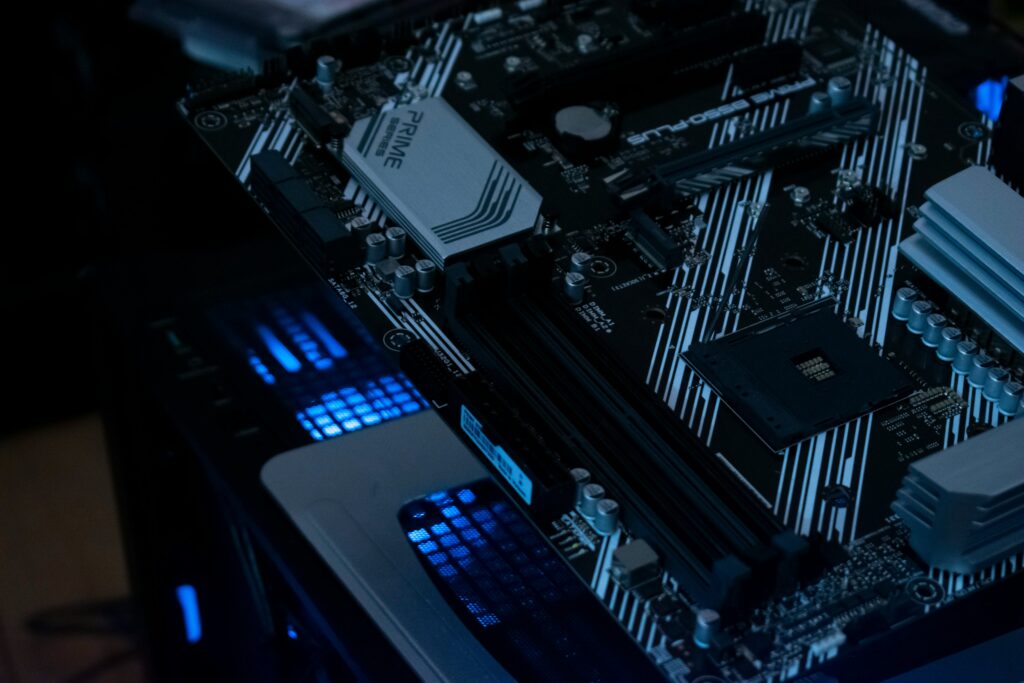
The Dawn of the Blackwell Architecture
Announced officially by NVIDIA at the GTC 2024 conference, the Blackwell architecture represents the most significant leap in GPU technology in recent years. Named after David Harold Blackwell, the first African American inducted into the National Academy of Sciences, this new platform is engineered to handle trillion-parameter models with unprecedented speed. Unlike its predecessor, the Hopper H100, the Blackwell B200 GPU utilizes a unique dual-die design connected by a 10TB/s chip-to-chip link, effectively functioning as a single, unified processor.
Performance Metrics and Data Integrity
According to official reports from The Verge, the Blackwell B200 offers up to 30 times the performance for generative AI inference compared to previous iterations. This is not merely a marginal increase; it is a fundamental shift in how hardware processes massive datasets. The architecture introduces a second-generation Transformer Engine, which dynamically adjusts precision for neural network calculations, ensuring that accuracy remains high even when speed is prioritized.
Impact on Enterprise Workflows
For organizations integrating these GPUs into their private clouds, the impact is two-fold: reduced energy consumption and accelerated training cycles. In the realm of automation and predictive analytics, the ability to process data at this scale allows for real-time decision-making that was previously bottlenecked by hardware limitations. Our team at ByteTechScope has previously explored how optimizing infrastructure is key to scaling enterprise AI, and the Blackwell series provides the underlying muscle to make this vision a reality.
The Role of Scalability
Blackwell isn’t just about raw power; it is about connectivity. With the fifth-generation NVLink, enterprises can interconnect up to 576 GPUs, creating a massive, cohesive computing fabric. This modularity allows businesses to scale their infrastructure incrementally rather than overhauling their entire data center footprint. It is a smarter way to manage hardware lifecycles in an era where technology evolves every eighteen months.
Industry Predictions: The Future of Compute
Market analysts suggest that the demand for Blackwell will define the competitive edge for cloud service providers and hyperscalers through 2026. While widespread availability is still ramping up, the consensus among experts is that this architecture will become the backbone of the next industrial revolution. We expect to see a surge in specialized SaaS applications that leverage this increased throughput to offer deeper, more personalized insights for end-users.
Ultimately, the NVIDIA Blackwell GPU is more than a hardware release; it is a foundational component for the next generation of intelligent systems. As businesses assess their current technology stacks, those who embrace high-density, energy-efficient architectures will likely capture the lead in their respective markets.