
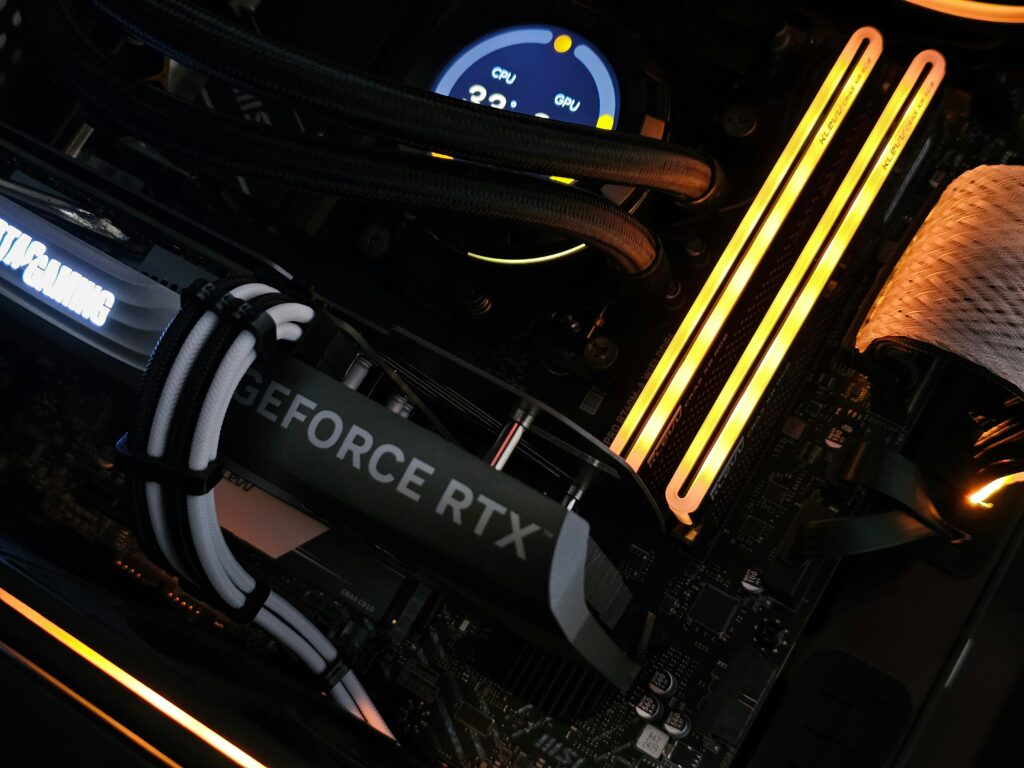
The Dawn of the Blackwell Era
In a major development for the tech sector, Nvidia has officially commenced the shipping of its Blackwell GPUs, signaling a significant evolution in hardware capabilities. This announcement, coming as the industry reaches a fever pitch regarding computational limits, addresses the growing demand for energy-efficient, high-density processing power. Unlike its predecessor, the Hopper architecture, the Blackwell series is designed specifically to handle the increased complexity of trillion-parameter models, providing a foundation for next-generation automated workflows.
Technical Prowess and Industrial Impact
Industry analysts and official statements suggest that the architecture focuses heavily on reducing the ‘memory wall’ that has historically hindered rapid data processing. By integrating specialized engine components that accelerate real-time data handling, Nvidia is positioning its latest hardware not just as a consumer-facing product, but as a critical infrastructure component for global enterprises. For organizations currently utilizing legacy hardware, the transition to Blackwell represents a potential 3x increase in efficiency, effectively transforming how industries process edge and cloud analytics.
For a deeper dive into how current hardware trends are shaping your enterprise architecture, check out our insights on scaling enterprise infrastructure.
The Market Perspective
According to recent reports from Bloomberg Tech, demand remains at record levels, driven by the race among cloud service providers to maintain the fastest training pipelines. The economic implications are clear: companies that adopt high-density GPU acceleration are likely to gain a competitive advantage in operational agility. As we monitor these deployments, it is clear that the integration of such powerful hardware requires a rethink of traditional workflow automation strategies.
Future Predictions and Expert Outlook
Experts speculate that the Blackwell generation will catalyze a wave of decentralized processing, where complex computations are offloaded to localized, high-performance nodes rather than relying solely on centralized clusters. While the initial supply remains tightly constrained to major data center partners, the ripple effect on software development—specifically in tools that leverage GPU-optimized libraries—will be profound. Businesses should begin planning their technology roadmaps around this new hardware baseline to ensure long-term compatibility with emerging automated systems.
Ultimately, the arrival of Blackwell is a testament to the accelerated pace of innovation within the semiconductor space. For technology leaders, the strategy should not be just about acquiring hardware, but about restructuring operational frameworks to utilize this raw power effectively.