
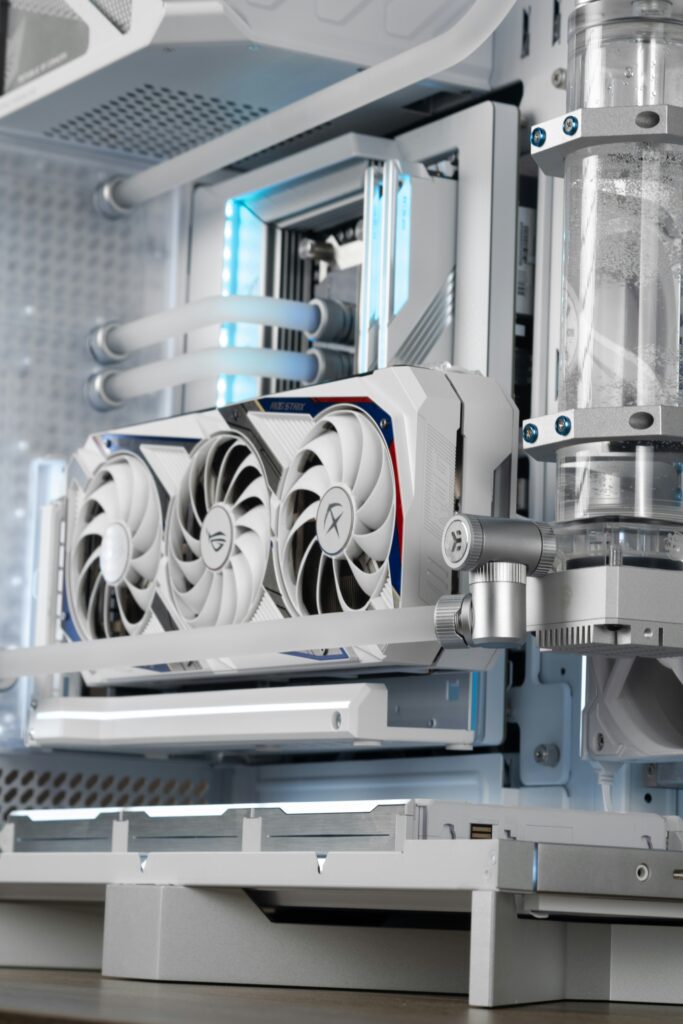
The Architecture Behind the Blackwell Revolution
Announced as the successor to the highly successful Hopper architecture, Nvidia’s Blackwell GPU is built to address the exponential growth in demand for specialized processing. At its core, the Blackwell architecture utilizes a multi-die design, which allows for unprecedented transistor density and improved interconnect speeds. By integrating two reticle-limit dies into a single unified GPU, Nvidia has effectively bypassed traditional physical limitations, providing a platform that can handle trillions of parameters in large-scale models.
Data-Driven Performance Metrics
According to official technical specifications released by Nvidia, the Blackwell B200 GPU offers significant improvements in power efficiency and raw computational throughput compared to its predecessor. This isn’t merely a marginal gain; it is a fundamental re-engineering of how data moves across high-bandwidth memory (HBM3e). With the inclusion of a second-generation Transformer Engine, the hardware is specifically optimized to accelerate inference tasks, which is the primary bottleneck for many enterprise-grade automation systems today.
Impact on Enterprise Infrastructure
For businesses, the arrival of Blackwell hardware signifies a shift toward decentralized, high-density computing clusters. Organizations that rely on intensive data processing—ranging from supply chain optimization to real-time financial modeling—can now expect lower latency and reduced energy costs per unit of compute. This is not just a hardware upgrade; it is an opportunity to re-evaluate current IT architecture and remove the legacy constraints that prevent seamless workflow integration. You can learn more about how to assess your current IT stack in our guide on optimizing IT infrastructure.
Market Context and Industry Adoption
The tech industry has responded with significant momentum. Major cloud providers and hyperscalers have already secured allocation, viewing the Blackwell platform as the new industry benchmark. As noted in a recent report by Bloomberg Technology, the competitive race for AI hardware is intensifying, putting Nvidia in a position of significant influence regarding the future of the global digital supply chain.
Future Outlook: What Should CTOs Prepare For?
While the hardware is currently reaching early-stage production, the transition to Blackwell-based systems will require thoughtful planning. CTOs must consider thermal management, power distribution, and the software stack compatibility before deployment. Looking ahead, the focus will likely shift from raw power to software-defined hardware, where the agility of the system becomes just as important as the GPU’s clock speed. We anticipate that by next year, the industry will pivot toward specialized clusters specifically tuned for multimodal model workloads.
Ultimately, the Blackwell GPU is more than a powerful processor—it is the engine that will likely power the next decade of digital transformation. Organizations that align their technology roadmap with these hardware advancements will undoubtedly gain a competitive advantage in processing efficiency and operational speed.