
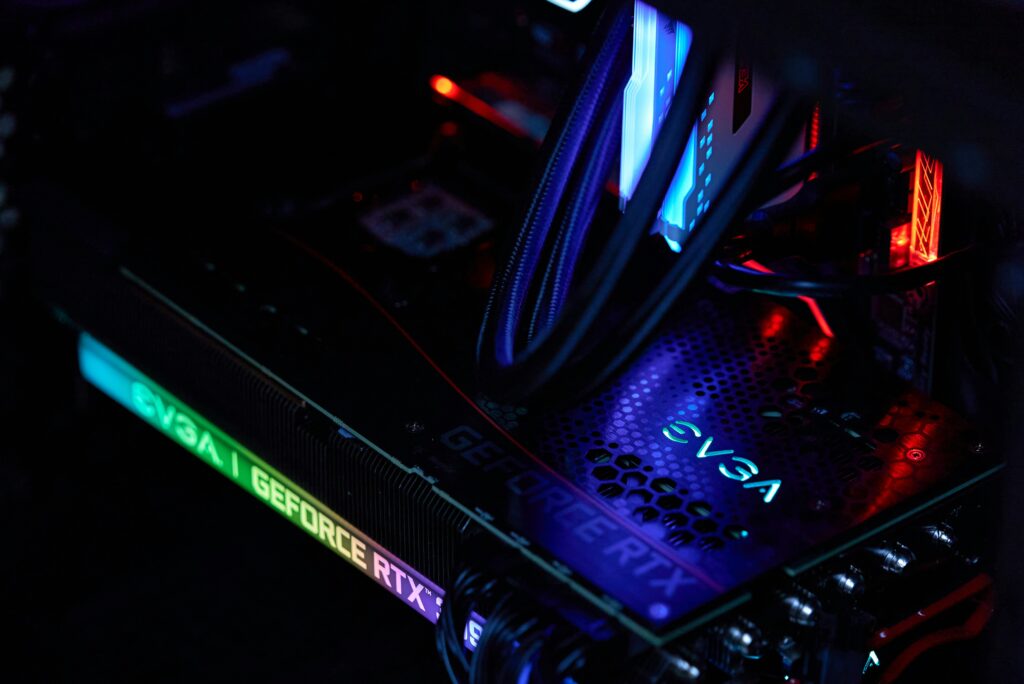
In late 2024, Nvidia confirmed that its Blackwell GPU architecture has reached a critical stage in production, with major partners across the globe beginning to integrate these units into their server clusters. This rollout marks the culmination of an intensive development cycle aimed at solving the “memory wall”—a persistent challenge in high-performance computing where data transfer speeds struggle to keep up with raw processing power.
The Architecture Behind the Power
The Blackwell architecture is not merely an incremental update; it is an entirely new approach to multi-chip packaging. By connecting two silicon dies into a single unified GPU, Nvidia has effectively doubled the performance-per-watt compared to the preceding Hopper generation. Official statements from Nvidia emphasize that this design allows for a massive increase in bandwidth, essential for real-time inference and complex neural network training.
Data Center Implications
For large enterprises, the transition to Blackwell implies a fundamental restructuring of data center operations. The hardware is designed to support liquid-cooled configurations, which are necessary to manage the extreme thermal loads generated by such high-density computing. Companies investing in this technology are looking to reduce the total cost of ownership by consolidating multiple previous-generation racks into single, highly efficient Blackwell-powered cabinets.
Market Analysis and Industry Shift
The move toward Blackwell aligns with broader industry trends identified by analysts at outlets like The Verge, where supply chain reliability has become just as critical as raw specifications. Industry experts suggest that the scarcity of high-end silicon will continue to favor companies that can secure supply chain priorities early. Furthermore, the shift toward localized AI models requires hardware that is both powerful enough for training and efficient enough for consistent deployment at the edge.
The Road Ahead
While the hardware is technically superior, the real value will emerge as software stacks are optimized to leverage these specific silicon structures. We predict that the next 18 months will be defined by a race to maximize the utilization of Blackwell’s tensor core throughput. Businesses that successfully integrate this hardware will likely see an exponential improvement in their data processing speeds, far outpacing competitors stuck on legacy architectures. If you want to see how this fits into your broader infrastructure, check out our recent insights on optimizing cloud workflows for modern scaling needs.
Conclusion
The Nvidia Blackwell GPU represents a pivotal moment in hardware engineering. By addressing the fundamental bottlenecks of memory and power density, Nvidia has set a new benchmark that the industry will follow for years to come. Whether you are scaling internal data centers or building out proprietary large-scale models, staying updated on these hardware shifts is essential for strategic technology planning.