
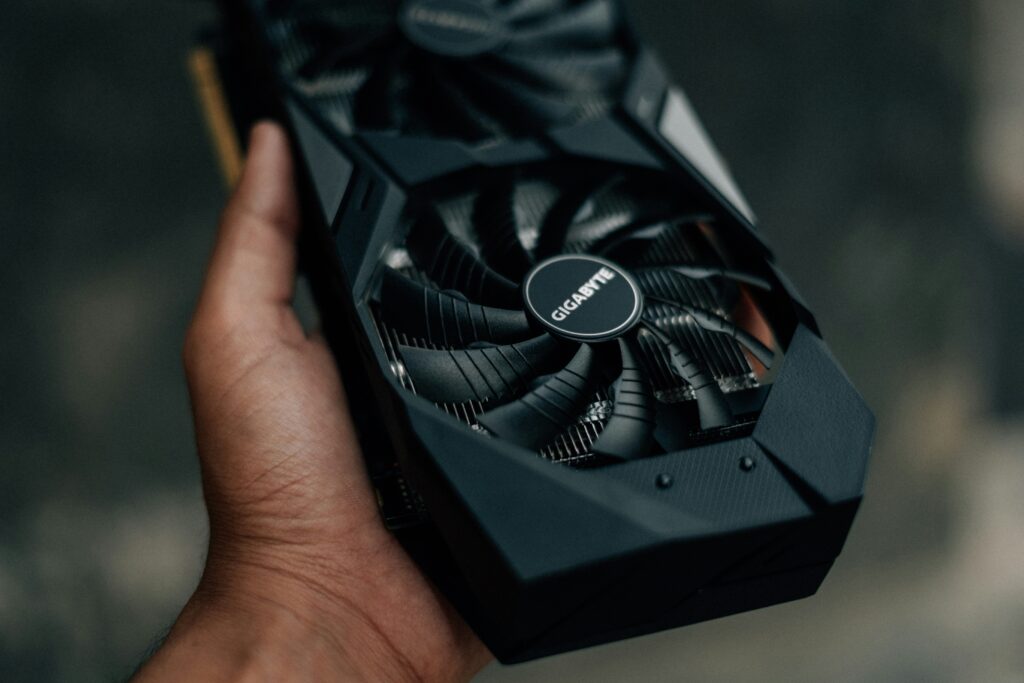
The Architecture of the Blackwell GPU
Announced as the successor to the highly successful Hopper architecture, Nvidia’s Blackwell GPU is built to handle the exponential growth of complex workloads. The architecture features a dual-die design that is interconnected via a 10 TB/s chip-to-chip link. According to The Verge, this engineering marvel is designed to sustain massive memory bandwidth while maintaining lower power consumption per flop compared to its predecessors. This is not just a marginal improvement; it represents a fundamental change in how silicon handles data-intensive tasks.
Industry Impact and Enterprise Integration
For organizations, the primary draw of Blackwell is the dramatic improvement in training efficiency. In practice, this means companies can deploy sophisticated workflows in a fraction of the time previously required. We have previously discussed the importance of infrastructure in our guide to scalable cloud infrastructure, and Blackwell represents the hardware layer that makes such scaling economically viable. The ability to handle multi-trillion parameter workloads allows industries to simulate complex environments, from drug discovery in healthcare to autonomous logistics in supply chains.
Strategic Shifts in Data Center Deployment
Industry analysts point out that Blackwell isn’t just a chip; it’s a modular system. By utilizing the NVLink switch system, data centers can scale to tens of thousands of GPUs acting as a single entity. This shift effectively eliminates the bottlenecks that have historically plagued distributed computing. Experts suggest that firms adopting this hardware now will be better positioned to integrate future-facing computational stacks without needing to overhaul their entire facility design. It is a future-proof investment for those operating at the scale of hyper-connectivity.
The Road Ahead: Expert Forecasts
While the hardware is technically superior, the real value will emerge as software stacks optimize for Blackwell’s native architecture. We anticipate that hardware-as-a-service providers will begin pivoting their offerings to emphasize Blackwell-powered tiers by late 2024. As these components become more accessible, we expect a rapid decline in the ‘compute-cost’ barrier, allowing smaller startups to leverage power previously reserved for global tech giants. However, companies must prepare for the cooling and power density requirements that come with such high-performance hardware, ensuring their physical infrastructure can support the next leap in computing.
Conclusion
Nvidia’s Blackwell marks a pivotal point in hardware history. By prioritizing energy efficiency alongside raw power, it aligns perfectly with the sustainability goals of modern corporations. As we continue to witness these innovations, the gap between hardware capability and software potential will continue to close, setting the stage for a new era of enterprise-level technological dominance.