
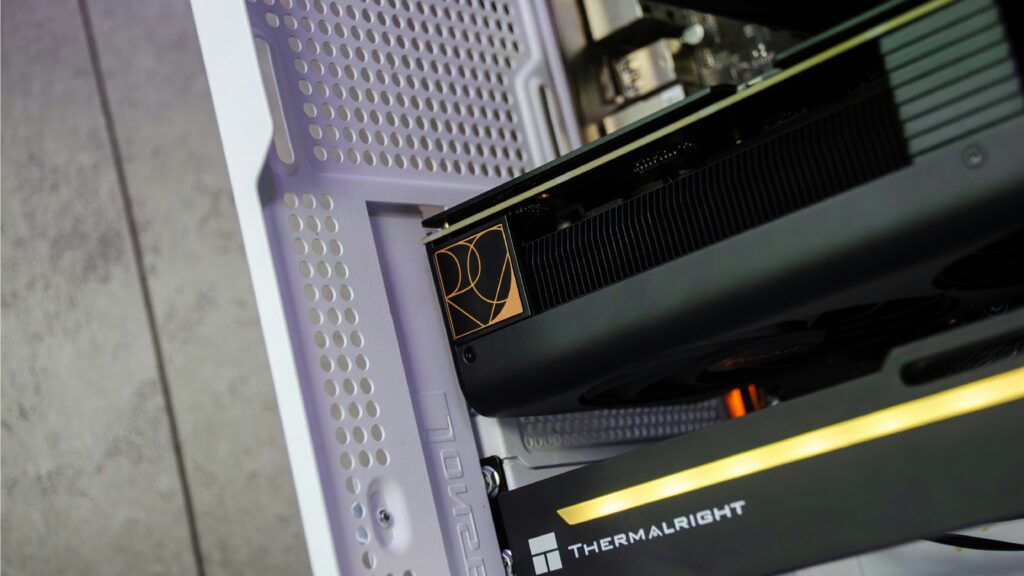
In a bold move that underscores its unwavering commitment to pushing the boundaries of artificial intelligence and high-performance computing, Nvidia officially unveiled its much-anticipated Blackwell architecture. Announced by CEO Jensen Huang at the company’s annual GTC conference earlier this year, Blackwell is not merely an evolution but a revolutionary leap, setting new benchmarks for GPU design and computational power. This architecture is engineered to tackle the most demanding AI workloads, from colossal language models to complex scientific simulations, promising unprecedented scale and efficiency.
The Engineering Marvel Behind Blackwell’s Power
At the heart of the Blackwell architecture lies an intricate design featuring an astonishing 208 billion transistors, making it the most complex chip ever created. This colossal transistor count is paired with cutting-edge manufacturing processes and innovative interconnect technologies to deliver staggering performance gains. Key components that define Blackwell’s prowess include:
- Second-Generation Transformer Engine: Specifically optimized for trillion-parameter AI models, providing enhanced accuracy and performance for next-generation AI.
- Fifth-Generation NVLink: Delivering 1.8 TB/s bidirectional throughput, allowing up to 576 GPUs to communicate seamlessly, which is critical for scaling large AI models across multiple servers.
- RAS (Reliability, Availability, Serviceability) Engine: Integrated directly into the architecture to ensure uptime and diagnostic capabilities, essential for mission-critical AI infrastructure.
- Secure AI: Hardware-level security features to protect AI models and data during inference and training.
These innovations combine to offer up to 30 times faster real-time inference for trillion-parameter models compared to its predecessor, Hopper, while simultaneously reducing power consumption by up to 25 times. Such figures, as presented by Nvidia, are indicative of a fundamental shift in what’s possible with accelerated computing.
Official Statements and Market Expectations
Jensen Huang, in his keynote address, emphasized that Blackwell is ‘the engine driving this new industrial revolution’ of AI. He highlighted how the architecture is designed from the ground up to address the unique challenges of generative AI, which requires immense computational resources for both training and inference. Nvidia has openly stated that Blackwell will be adopted by leading cloud providers and AI innovators globally, including Amazon Web Services, Google Cloud, Microsoft Azure, and Oracle Cloud Infrastructure, signaling its immediate impact on the cloud computing landscape.
Analyst firms like Jon Peddie Research and IDC have weighed in, suggesting that Blackwell could solidify Nvidia’s dominant position in the AI accelerator market, potentially expanding its reach into new enterprise segments that previously found high-performance AI cost-prohibitive. The focus on energy efficiency and scalability is particularly appealing to large enterprises looking to deploy AI responsibly and economically.
Transformative Impact on Industries and Users
The implications of Nvidia Blackwell extend far beyond the data center. Its capabilities are set to transform numerous industries:
For AI and Data Science:
Blackwell will accelerate the development and deployment of more sophisticated AI models. Researchers will be able to train larger, more complex neural networks in a fraction of the time, leading to breakthroughs in areas like drug discovery, climate modeling, and autonomous systems. Data scientists will benefit from faster data processing and more efficient model iteration, speeding up the entire AI lifecycle.
For Enterprise and Business Consulting:
For businesses, Blackwell offers a tangible pathway to implementing advanced AI solutions at scale. Companies looking to leverage generative AI for content creation, customer service automation, or personalized marketing will find the infrastructure far more capable and cost-effective. As a technology consulting firm, understanding and advising on the optimal deployment of Blackwell-powered systems will be a critical service. It paves the way for new engagements focused on AI infrastructure optimization, MLOps, and the strategic integration of next-gen AI into core business processes. For instance, enterprises struggling with data center efficiency could explore solutions leveraging Blackwell to significantly reduce their operational footprint while boosting computational power. To learn more about optimizing your AI infrastructure, explore our insights on Optimizing AI Infrastructure for Enterprise Efficiency.
For High-Performance Computing (HPC):
The architecture’s immense processing power and efficient interconnections make it ideal for scientific research and engineering simulations. From aerospace design to materials science, Blackwell will enable faster and more accurate simulations, driving innovation in fields vital to global progress. For more detailed insights into Nvidia’s approach to the enterprise market, see The Verge’s coverage of the Blackwell unveiling.
Future Predictions and Expert Opinions
Industry experts widely predict that Blackwell will catalyze a new wave of AI development, democratizing access to previously unattainable computational resources. While the initial rollout focuses on data center GPUs like the GB200, it’s highly anticipated that the Blackwell architecture will eventually trickle down to consumer-grade products. Speculations are rife regarding its potential to power the next generation of Nvidia’s GeForce RTX 50 series GPUs, which could bring unprecedented AI-accelerated features and gaming performance to mainstream users.
Analysts suggest that Blackwell’s modular design and advanced networking capabilities will also foster greater innovation in hardware-software co-design, encouraging startups and established firms alike to develop novel solutions that fully exploit the architecture’s potential. This competitive advantage will likely pressure rival chipmakers, such as AMD and Intel, to accelerate their own AI hardware roadmaps, ultimately benefiting the entire technology ecosystem with more diverse and powerful options.
A New Era of Computational Possibility
Nvidia Blackwell is more than just a new GPU; it’s a strategic platform designed to underpin the next decade of AI innovation. Its blend of raw power, enhanced efficiency, and scalable architecture positions it as a cornerstone for future technological advancement. For businesses, developers, and researchers, Blackwell represents a significant opportunity to redefine what’s possible, pushing the boundaries of intelligence and automation across every sector.