
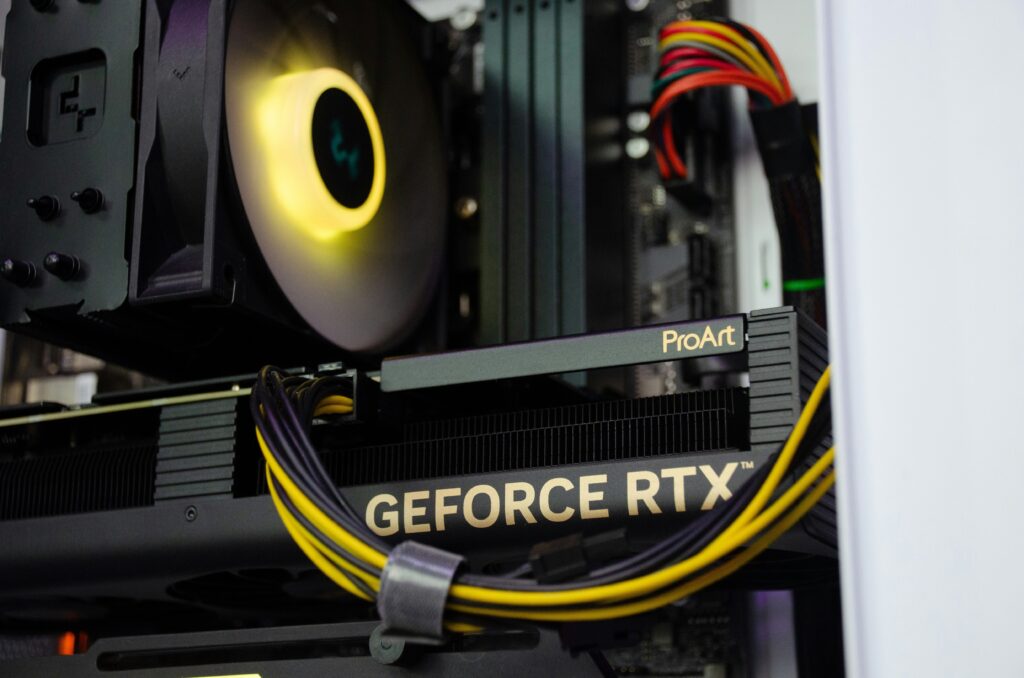
The Dawn of the Blackwell Era
In mid-March 2024, Nvidia officially introduced its Blackwell platform, named after the mathematician David Harold Blackwell. This new GPU architecture is engineered specifically to handle the massive computational requirements of modern large language models and real-time generative applications. Unlike its predecessors, Blackwell is not just a GPU; it is a multi-chip system designed to overcome the physical limitations of existing silicon lithography.
Engineering Breakthroughs in Processing
According to The Verge, the architecture features 208 billion transistors on two interconnected silicon dies. This dual-die design is linked via an ultra-high-speed 10TB/s chip-to-chip interconnect, allowing for seamless communication that effectively makes it function as a single unified entity. For IT consultants and infrastructure architects, this suggests a dramatic reduction in latency for complex automation workflows.
Implications for Enterprise Infrastructure
The shift toward Blackwell-based hardware is expected to change how data centers manage heavy-duty AI workloads. By offloading complex training processes to specialized hardware, companies can achieve higher efficiency without linearly scaling their energy consumption. This hardware evolution aligns with our focus on optimizing business processes, as seen in our guide to automating complex workflows. High-performance compute clusters are now becoming the backbone of operational intelligence.
The Role of Specialized Engines
Blackwell introduces a second-generation Transformer Engine that supports micro-scaling, which intelligently optimizes precision for neural networks. This ensures that hardware resources are not wasted on unnecessary computation, allowing for faster deployment of automated systems. Experts argue that this is the most significant leap in GPU utility since the initial inception of CUDA.
Future Projections and Expert Sentiment
Market analysts predict that the Blackwell series will serve as the standard for enterprise AI infrastructure for the next 24 months. While adoption requires a significant investment in cooling and power distribution, the trade-off in processing power is expected to result in a lower total cost of ownership (TCO) for large-scale operations. Industry leaders emphasize that the future of hardware will be defined by energy-efficient throughput, a trend that Nvidia is clearly betting on with this launch.
Final Reflections
The introduction of the Blackwell architecture signals that hardware is finally catching up to the ambitious software paradigms we have been building in the tech consulting space. Whether this serves as the definitive solution for the next wave of industrial automation remains to be seen, but the sheer technical prowess of these new chips is undeniably impressive.