
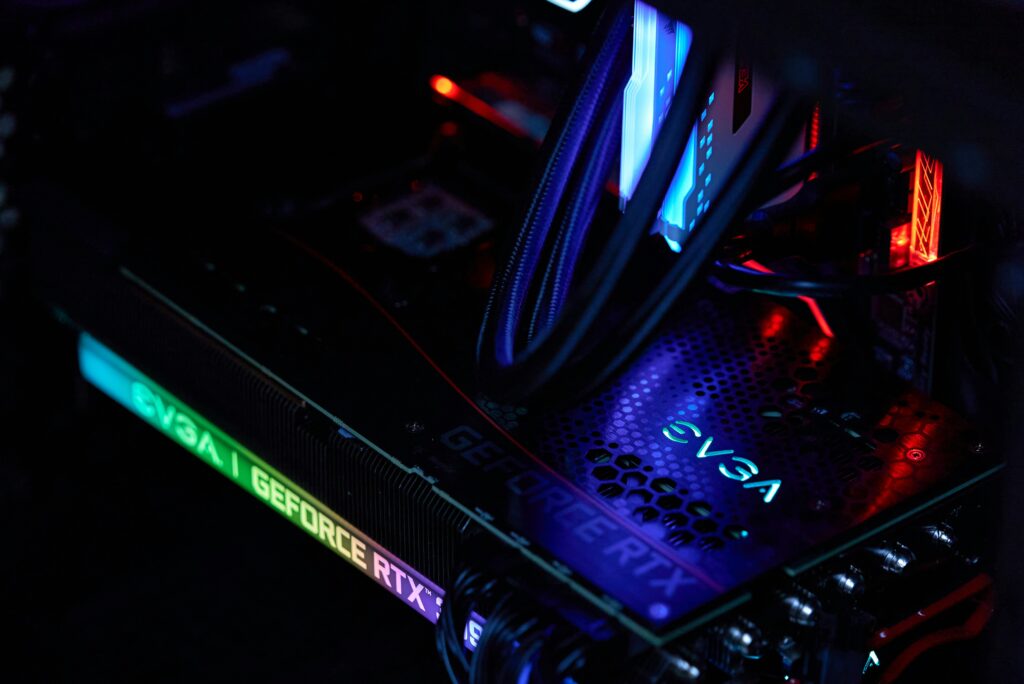
The Emergence of the Nvidia Blackwell Architecture
In a significant announcement earlier this year, Nvidia introduced the Blackwell architecture, a successor to the highly successful Hopper series. Engineered specifically to tackle the trillion-parameter scale of generative models and complex simulations, Blackwell is designed to provide up to 25 times lower cost and energy consumption for large-scale language model inference compared to its predecessors. This is a crucial evolution for businesses currently navigating the complexities of digital transformation and infrastructure scaling.
Technical Breakthroughs and Performance Metrics
The core of the Blackwell architecture features a massive 208-billion-transistor GPU, built using a custom-built 4NP TSMC process. According to official reports from The Verge, the design incorporates two GPU dies connected via a 10 TB/s chip-to-chip link. This enables seamless communication between the units, effectively allowing them to function as a single, unified processor. For organizations looking to optimize their automated data workflows, this hardware represents a significant reduction in bottleneck constraints.
The Enterprise Impact: Efficiency Meets Scale
For most enterprises, the immediate benefit of Blackwell lies in its potential for energy efficiency and reduced total cost of ownership. By integrating the fifth-generation NVLink, Nvidia has allowed for faster communication between GPUs in massive clusters. This reduces the time-to-market for complex software development cycles and accelerates the deployment of high-performance analytics. Industry analysts note that this level of hardware density is unprecedented, forcing data centers to rethink their cooling and power distribution strategies.
Expert Projections and Future Outlook
The industry consensus is that Blackwell will solidify Nvidia’s dominance in the server hardware sector for at least the next few years. Experts suggest that as software stacks begin to optimize specifically for this architecture, we will see a surge in specialized enterprise applications that were previously computationally prohibitive. While we wait for widespread availability, companies are already positioning their IT strategies to accommodate these high-density racks. Predicting the future of hardware, it is clear that modular, scalable, and highly interconnected systems are the path forward for global digital infrastructure.
Conclusion
The introduction of the Nvidia Blackwell architecture is a testament to how hardware innovation continues to pace the software industry. By balancing raw power with efficiency, Nvidia is providing the backbone for the next decade of enterprise technology. As businesses continue to integrate these tools, staying informed about hardware capabilities is essential for maintaining a competitive edge in any technology-driven strategy.