
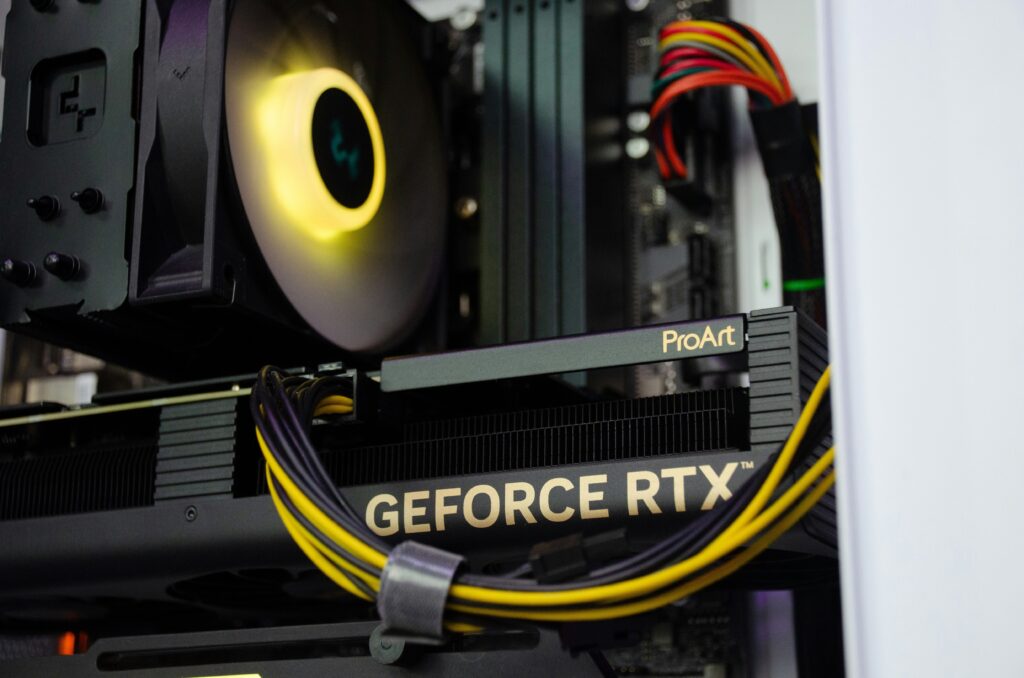
The Dawn of the Blackwell Era
In the latest industry briefings, Nvidia has highlighted the massive scale-up of its Blackwell architecture, positioning it as the new backbone for the world’s most demanding data centers. Following recent performance benchmarks released by the company, it is clear that Blackwell is engineered to bridge the gap between traditional processing limitations and the requirements of future-proof automation.
Engineering Marvels in Modern Hardware
The Blackwell architecture utilizes a sophisticated multi-chip design, which experts at The Verge note as a strategic move to maximize throughput while optimizing power consumption. By integrating two GPU dies into a single unified unit, Nvidia has effectively doubled the computational density compared to the previous Hopper generation. This allows for significantly faster training and inference times for mission-critical applications.
Impact on Enterprise Automation
For organizations, this hardware evolution means that workflows previously limited by latency—such as real-time predictive analytics and massive-scale supply chain simulations—can now be executed in a fraction of the time. The shift toward specialized hardware is increasingly becoming a competitive necessity. Companies that adopt these systems early can streamline their automated workflows to maintain high levels of operational efficiency.
Market Sentiment and Expert Projections
Industry analysts emphasize that while Blackwell is currently targeting hyperscale data centers, the trickle-down effect will redefine the standard for enterprise-grade hardware in the coming years. Predictions suggest that as production stabilizes, businesses will have unprecedented access to supercomputing-level performance at the edge. The focus has shifted from mere raw speed to ‘performance per watt,’ a critical metric for long-term sustainability in corporate infrastructure.
The Road Ahead
As we monitor the integration of Blackwell into global infrastructure, the narrative is clear: computing is moving toward a highly modular and interconnected future. For CTOs and infrastructure leads, the task now is to audit existing legacy hardware and determine how these next-gen GPUs can integrate into existing technical stacks. Stay ahead of these hardware transitions by keeping an eye on our latest industry insights.