brno.adhi.krisna.d@gmail.com

OpenAI’s Operator: A Game-Changer for Autonomous Workflow Automation

OpenAI’s Operator is an agentic AI designed to execute complex tasks by navigating web browsers autonomously. The tool marks a shift from passive AI assistants to proactive agents capable of replacing manual interface navigation. Enterprises must focus on governance and human-in-the-loop frameworks to safely adopt agentic automation. Consulting strategies will evolve toward designing agentic architectures that orchestrate end-to-end workflows.

OpenAI’s Operator: A Game-Changer for Autonomous Workflow Automation Read More »
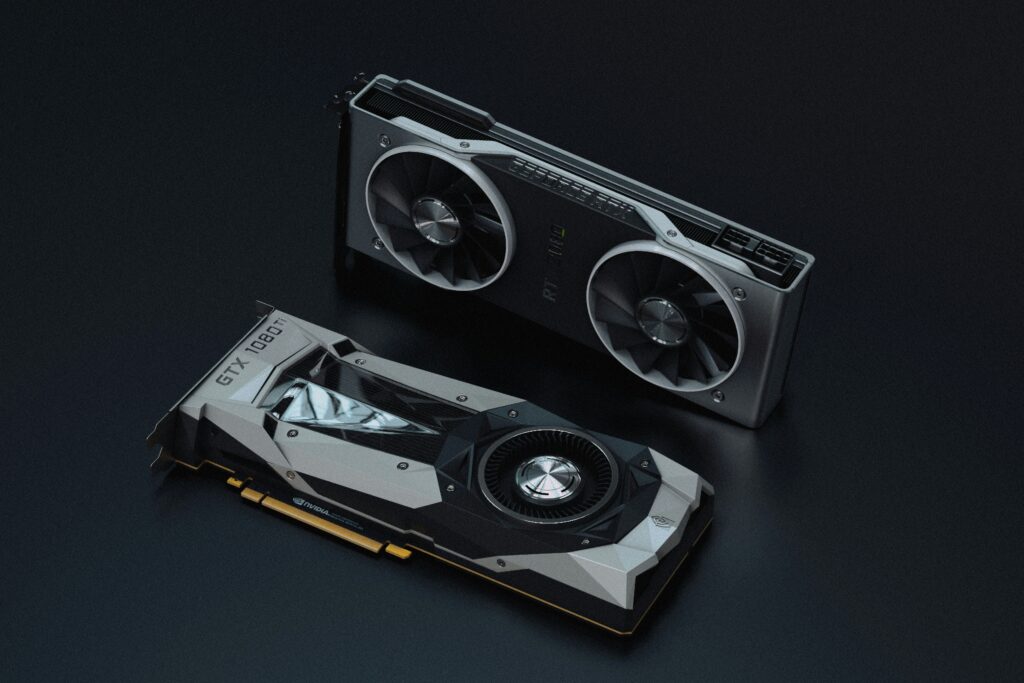
Nvidia Blackwell Architecture: A Revolutionary Leap in Enterprise Computing

Blackwell features 208 billion transistors, significantly outperforming previous architectures. The second-gen Transformer Engine enables 4-bit precision, crucial for scaling trillion-parameter models. Improved energy efficiency allows enterprises to run larger AI models with a lower power footprint. Nvidia’s NVLink connectivity provides record-breaking communication speeds between GPU clusters. Industry-wide adoption is expected to shift focus toward domain-specific industrial simulation.

Nvidia Blackwell Architecture: A Revolutionary Leap in Enterprise Computing Read More »

OpenAI’s Operator: A Revolutionary Shift in Autonomous AI Agents

OpenAI is developing ‘Operator,’ an agentic AI designed to execute tasks by directly controlling a user’s computer interface. The transition signifies a move from conversational AI to ‘active’ AI, capable of navigating complex software environments. Enterprises should focus on security and data readiness to prepare for the integration of autonomous agents. The technology utilizes advanced reasoning and vision capabilities to replicate human-like interaction with digital tools.

OpenAI’s Operator: A Revolutionary Shift in Autonomous AI Agents Read More »

OpenAI’s Operator: A Revolutionary Shift in Autonomous AI Agents

OpenAI is developing ‘Operator,’ an autonomous agent capable of performing tasks directly on user computers. The technology aims to bridge the gap between conversational AI and active workflow execution. Agentic systems are expected to significantly boost productivity by handling repetitive, multi-step digital tasks. Security, privacy, and system reliability remain key areas for development before a broad market launch. The integration of AI agents is set to redefine the traditional enterprise workflow and human-machine collaboration.

OpenAI’s Operator: A Revolutionary Shift in Autonomous AI Agents Read More »

OpenAI’s Operator: A Revolutionary Shift in Autonomous AI Agents

OpenAI’s ‘Operator’ aims to transition AI from passive chatbots to active autonomous agents. The tool is designed to execute multi-step tasks directly within web browsers and enterprise apps. Autonomous agents represent a massive leap in how industries automate complex, repetitive workflows. Security and human oversight remain critical focal points for the adoption of this technology.

OpenAI’s Operator: A Revolutionary Shift in Autonomous AI Agents Read More »

OpenAI’s Strategy Shift: Shaping the Future of Enterprise Automation

OpenAI is pivoting toward autonomous, agentic workflows to enhance enterprise productivity. Data indicates potential operational cost reductions of up to 40% through agent-driven automation. Successful integration requires a shift from simple tool implementation to architecture-first strategies. Industry leaders emphasize the importance of robust data governance when deploying autonomous AI.

OpenAI’s Strategy Shift: Shaping the Future of Enterprise Automation Read More »

NVIDIA Blackwell GPU: The Next-Gen Hardware Powering Future Data Centers

The NVIDIA Blackwell architecture features 208 billion transistors for high-performance computing. It utilizes a second-generation Transformer Engine to optimize speed for complex large-scale models. Energy efficiency in the Blackwell design helps data centers manage high-compute loads sustainably. The rollout is expected to lower barriers for enterprise-level predictive analytics as it moves to cloud platforms.

NVIDIA Blackwell GPU: The Next-Gen Hardware Powering Future Data Centers Read More »

Nvidia Blackwell GPU: A Revolutionary Leap in Next-Gen Data Processing

Nvidia has officially transitioned the Blackwell GPU architecture into volume production. The dual-die design significantly reduces latency and enhances total throughput for complex data tasks. Second-generation transformer engines are key to optimizing modern heavy-duty computational workloads. Early adoption is expected to provide enterprise-level efficiency gains through improved power-to-performance ratios.

Nvidia Blackwell GPU: A Revolutionary Leap in Next-Gen Data Processing Read More »

Microsoft 365 Copilot Update: Game-Changer for Modern Workflow Efficiency

Microsoft 365 Copilot now features ‘Copilot Pages’ for collaborative, multi-user project environments. The shift towards agentic workflows helps reduce time spent on manual data synthesis across Office apps. Future software trends point toward living, canvas-based documents rather than static file formats. Enterprises must shift from basic software implementation to architectural integration to realize the full ROI of Copilot.

Microsoft 365 Copilot Update: Game-Changer for Modern Workflow Efficiency Read More »

Nvidia Blackwell Architecture: A Revolutionary Leap in GPU Power

Nvidia Blackwell architecture doubles the transistor count of the previous generation, reaching 208 billion. The GB200 Superchip offers significant improvements in energy efficiency for large-scale data centers. Multi-die GPU design allows for unprecedented memory bandwidth in complex computational tasks. Enterprises must weigh the high capital costs against long-term TCO benefits during the 2024-2025 rollout.

Nvidia Blackwell Architecture: A Revolutionary Leap in GPU Power Read More »