
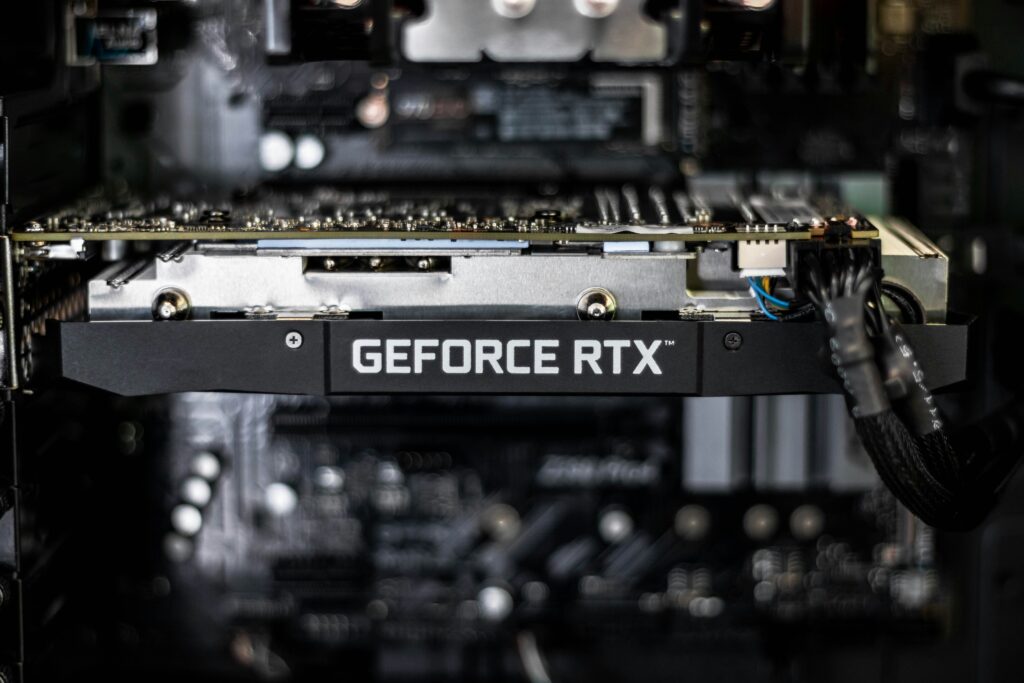
The Dawn of the Blackwell Era
In mid-March 2024, Nvidia officially introduced the Blackwell GPU architecture, a successor to the highly successful Hopper platform. Named after David Harold Blackwell, the first African American inducted into the National Academy of Sciences, this new architecture is purpose-built to handle the complexities of trillion-parameter large language models. The technical engineering behind Blackwell focuses on two primary areas: multi-chip communication efficiency and energy scalability.
Architectural Breakthroughs and Performance Metrics
At the core of the Blackwell B200 GPU lies a 208-billion transistor design, manufactured using a customized 4NP TSMC process. According to The Verge, the architecture introduces a second-generation Transformer Engine that supports double the compute capacity for FP4 precision, effectively allowing for faster model training with significantly reduced latency. This isn’t just an iterative update; it is a fundamental reconfiguration of how data flows between compute clusters.
The Impact on Enterprise Workflows
For organizations operating in the realm of predictive analytics and complex automation, Blackwell offers more than just raw power. The integration of high-bandwidth memory (HBM3e) allows for massive data throughput, which is critical for real-time automating complex enterprise data pipelines. Businesses currently limited by hardware bottlenecks during massive dataset processing will find the Blackwell infrastructure to be a potential game-changer for their operational efficiency.
The Future of Accelerated Computing
Industry analysts anticipate that the rollout of Blackwell-powered systems will force a refresh cycle in global data centers. As energy costs and space limitations become primary constraints for CIOs, the power efficiency gains promised by Blackwell—delivering up to 25 times more efficiency in inference workloads compared to previous iterations—will be the deciding factor for mass adoption. We predict that by 2025, the standard for ‘Enterprise-Grade’ infrastructure will be measured by the ability to support these high-density clusters natively.
Conclusion
While the hardware is undeniably powerful, the true value lies in how companies adapt their software ecosystems to utilize these resources. Investing in the latest hardware is only the first step; the real challenge—and opportunity—is optimizing the alur kerja to ensure that this computing power translates directly into measurable business outcomes.