
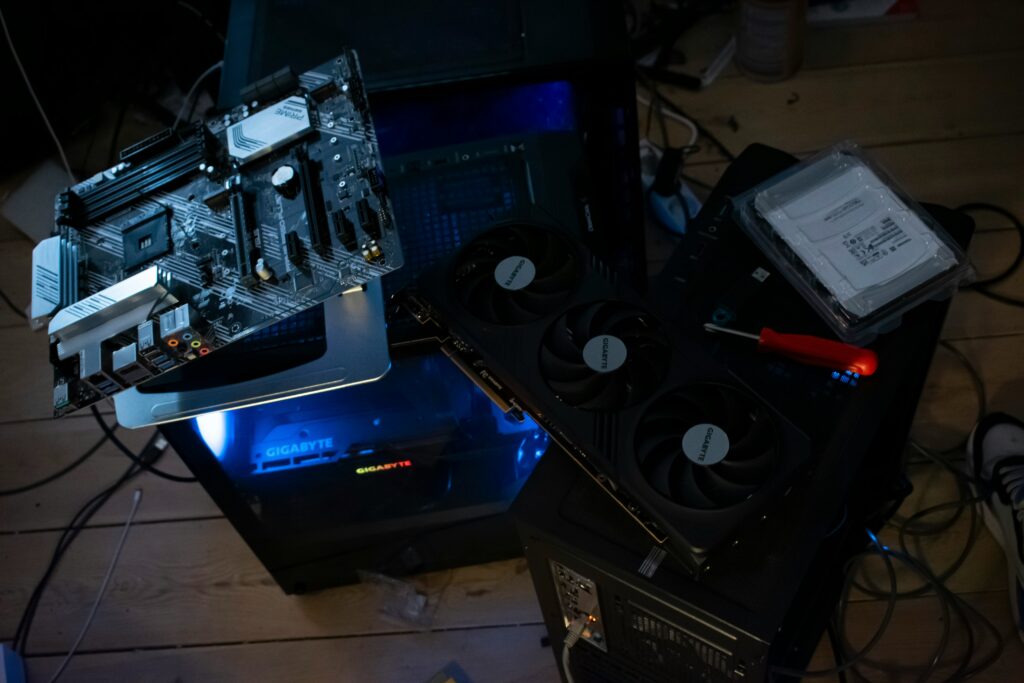
The Dawn of the Blackwell Era
On March 18, 2024, Nvidia officially unveiled the Blackwell architecture, a successor to the highly successful Hopper series. Designed specifically to handle the demands of trillion-parameter large language models, this architecture is not merely an incremental update; it is a fundamental shift in hardware engineering. By integrating two reticle-limited dies into a single chip, Nvidia has effectively created a unified GPU that communicates over a high-speed 10 TB/s interconnect, addressing the primary bottleneck in previous hardware iterations.
Data-Driven Insights and Performance Metrics
According to official reports from The Verge, the B200 GPU chip boasts 208 billion transistors, a staggering figure that underscores the architectural complexity involved. The focus here is on inference performance, which, according to internal Nvidia benchmarks, can be up to 30 times faster than the Hopper architecture for specific LLM workloads. This efficiency is critical for firms currently optimizing their internal workflows through automated infrastructure management.
Industrial Impact and Operational Scalability
The implications for industries ranging from healthcare research to financial modeling are profound. With Blackwell, companies can now train massive models in a fraction of the time, allowing for more iterative experimentation and shorter development lifecycles. Furthermore, the architecture emphasizes ‘sustainable computing,’ utilizing specialized hardware engines to lower the power consumption required for data center operations. This shift is vital for enterprises striving to hit carbon-neutral targets while simultaneously expanding their computational footprint.
Expert Predictions for the Future of Silicon
Industry analysts expect a significant shift in procurement patterns as hyperscalers move to integrate Blackwell-based pods. As we look ahead, the modular nature of this architecture suggests that future upgrades will likely focus on interconnect density rather than just raw clock speed. Experts predict that firms that fail to adapt their underlying server architecture to support these dense power requirements may find themselves at a disadvantage in the race for AI-driven competitive intelligence.
Conclusion
Nvidia’s Blackwell is undeniably a pivotal moment in the hardware landscape. While the initial integration phase will demand significant investment, the potential for streamlined operations and breakthrough insights makes it a necessary evolution for high-performance computing. Businesses must now evaluate their current tech stack to determine how they can best leverage these advancements to stay ahead of the curve.