
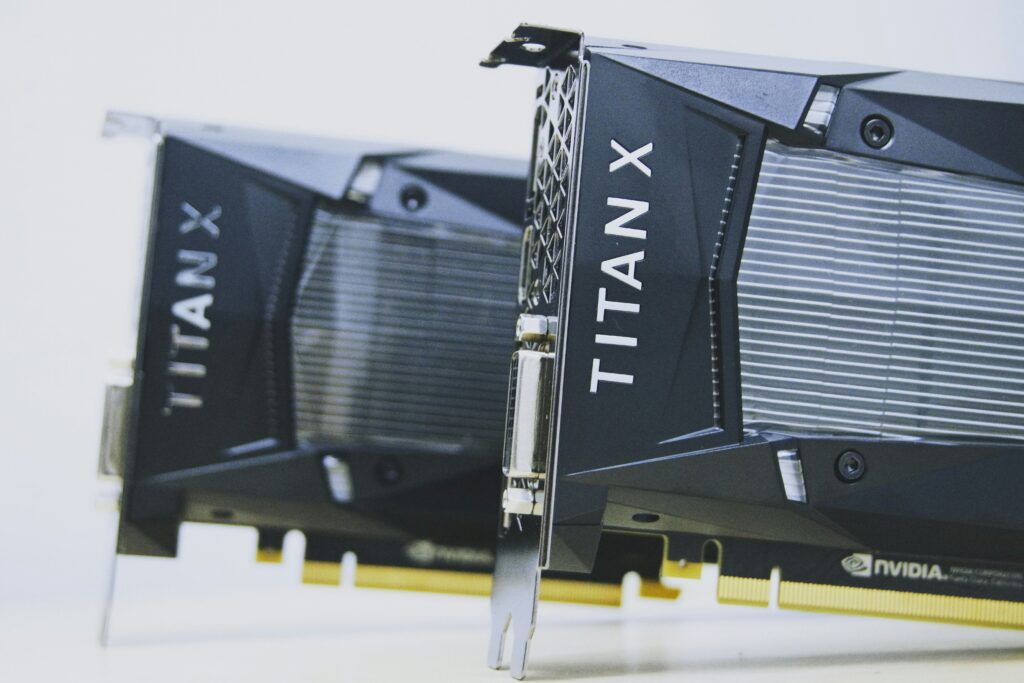
In a period marked by rapid technological advancement, Nvidia has emerged as a quintessential force, redefining the contours of innovation and investment. The company’s recent 10-for-1 stock split, effective June 7, 2024, made headlines globally, not merely as a corporate financial maneuver but as a symbol of its colossal impact on the global economy. This action, following a surge that briefly positioned Nvidia as the world’s most valuable company, ahead of tech giants like Apple and Microsoft, vividly illustrates the profound shift in the technology sector where artificial intelligence reigns supreme.
Nvidia’s ascent is not a fleeting trend but the culmination of decades of strategic foresight, particularly in its commitment to GPU technology. While initially developed for gaming graphics, these powerful processors found their true calling in parallel computing, becoming the indispensable engine for AI workloads. The insatiable demand for Nvidia’s H100 and the eagerly anticipated Blackwell platforms by hyperscale cloud providers and enterprises worldwide underscores a fundamental truth: robust, purpose-built hardware is the bedrock upon which the entire AI ecosystem is being constructed. CEO Jensen Huang’s vision of accelerated computing is no longer a niche concept but a guiding principle for the next industrial revolution, transforming everything from drug discovery to autonomous systems and complex data analytics.
The Unassailable Moat: CUDA and Ecosystem Power
Industry analysts widely acknowledge that Nvidia’s market dominance extends far beyond its cutting-edge hardware. A critical component of its nearly unassailable position is the CUDA (Compute Unified Device Architecture) platform. This proprietary software layer provides developers with the tools and libraries needed to program Nvidia GPUs efficiently. Over two decades in the making, CUDA has fostered a vibrant and extensive ecosystem of developers, researchers, and applications, making it incredibly challenging for competitors to replicate. The network effect created by CUDA means that migrating to alternative hardware often entails significant re-tooling, code rewriting, and retraining, presenting a substantial barrier to entry for rivals like AMD and Intel.
Moreover, Nvidia’s integrated approach, combining hardware, software, and networking solutions, creates a cohesive and optimized stack that delivers unparalleled performance for AI training and inference. Major cloud providers — Amazon Web Services, Microsoft Azure, Google Cloud Platform, and Oracle Cloud Infrastructure — are all heavily invested in Nvidia’s infrastructure, deploying thousands of its GPUs to power their AI services. This reliance is not just about raw processing power; it’s about the entire software stack that enables developers to harness that power effectively, from low-level drivers to high-level AI frameworks. The sheer scale of investment into Nvidia’s technology by these foundational internet companies provides compelling evidence of its indispensability in the current AI landscape.
Transformative Impact on Industries and Businesses
The ripple effects of Nvidia’s AI market dominance are profoundly felt across various industries, fundamentally altering business strategies and technological roadmaps. For enterprises, the rise of AI, powered by Nvidia’s technology, signifies both immense opportunity and pressing challenges. Companies are now under immense pressure to integrate AI into their operations, from enhancing customer service with AI chatbots to optimizing supply chains with predictive analytics and accelerating research with advanced simulations. This surge in demand for AI capabilities translates directly into a critical need for expert guidance in implementation and strategy.
Consulting firms, particularly those specializing in technology and workflow automation like ByteTechScope, play a pivotal role in this new era. We help organizations navigate the complexities of AI adoption, from assessing their current infrastructure to designing scalable AI solutions and ensuring seamless integration with existing workflows. The focus is no longer just on procuring hardware but on strategically leveraging the entire Nvidia ecosystem to drive meaningful business outcomes. Optimizing Workflows with Advanced Technology for Enterprise AI is becoming a core competency for any forward-thinking business.
For Nvidia’s competitors, the challenge is formidable. While AMD and Intel are aggressively developing their own AI accelerators and software stacks, closing the gap with Nvidia’s mature ecosystem and market share is an uphill battle. This competition, however, is beneficial for the industry, spurring innovation and potentially leading to more diverse and cost-effective solutions in the long run. Startups, on the other hand, find themselves in a unique position. Many are building their AI applications directly on Nvidia’s platforms, capitalizing on the robust tooling and performance. Yet, they also face challenges in securing access to limited GPU supplies and competing for top-tier AI talent proficient in these specialized technologies.
Future Trajectories and Expert Outlook
Looking ahead, the sustainability of Nvidia’s market lead is a frequent topic of debate among industry experts. While the CUDA ecosystem provides a strong moat, the rapid evolution of AI technology means that no position is entirely invulnerable. We can anticipate increased investment in open-source AI hardware and software alternatives, which could democratize access to powerful AI capabilities and potentially reduce reliance on a single vendor. Companies like Google with its TPUs and Amazon with its Inferentia chips illustrate a trend toward custom silicon tailored for specific AI workloads, offering alternatives to general-purpose GPUs.
Expert opinions suggest that while Nvidia will likely maintain a significant lead in the immediate future, the market will become more diversified. The next generation of AI hardware may move beyond traditional GPUs to include more specialized Application-Specific Integrated Circuits (ASICs), neuromorphic chips designed to mimic the human brain, and more powerful edge AI solutions that bring processing closer to the data source. These developments could address unique challenges such as power efficiency, latency, and data privacy, opening new avenues for innovation.
Moreover, the geopolitical landscape, supply chain resilience, and regulatory considerations will increasingly influence the semiconductor industry. The concentration of AI power in a few hands also raises ethical questions about access, control, and the responsible development of artificial intelligence. Nvidia’s continued success will depend not only on its technological prowess but also on its ability to navigate these complex macro-environmental factors, adapt to emerging trends, and continue fostering an open, collaborative ecosystem.
Conclusion: Navigating the AI Frontier with Strategic Partnerships
Nvidia’s remarkable journey, epitomized by its recent financial milestones and technological breakthroughs, underscores a critical inflection point in the tech world. The company is not merely selling chips; it is providing the foundational infrastructure for the future of AI, driving unprecedented innovation and economic growth. As businesses globally race to harness the power of artificial intelligence, understanding the dynamics of Nvidia’s market dominance and its broader implications is paramount.
The path forward for enterprises involves strategic planning, informed decision-making, and often, collaboration with expert partners. Leveraging advanced technologies for workflow automation and business transformation requires a deep understanding of the ecosystem, careful implementation, and a clear vision for how AI can deliver sustainable competitive advantage. Nvidia’s story is a powerful reminder that in the fast-paced world of tech, staying ahead means continuously embracing innovation and adapting to the forces shaping tomorrow.
For further insights into the global financial and tech markets, consider resources like Bloomberg Technology, which consistently provides in-depth analysis of companies like Nvidia and their impact on the industry.