
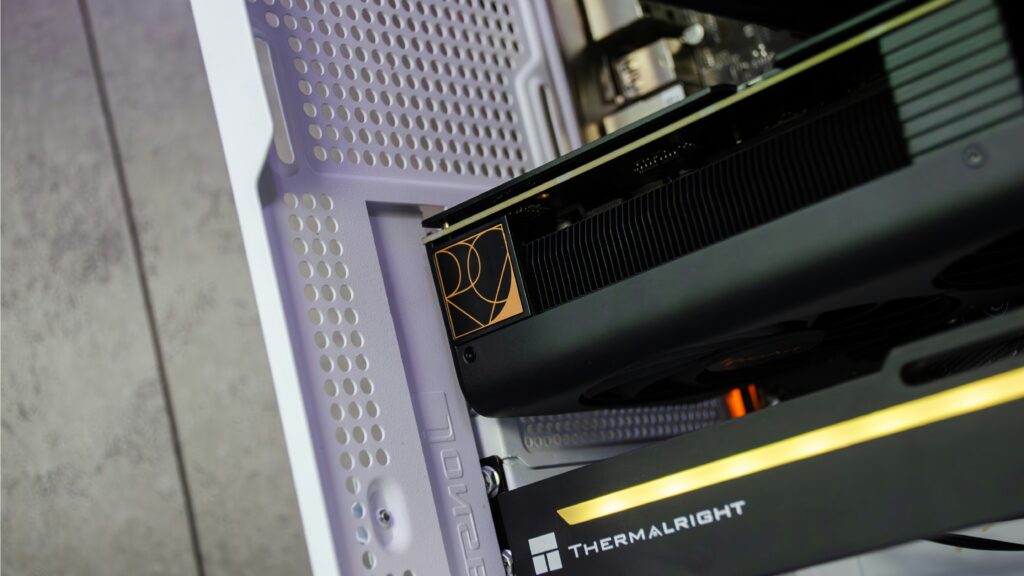
Speculation is rampant regarding NVIDIA’s forthcoming GPU architecture, widely believed to be codenamed “Blackwell.” Following the success of the “Lovelace” architecture found in the RTX 40 series, Blackwell is expected to deliver monumental performance uplifts. Industry whispers suggest significant advancements in core counts, vastly improved clock speeds, and revolutionary memory bandwidth configurations, potentially leveraging next-generation GDDR7 memory. These enhancements are not merely incremental; they represent a fundamental redesign aimed at pushing the limits of what’s possible in real-time rendering and complex data processing. Early reports indicate that these GPUs will feature a denser transistor count, leading to more processing units packed into smaller, more efficient dies.
A key focus for these next-gen NVIDIA GPUs will undoubtedly be an even deeper integration of AI acceleration features. While current generations already boast Tensor Cores for AI tasks, Blackwell is anticipated to dramatically expand these capabilities, making AI a more central component of the GPU’s functionality, even for consumer-grade cards. This isn’t just about faster AI inference; it’s about enabling a new class of applications that blend traditional graphics with intelligent processing. Furthermore, NVIDIA’s commitment to energy efficiency remains paramount. Despite the promised performance gains, innovations in manufacturing processes and power management will aim to keep power consumption in check, a critical factor for both consumer devices and massive data center deployments.
Industry Impact: Revolutionizing Gaming, AI, and Enterprise Computing
Gaming Unleashed: Hyper-Realism and Beyond
For gamers, the arrival of next-gen NVIDIA GPUs promises a new era of visual fidelity and immersion. These cards will push the boundaries of ray tracing and path tracing, delivering hyper-realistic lighting, shadows, and reflections that blur the line between virtual and reality. Expect to run future-generation games at higher resolutions—think 4K and even 8K—with unprecedented frame rates, all while maintaining breathtaking graphical detail. Advances in NVIDIA’s Deep Learning Super Sampling (DLSS) technology will likely accompany these new GPUs, utilizing AI to upscale images with incredible precision, providing a performance boost without sacrificing visual quality. This synergy of raw power and intelligent upscaling will ensure smooth gameplay even in the most graphically demanding titles, setting a new benchmark for interactive entertainment.
Accelerating AI and Data Centers: Unlocking New Frontiers
Beyond gaming, the profound impact of these GPUs will resonate deeply within the AI and data center landscapes. Hyperscale data centers and research institutions are eagerly awaiting these new units to power the next generation of large language models (LLMs), complex machine learning algorithms, and deep learning neural networks. The expected increase in Tensor Core performance and memory bandwidth will drastically reduce training times for massive AI models, enabling faster innovation and discovery across scientific research, medical imaging, and climate modeling. Furthermore, the automotive industry will leverage these powerful processors for the development and deployment of autonomous vehicle systems, processing vast amounts of sensor data in real-time to ensure safety and reliability. These GPUs are not just processors; they are engines for scientific and technological advancement.
Professional Visualization and Creative Workflows Transformed
Content creators, engineers, and designers stand to gain immensely from the power of next-gen NVIDIA GPUs. Tasks that currently take hours, such as complex 3D rendering, high-resolution video editing, and intricate simulations, will see dramatic speed improvements. This acceleration allows professionals to iterate more quickly, tackle more ambitious projects, and achieve higher fidelity in their creations. From architectural visualization to special effects in film and television, these GPUs will unlock new levels of productivity and artistic freedom. The ability to render massive scenes and intricate models in real-time will revolutionize design pipelines, providing immediate feedback and fostering unprecedented levels of creativity across various industries. For more on how powerful hardware drives advancements in digital experiences, explore our article on The Evolution of Gaming Hardware.
Expert Outlook and Future Predictions
Industry analysts, such as those from Jon Peddie Research and Gartner, predict that NVIDIA will continue to dominate the high-end GPU market with these forthcoming releases. Their continuous investment in cutting-edge R&D and strategic positioning in key growth sectors like AI and data centers ensures a sustained leadership role. Experts anticipate that the sheer performance leap will not only entice upgrades from existing users but also expand the market by making previously unattainable computational tasks accessible. Pricing strategies will be crucial, balancing cutting-edge technology with market accessibility, though high demand is expected to persist. According to recent reports, The Verge highlights NVIDIA’s relentless pursuit of performance and efficiency as a key differentiator, indicating their long-term vision for hardware dominance.
The Road Ahead for Hardware Innovation
In conclusion, the impending launch of next-gen NVIDIA GPUs is far more than a typical product refresh; it represents a pivotal moment in hardware innovation. These powerful new units will not only enhance current computing capabilities but also pave the way for entirely new applications and industries. By delivering unprecedented performance, efficiency, and AI acceleration, they are set to influence technological development for years to come. From immersive gaming worlds to groundbreaking scientific discoveries and the backbone of enterprise computing, NVIDIA’s next generation of graphics processors will truly drive the future of digital and automated workflows. The future of computing is about to get a lot faster, smarter, and more vibrant.