
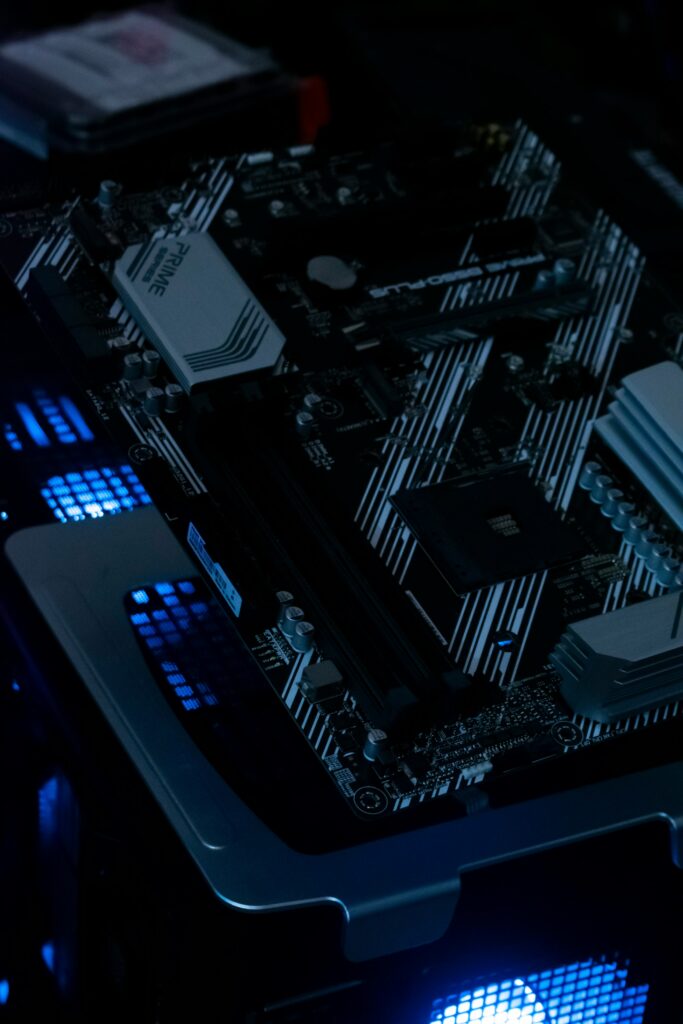
The Dawn of Dedicated AI Processing in PCs
The landscape of personal computers is undergoing a radical change, driven by the integration of powerful Neural Processing Units (NPUs). These specialized co-processors are designed to handle AI and machine learning workloads directly on the device, rather than relying solely on cloud computing. This architectural shift marks a pivotal moment, with major industry players like Intel, AMD, and Qualcomm rapidly rolling out new chips that heavily feature these dedicated AI engines.
Recent announcements, particularly from major tech events like Computex 2024, have highlighted this trend. Intel’s latest Lunar Lake and Core Ultra processors, AMD’s Ryzen AI series, and Qualcomm’s Snapdragon X Elite are all prominently featuring significantly enhanced NPU capabilities. These advancements are not just incremental; they represent a fundamental re-imagining of what a personal computer can do, setting the stage for a new era of ‘AI PCs’ that can perform complex AI tasks with remarkable speed and efficiency.
Performance Benchmarks and Industry Backing
The push for dedicated NPUs is backed by impressive performance figures and strong industry consensus. Modern NPUs are capable of delivering tens of trillions of operations per second (TOPS), a metric that signifies their raw processing power for AI tasks. For instance, chips like the Snapdragon X Elite boast over 45 TOPS, significantly outpacing previous generations and even some cloud-based solutions for specific workloads. Microsoft, a key partner in this revolution, has set a benchmark of 40 TOPS for its new ‘Copilot+ PCs’ designation, signaling a clear commitment to on-device AI as a standard feature.
Market research firm Canalys predicts a massive surge in AI PC shipments, expecting them to account for 60% of total PC shipments by 2027. This data underscores the rapid adoption and strategic importance of NPUs. Executives from leading silicon manufacturers have also emphasized the importance of this shift. Pat Gelsinger, CEO of Intel, has frequently spoken about the ‘AI Everywhere’ strategy, with the NPU being central to delivering AI experiences directly to users. Likewise, AMD’s Dr. Lisa Su has highlighted the transformative potential of Ryzen AI in enhancing productivity and creativity on personal devices.
Transformative Impact on Users and Industry
The integration of powerful NPUs into **AI PC hardware** will have far-reaching implications for both end-users and the broader technology industry. For users, the benefits are immediate and substantial. Tasks like real-time language translation, advanced video editing, background blur, noise suppression during video calls, and even generative AI functions (e.g., image generation from text prompts) will become faster, more seamless, and more energy-efficient. Crucially, by processing AI tasks on the device, privacy is inherently enhanced, as sensitive data doesn’t need to be sent to the cloud.
For the industry, the NPU revolution is fostering a new wave of innovation. Software developers are now empowered to create more sophisticated AI-powered applications that leverage the local processing power, leading to a richer ecosystem of tools and services. This also drives competition and collaboration among hardware manufacturers, pushing the boundaries of what’s possible in chip design and thermal management. Furthermore, the rise of AI PCs is expected to stimulate demand for new peripherals and form factors optimized for AI workloads, potentially reshaping the entire personal computing market as explored in the evolution of PC processors.
The Future of Computing: Predictions and Expert Opinions
Experts widely agree that NPUs will become an indispensable component of future computing. Many predict that within the next few years, every new mainstream PC will feature a dedicated NPU, making on-device AI capabilities as standard as a graphics processing unit (GPU) is today. This shift could lead to a decentralization of AI processing, reducing reliance on massive data centers for everyday tasks and potentially lowering carbon footprints associated with cloud computing.
However, challenges remain. Ensuring software compatibility and encouraging developer adoption of NPU-specific APIs are crucial hurdles. As The Verge’s report on Copilot+ PCs suggests, the user experience will heavily depend on how effectively software can harness the NPU’s power. Opinions also vary on whether NPUs will eventually converge with GPUs or remain distinct entities, though the current trend points towards complementary roles, with NPUs handling lighter, continuous AI tasks and GPUs tackling heavier, parallel processing workloads.
In conclusion, the NPU is not just another chip; it’s a fundamental shift that is redefining the capabilities of personal computing. As **AI PC hardware** evolves, it promises a future where intelligent, personalized, and private AI experiences are standard, profoundly impacting how we work, create, and interact with our devices.