
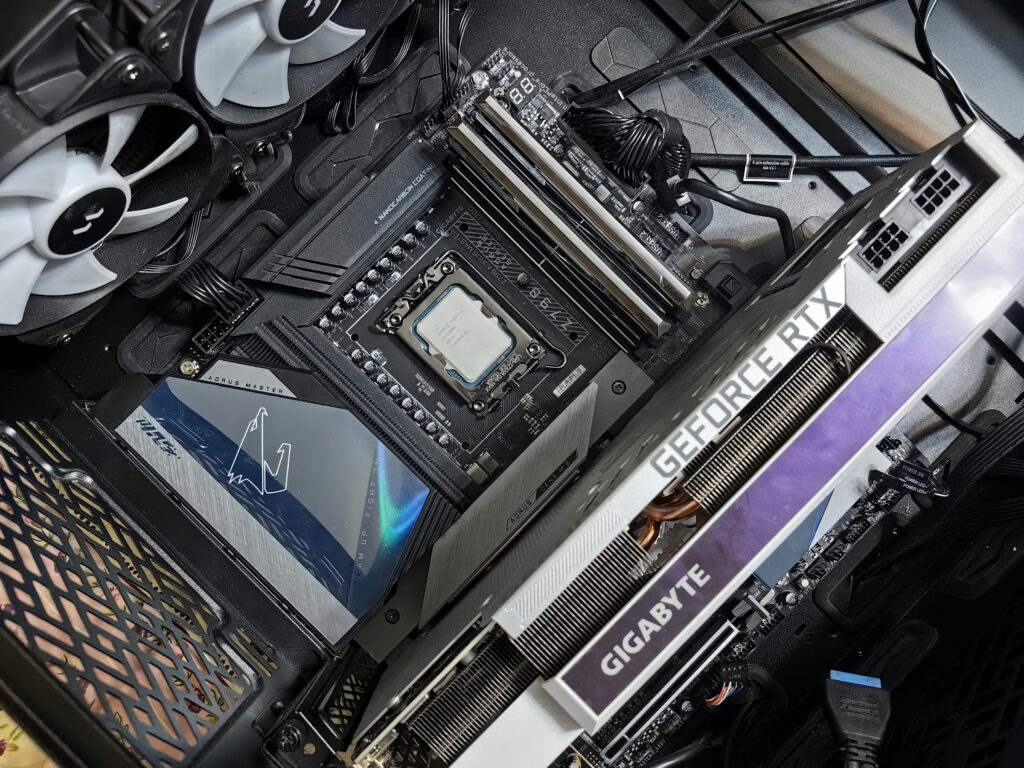
The excitement surrounding the **NVIDIA RTX 50 Series** has reached a fever pitch, with an ever-growing stream of rumors and speculative leaks dominating tech headlines. While NVIDIA has yet to make any official announcements regarding its next-gen consumer GPUs, the consensus among industry insiders points towards the “Blackwell” architecture, which has already been revealed for data center and AI accelerators (like the B200 and GB200). It’s widely expected that consumer variants derived from this powerful architecture will begin to emerge in late 2024 or early 2025. These new cards are predicted to offer significant generational performance gains, with some reports suggesting an uplift of 50-70% over the current Ada Lovelace (RTX 40 series) lineup, particularly in ray tracing and AI-accelerated tasks.
Key specifications rumored to be part of the RTX 50 series include an upgraded memory interface, with top-tier models potentially boasting a 512-bit memory bus – a substantial increase from the RTX 4090’s 384-bit bus. This would facilitate much higher memory bandwidth, crucial for handling increasingly demanding textures and complex scenes in high-resolution gaming and professional applications. Analyst firms like Jon Peddie Research have often highlighted the relentless pace of GPU innovation, emphasizing that each new generation aims not just for raw power but also for improved power efficiency and new feature sets. The integration of advanced manufacturing processes, likely TSMC’s 3nm or 4nm nodes, will be instrumental in achieving these performance and efficiency targets, allowing for more transistors and higher clock speeds within similar or improved power envelopes. Competitor moves, particularly from AMD’s RDNA 4 architecture, will also influence NVIDIA’s final product stack and pricing strategies, ensuring a dynamic market.
The Game-Changing Impact on Gaming and Beyond
The arrival of the **NVIDIA RTX 50 Series** will undoubtedly send ripples across multiple industries, with PC gaming at the forefront. Gamers can anticipate unprecedented levels of visual fidelity, enabling smoother gameplay at 4K and even 8K resolutions with all graphical settings maxed out, including complex ray tracing effects. Technologies like NVIDIA’s Deep Learning Super Sampling (DLSS) are expected to see further enhancements, potentially leveraging even more advanced AI cores on the Blackwell architecture to deliver superior upscaling and frame generation, making high frame rates achievable on a wider range of hardware configurations. This means more immersive and realistic gaming experiences, pushing the boundaries of what virtual worlds can offer.
Beyond gaming, the impact on content creation and professional workflows will be profound. Video editors, 3D artists, architects, and designers will benefit from dramatically accelerated rendering times, faster simulations, and more responsive real-time previews. The enhanced computational horsepower will streamline complex tasks, reducing project turnaround times and fostering greater creative freedom. Furthermore, the growing trend of local AI applications on consumer PCs – from generative art tools like Stable Diffusion to running lightweight large language models (LLMs) – will receive a substantial boost. The RTX 50 series will make these powerful AI capabilities more accessible and efficient for everyday users, opening up new possibilities for personal computing and automation. For a deeper dive into how cutting-edge hardware impacts modern workflows, you can explore articles like Powering Your Workflow with the Latest Tech on ByteTechScope.
Expert Predictions and What the Future Holds
Industry pundits and hardware reviewers are already weighing in on the potential trajectory of the **NVIDIA RTX 50 Series**. Many expect NVIDIA to continue its strategy of segmenting the market with a clear performance hierarchy, from flagship cards to more budget-friendly options, though the initial launch will likely focus on the high-end. Pricing, as always, remains a key speculation point. Given the technological advancements and manufacturing costs, a premium pricing strategy for the top-tier cards is anticipated, but competitive pressures from AMD could lead to more aggressive pricing in other segments. Analysts like those cited by The Verge’s tech news often suggest that GPU generations are now delivering increasingly refined rather than purely revolutionary gains, but Blackwell is shaping up to challenge that notion with its significant architectural overhaul.
The long-term future looks bright for PC hardware. The RTX 50 series is not just about raw power; it’s about setting a new foundation for future innovations. We can expect further integration of specialized processing units for AI and ray tracing, making these once-niche features central to the computing experience. This could also drive further advancements in VR/AR, cloud gaming, and even scientific research conducted on consumer-grade hardware. The continuous push for better performance and efficiency ensures that the gap between digital imagination and rendered reality shrinks with each new generation. The RTX 50 series represents a pivotal moment, promising to redefine what we expect from our personal computers.
In conclusion, while official details are still under wraps, the **NVIDIA RTX 50 Series** is poised to be a landmark release in the world of PC hardware. From rumors of unprecedented performance to the potential for transformative impacts on gaming and creative industries, the next generation of NVIDIA GPUs is generating immense excitement. Keep an eye on ByteTechScope for all the breaking news and in-depth analysis as more information becomes available.