
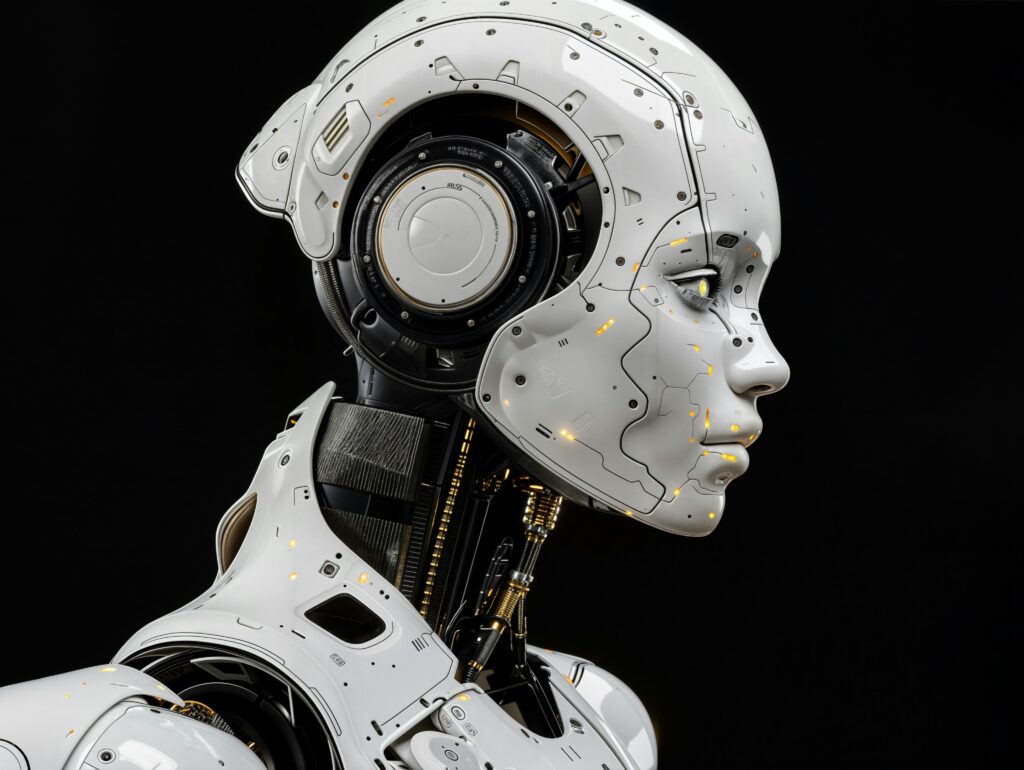
The New Frontier: Generative AI’s Impact on Research
The landscape of scientific exploration is undergoing a profound transformation, spearheaded by the remarkable capabilities of Generative AI. No longer confined to generating realistic images or text, these intelligent systems are now actively participating in the discovery process, fundamentally altering how breakthroughs are made across various scientific disciplines. From designing novel drug candidates to engineering materials with bespoke properties, Generative AI offers an unparalleled ability to explore vast solution spaces and identify promising avenues that traditional methods might miss.
In recent years, we’ve seen a surge in applications where AI models can predict molecular interactions, synthesize new chemical compounds, and even propose experimental designs. This shift is not just about automation; it’s about augmentation, empowering researchers with tools that can accelerate iterative processes and uncover non-obvious correlations. Major pharmaceutical companies and leading research institutions are now investing heavily in these AI-driven platforms, recognizing their potential to drastically cut down research and development timelines and costs.
Accelerating Drug Discovery and Material Science
Drug Discovery: A Race Against Time Accelerated by AI
One of the most impactful applications of Generative AI in science is in drug discovery. The traditional process of identifying, synthesizing, and testing new drugs is notoriously long, expensive, and often plagued by high failure rates. Generative AI models can significantly shorten this cycle by designing new molecular structures with desired therapeutic properties from scratch. They can predict how these molecules will interact with biological targets, screen millions of potential compounds virtually, and optimize lead candidates for efficacy and safety. Companies like Insilico Medicine, for instance, have demonstrated the ability to discover novel drug candidates and advance them to preclinical trials in record time, showcasing the technology’s transformative power. This accelerated pace means new treatments for diseases could reach patients much faster than ever before. For further insights into how AI is redefining healthcare, check out our article on AI’s Role in Next-Gen Healthcare.
Material Science: Engineering the Future, Atom by Atom
Beyond medicine, Generative AI is revolutionizing material science. Researchers are leveraging these systems to design new materials with specific properties, such as enhanced strength, conductivity, or catalytic activity. By learning from vast datasets of existing materials and their characteristics, AI models can propose novel atomic arrangements and compositions that have never been created. This capability is crucial for advancements in renewable energy (e.g., new battery materials, efficient catalysts), aerospace (e.g., lighter, stronger alloys), and electronics (e.g., superior semiconductors). The ability to simulate and predict material behavior before costly synthesis in the lab represents a paradigm shift, enabling unprecedented innovation in various industrial sectors.
Data-Driven Insights and Expert Predictions
A report by MIT Technology Review highlighted that AI-driven drug discovery pipelines are, on average, 2-3 times faster in early-stage development compared to traditional methods. Furthermore, expert opinions from leading scientists, like those presented at the recent AI in Science Summit (held in Q3 2023), consistently emphasize that the true potential of Generative AI lies not just in speed, but in its capacity to uncover entirely new scientific principles and solutions. They predict that within the next decade, AI will become an indispensable co-pilot for every researcher, much like computing became fundamental in the late 20th century. The sheer volume of data being generated in scientific fields makes AI not just useful, but necessary, to extract meaningful insights and drive discovery.
However, alongside this immense promise, challenges remain, particularly regarding data quality, interpretability of AI models, and ethical considerations. Ensuring that AI-generated discoveries are robust, reproducible, and bias-free is paramount. Future developments will likely focus on creating more transparent “explainable AI” (XAI) systems and integrating human expertise more seamlessly into the AI-driven discovery loop.
The Game-Changing Impact on Industries
The implications of Generative AI for industries are profound and far-reaching. Companies that embrace these intelligent systems will gain a significant competitive edge, capable of bringing innovative products and services to market faster and more efficiently. For the pharmaceutical industry, this means a faster pipeline of life-saving drugs. For materials engineering, it translates to stronger, lighter, and more sustainable products. Ultimately, Generative AI is not just a tool; it’s a catalyst for innovation that will reshape entire economies, fostering a new era of scientific and technological progress.
Conclusion
Generative AI stands as a true game-changer in scientific discovery. By empowering researchers to design, predict, and innovate at unprecedented scales, it is ushering in an era of rapid advancements in medicine, materials, and beyond. As these intelligent systems continue to evolve, the boundaries of what is scientifically possible will undoubtedly expand, promising a future filled with transformative breakthroughs driven by the synergy of human ingenuity and artificial intelligence.