
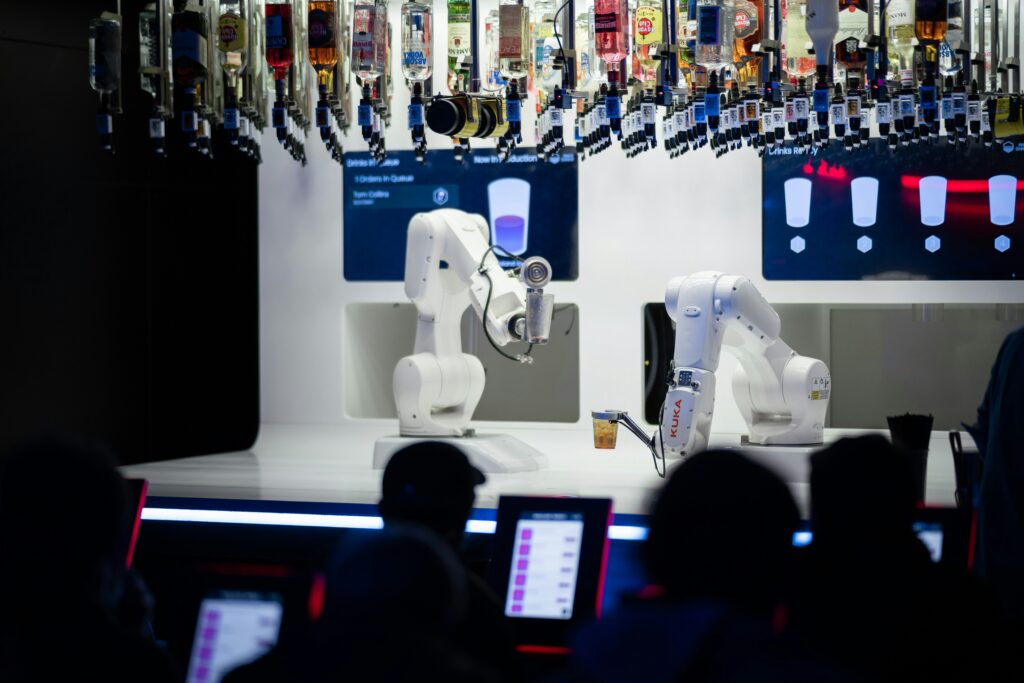
In recent years, Artificial Intelligence has steadily advanced, but the latest wave of innovation brings forth something truly groundbreaking: autonomous AI agents. Unlike traditional AI, which typically performs predefined tasks or requires human prompts, autonomous agents are designed to operate independently, understand goals, break them down into actionable steps, and even self-correct. This marks a significant leap, shifting from passive tools to active, intelligent collaborators within enterprise environments.
The concept, though rooted in earlier research, has gained significant traction with breakthroughs in large language models and reinforcement learning. Recent developments, particularly in late 2023 and early 2024, have seen several tech giants and startups unveil more capable autonomous systems. For example, Google DeepMind’s advancements in AI agents capable of complex problem-solving and task execution, or Microsoft’s integration of AI copilot features that move beyond simple suggestions to active task management, underscore this trend. Industry reports, such as those from Gartner, predict that by 2025, over 30% of new enterprise applications will incorporate autonomous AI capabilities, up from less than 5% in 2023. This rapid adoption is fueled by the promise of unprecedented operational efficiency and strategic advantages.
The impact of autonomous AI across various industries is already becoming evident. In **customer service**, AI agents are evolving from chatbots that handle FAQs to sophisticated virtual assistants that can proactively resolve complex customer issues, personalize interactions, and even initiate follow-ups, drastically improving customer satisfaction and reducing operational costs. For instance, companies like KLM have experimented with AI to manage flight rebookings and compensation claims autonomously.
In **software development**, autonomous AI is transforming the entire lifecycle. AI agents can now assist in writing code, identifying and debugging errors, generating comprehensive test cases, and even proposing architectural improvements. This not only accelerates development cycles but also frees up human developers to focus on more complex, creative problem-solving. Startups like Cognition AI, with their ‘Devin’ AI software engineer, are demonstrating the potential for AI to autonomously complete engineering tasks.
The **manufacturing and supply chain sectors** are also seeing radical changes. Autonomous AI systems are optimizing inventory management, predicting equipment failures before they occur (predictive maintenance), and orchestrating complex logistics networks with minimal human intervention. They can analyze vast datasets from sensors, adjust production schedules in real-time based on demand fluctuations, and manage global supply chain disruptions more effectively than human teams alone. TechCrunch has recently highlighted the surge in funding for autonomous supply chain AI solutions, indicating strong investor confidence.
Even in **healthcare**, autonomous AI is making strides. Beyond aiding in diagnostics and drug discovery, AI agents are being developed to manage patient data, personalize treatment plans, and even assist in robotic surgeries with enhanced precision. The ethical considerations are profound, but the potential for improving patient outcomes and streamlining administrative tasks is immense.
Looking ahead, experts predict a future where human-AI collaboration becomes seamless and indispensable. Dr. Fei-Fei Li, a leading AI researcher, envisions a future where AI acts as an ‘intelligence amplifier,’ extending human capabilities rather than replacing them entirely. The rise of ‘AI-driven enterprises’ will necessitate new skill sets for the human workforce, focusing on AI governance, oversight, and strategic integration. However, challenges remain, including ensuring ethical AI deployment, managing data privacy, and navigating the complexities of regulatory frameworks. The balance between autonomy and human control will be a critical ongoing debate. For more on optimizing AI within your enterprise, explore our insights on The Future of Enterprise AI Solutions.
In conclusion, autonomous AI is not just another technological trend; it’s a fundamental shift in how businesses operate. By enabling systems to act, learn, and adapt independently, these intelligent agents are unlocking new levels of efficiency, fostering innovation, and preparing industries for a future defined by smart, adaptive operations. Companies that strategically adopt and integrate autonomous AI will be best positioned to thrive in this evolving technological landscape, staying ahead of the curve and creating unprecedented value.