
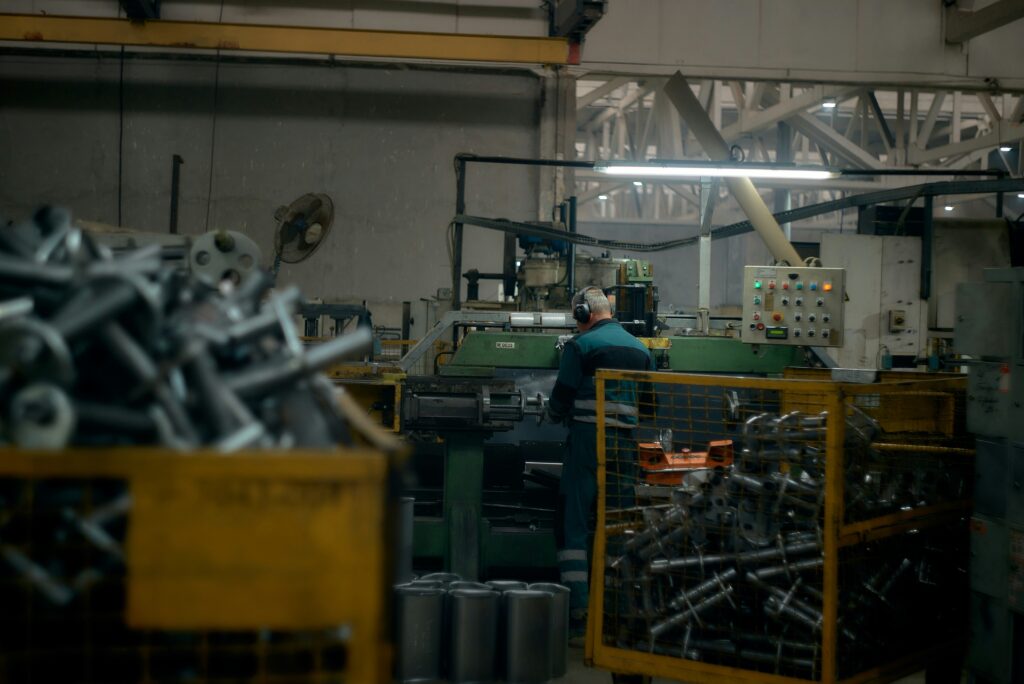
The Dawn of Intelligent Manufacturing
A recent report by the World Economic Forum, corroborated by findings from major tech research firms, indicates a rapid acceleration in AI adoption within manufacturing. Leading global manufacturers are actively deploying intelligent automation solutions, leveraging advanced machine learning algorithms for tasks ranging from intricate assembly to real-time quality assurance. For instance, companies like Siemens and Bosch have announced significant investments in AI-driven smart factories, showcasing a shift towards hyper-connected and self-optimizing production environments. This surge isn’t merely about automating repetitive tasks; it’s about building cognitive systems that can learn, adapt, and make autonomous decisions on the factory floor. The move towards Industry 4.0 is intrinsically linked with the maturation of AI, which acts as the brain behind the operational brawn.
Driving Efficiency and Innovation with AI
The strategic imperative for adopting intelligent systems is underscored by tangible gains. Industry analysts predict that AI will boost manufacturing productivity by 30% to 50% over the next decade. A study published by McKinsey & Company highlights that early adopters of AI in manufacturing have already seen a 15-20% reduction in operational costs and a 10-12% improvement in product quality. Dr. Anya Sharma, a leading AI ethicist and industrial automation consultant, notes, "The integration of AI isn’t just a technological upgrade; it’s a strategic imperative that redefines competitive advantage. Businesses that fail to embrace these intelligent systems risk being left behind in a rapidly evolving global market." This trend is also highlighted in a recent report by TechCrunch on the new era of production.
Revolutionizing Operations: From Predictive Maintenance to Quality Control
The impact of intelligent systems extends across multiple facets of the manufacturing value chain. For industries, it translates into unparalleled operational efficiency. Predictive maintenance, powered by machine learning, can foresee equipment failures before they occur, drastically reducing downtime and maintenance costs. AI-driven quality control systems can detect microscopic defects faster and more accurately than human eyes, ensuring higher product standards and reducing waste. Furthermore, AI enables hyper-customization, allowing manufacturers to produce bespoke products at scale, catering to individual customer preferences with agility previously unimaginable. From a workforce perspective, while concerns about job displacement persist, AI is also creating new roles requiring advanced analytical and oversight skills, shifting the human element towards higher-value activities. This paradigm shift can be observed in various sectors, from automotive production where AI optimizes robotic assembly to electronics manufacturing where intelligent vision systems ensure defect-free components. The ripple effect ultimately benefits the end-user through more reliable, higher-quality products and, often, more competitive pricing.
For more insights into AI trends, check out our article on The Evolution of AI in Enterprise Solutions.
The Future Horizon: Digital Twins and Edge AI
Looking ahead, the evolution of AI in manufacturing promises even more sophisticated integration. We can anticipate the widespread adoption of digital twins, where virtual models of factory floors are used for real-time simulation and optimization, powered by AI. Edge AI will become crucial, processing data closer to the source to enable faster, more secure decision-making without relying solely on cloud infrastructure. However, this transformative journey is not without its challenges. Data security, ethical deployment of autonomous systems, and the imperative for workforce upskilling remain critical considerations. Experts like Dr. David Chen, head of AI research at a major industrial conglomerate, foresee a future where "factories will operate with a collective intelligence, constantly learning and adapting, making real-time decisions that optimize for both efficiency and sustainability. The true game-changer will be the seamless collaboration between human ingenuity and artificial intelligence, fostering unprecedented levels of innovation."
Conclusion: A Smarter Industrial Age
The integration of AI into manufacturing is more than just a technological upgrade; it’s a fundamental recalibration of industrial potential. Intelligent systems are not merely augmenting human capabilities but are redefining the very essence of production, creating factories that are smarter, more efficient, and more adaptable than ever before. As this revolution continues to unfold, industries worldwide are poised for a future of innovation and growth, driven by the limitless possibilities of AI.