
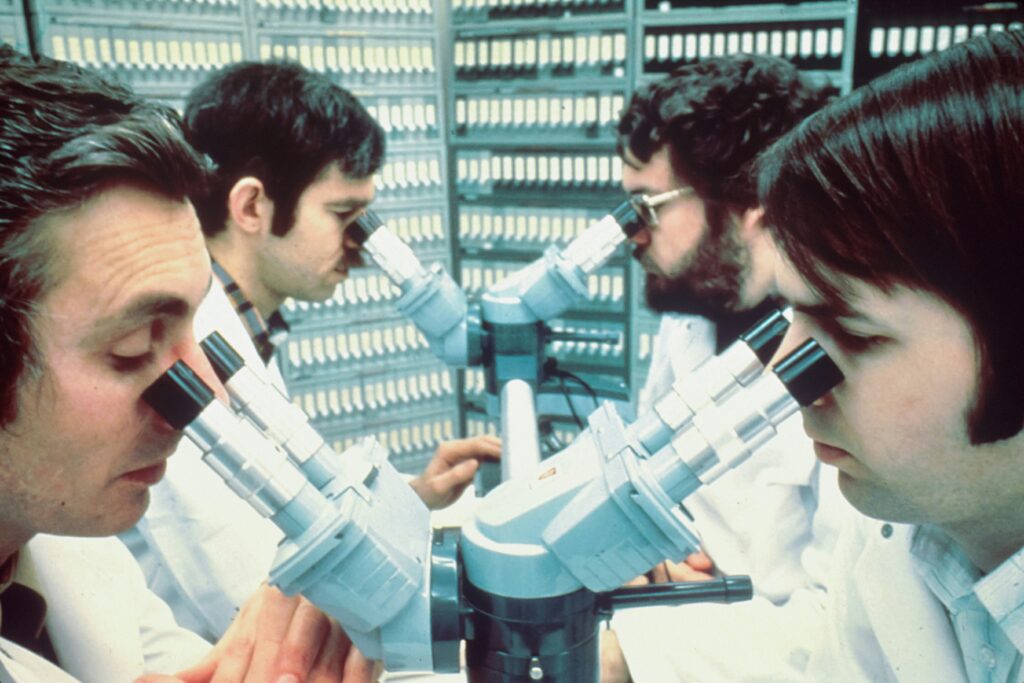
The pharmaceutical industry, historically known for its lengthy and costly research and development cycles, is undergoing a profound transformation. At the heart of this revolution is artificial intelligence (AI), which is rapidly changing how drugs are discovered, developed, and ultimately delivered to patients. Intelligent systems are not just assisting scientists; they are fundamentally altering the speed, precision, and potential of drug discovery, promising a healthier future.
The Dawn of a New Era in Pharmaceutical R&D
Recent breakthroughs in AI have unlocked unprecedented capabilities for drug discovery. One of the most significant advancements came in May 2024 with the unveiling of DeepMind’s AlphaFold 3. This revolutionary model can accurately predict the structure of proteins, DNA, RNA, and ligands, and how they interact – a critical step in understanding disease mechanisms and designing new drugs. Prior to this, predicting complex molecular interactions was a monumental challenge, often taking years of experimental work.
Beyond structural prediction, generative AI is now being employed to design novel chemical compounds from scratch, rather than merely screening existing libraries. Algorithms can explore vast chemical spaces to identify potential drug candidates with desired properties, drastically shortening the early-stage discovery process. Machine learning models are also excelling at target identification, pinpointing specific molecules or pathways that contribute to disease, and optimizing lead compounds to improve efficacy and reduce toxicity.
Quantifying AI’s Impact: Speed, Cost, and Success
The traditional drug discovery pipeline is notoriously inefficient, with the average new drug taking 10-15 years and costing billions of dollars to bring to market, often with high failure rates in clinical trials. AI is poised to dramatically alter these statistics.
Studies and early successes indicate that AI can reduce early-stage discovery timelines from several years to just a few months. By automating data analysis, simulating molecular interactions, and predicting compound efficacy and toxicity, AI minimises costly dead ends and prioritises the most promising candidates. For instance, several AI-discovered drug candidates have already entered clinical trials, demonstrating AI’s capability to move beyond theoretical models into tangible therapeutic solutions. This acceleration directly translates to significant cost savings, freeing up resources for further innovation.
According to Bloomberg Tech, venture capital funding for AI drug discovery startups soared, reflecting investor confidence in the technology’s potential to disrupt the pharmaceutical landscape and deliver substantial returns by solving some of the industry’s most persistent challenges.
Transforming the Industry and Patient Outcomes
For Pharmaceutical Companies
AI offers pharmaceutical companies an unparalleled competitive edge. It enables more efficient resource allocation, higher success rates in preclinical development, and the ability to explore previously ‘undruggable’ targets – diseases for which traditional methods have failed to identify viable treatments. Companies leveraging AI are better positioned to innovate faster, capture new market segments, and maintain leadership in a rapidly evolving scientific landscape.
For Patients and Healthcare Systems
The ultimate beneficiaries of this AI revolution are patients. Faster drug discovery means quicker access to innovative treatments for a wide range of conditions, including rare diseases that often lack effective therapies. AI also facilitates the development of more personalized medicine approaches, where treatments are tailored to an individual’s genetic makeup and disease profile, leading to more effective and safer outcomes. In the long term, the efficiencies gained through AI could potentially lead to reduced drug costs, making vital medicines more accessible globally.
Navigating the Future: Predictions and Challenges
Industry experts universally agree that AI will become an indispensable component of every stage of drug development. The future holds even more transformative possibilities.
Predictions
- AI-Driven Clinical Trials: AI will optimize clinical trial design, identify suitable patient cohorts more efficiently, and monitor patient responses in real-time, accelerating trial completion.
- Predictive Toxicology: Advanced AI models will predict potential adverse drug reactions with greater accuracy earlier in development, improving drug safety profiles.
- Fully Autonomous Pipelines: The long-term vision includes AI-driven labs capable of autonomously designing, synthesizing, and testing compounds, dramatically compressing the drug discovery timeline.
Challenges
Despite its immense promise, the widespread adoption of AI in drug discovery faces challenges. Ensuring high-quality, unbiased biological data for training AI models is paramount. Regulatory bodies need to adapt quickly to validate AI-generated insights and ensure the safety and efficacy of AI-discovered drugs. Ethical considerations regarding data privacy and the potential for AI to introduce unintended biases also require careful navigation. Understanding and managing these complexities is crucial for successful integration.
For more insights on how businesses are tackling the ethical implications of advanced AI, read our article on Ethical AI: Navigating the Complexities in Business.
Conclusion: A Healthier Future, Accelerated by AI
AI-driven drug discovery is not merely an improvement on existing methods; it is a paradigm shift. By harnessing the power of intelligent systems, the pharmaceutical industry is on the cusp of delivering treatments faster, more affordably, and with greater precision than ever before. This transformative wave promises to unlock new cures and improve the lives of millions worldwide. As businesses navigate this complex and exciting landscape, strategic guidance and a deep understanding of AI’s capabilities will be crucial to harnessing its full potential.