
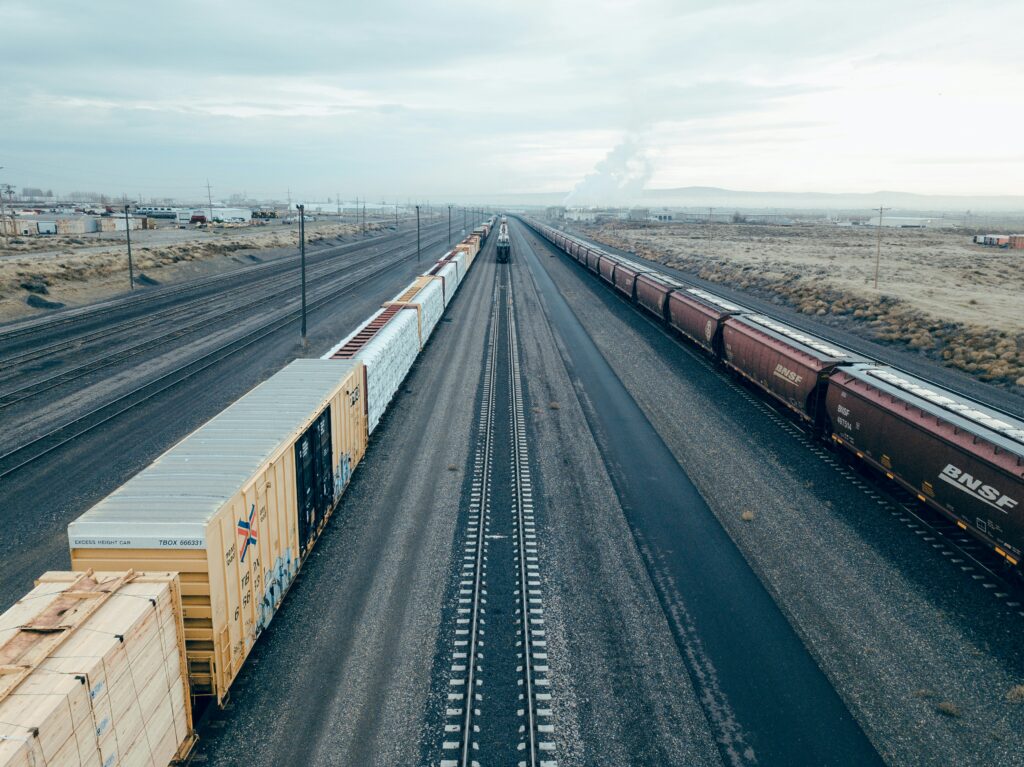
In an era marked by rapid globalization and unforeseen disruptions, the resilience and efficiency of supply chains have become paramount. From the Suez Canal blockage to recent global pandemics, businesses have recognized the urgent need for advanced solutions. This is where AI steps in, ushering in an era of unprecedented optimization and predictive capabilities across the entire supply chain ecosystem.
The AI Leap in Logistics and Supply Chain Management
Recent developments highlight a significant acceleration in AI adoption within logistics. Companies are increasingly deploying machine learning models for demand forecasting, optimizing warehouse operations through robotics and computer vision, and enhancing route planning with sophisticated algorithms. For instance, major e-commerce giants and logistics providers are leveraging AI to predict delivery delays with remarkable accuracy and to dynamically reroute shipments in real-time, adapting to traffic, weather, or geopolitical events.
A recent report from Deloitte indicates that businesses integrating AI into their supply chain operations have seen an average improvement of 15% in forecasting accuracy and a 10-20% reduction in operational costs. Moreover, Gartner predicts that by 2025, 50% of global product-centric organizations will have invested in AI-driven predictive analytics for their supply chain, up from less than 10% in 2020. These statistics underscore a clear industry shift towards intelligent automation and data-driven decision-making.
Impact on Industries and Consumers
The implications of AI for industries are profound. Manufacturers benefit from optimized production schedules, reduced waste, and more efficient inventory management, ensuring components are available precisely when needed. Retailers can offer more personalized customer experiences with highly accurate stock predictions and faster, more reliable delivery options. The energy sector uses AI to optimize the distribution of resources, while healthcare logistics leverages it for timely and precise delivery of critical medical supplies.
For the end-user, this translates into tangible benefits: faster shipping times, fewer out-of-stock items, and potentially lower costs due to increased efficiency. The ability of AI to anticipate and react to disruptions means a more stable and reliable flow of goods, enhancing overall consumer satisfaction and trust. AI-driven systems also contribute to sustainability goals by optimizing routes to reduce fuel consumption and minimizing waste through better inventory control.
Future Outlook and Expert Insights
Looking ahead, experts foresee an even deeper integration of AI. Dr. Emily Chen, a leading supply chain technologist, notes, “The next frontier for AI in supply chain involves hyper-personalization at scale and the creation of truly autonomous supply networks, where systems can self-optimize and adapt with minimal human intervention.” This could include fully autonomous warehouses, drone deliveries for last-mile logistics, and self-managing inventory systems that learn and evolve over time.
However, challenges remain, primarily concerning data quality, the ethical implications of autonomous decision-making, and the need for skilled professionals to manage these advanced systems. Organizations must focus on robust data governance and invest in workforce training to fully harness AI’s potential. Continuous research and collaboration across industries will be vital to navigate these complexities and ensure responsible innovation.
As intelligent systems continue to evolve, their role in transforming industries, especially the critical domain of supply chain management, will only grow. AI is not just a tool; it’s the architect of the future, building smarter, more resilient, and sustainable global networks. Discover more about how predictive analytics is powering business decisions in our article: Exploring Predictive Analytics in Business Operations.