
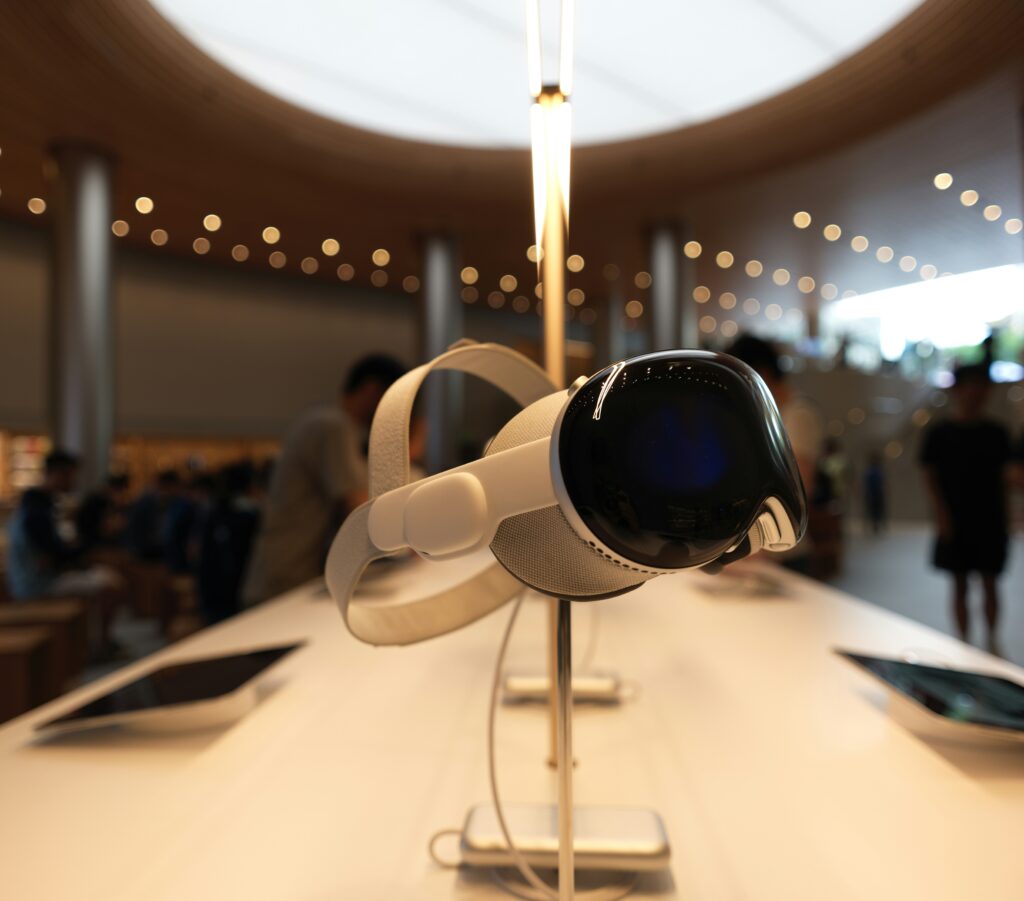
Since its launch, the Apple Vision Pro has captivated imaginations, offering a glimpse into the future of spatial computing. However, as with any pioneering technology, the journey continues. Recent reports and industry analyst predictions suggest that Apple is already deep into the development of the **Apple Vision Pro 2**, with potential launch windows eyed for late 2025 or early 2026. These next-gen devices are rumored to address some of the initial model’s primary challenges, focusing on enhanced comfort, improved performance, and a more accessible price point.
Key areas of expected improvement for the Apple Vision Pro 2 include a significantly lighter and more streamlined design. The current model, while technologically advanced, has been noted for its weight, which can impact extended usage. Industry insiders, including prominent analyst Ming-Chi Kuo, have indicated that Apple is exploring new materials and revised internal layouts to achieve a more ergonomic form factor. This could involve relocating some components or adopting more compact display technologies to reduce bulk, making the device comfortable for longer periods, whether for entertainment, work, or social interactions.
Furthermore, the **Apple Vision Pro 2** is expected to feature upgraded processors, potentially leveraging Apple’s upcoming ‘M’ series chips, to deliver even more seamless performance and unlock new spatial computing capabilities. This enhanced processing power would facilitate more complex AR experiences, higher fidelity graphics, and more efficient multitasking within the visionOS environment. Improved eye-tracking and hand-tracking systems are also on the roadmap, aiming to make interactions even more intuitive and responsive. Battery life, another critical aspect, is also a prime candidate for significant upgrades, potentially through more efficient power management or increased battery capacity without adding considerable weight.
Impact on Industries and Users
The potential impact of the **Apple Vision Pro 2** on various industries is immense. For enterprise users, a lighter, more powerful, and potentially more affordable device could accelerate adoption in fields such as architecture, engineering, healthcare, and education. Imagine surgeons practicing complex procedures in a fully immersive environment, or architects collaborating on 3D models with unprecedented precision. The advancements in spatial computing offered by AVP2 could transform remote work, training simulations, and data visualization, making them more interactive and effective.
For consumers, the refined experience of the Apple Vision Pro 2 could expand its appeal beyond early adopters. Enhanced comfort and performance would make spatial entertainment more engaging, from watching movies on a virtual giant screen to playing immersive games. New applications and content developed specifically for visionOS would likely proliferate, creating a richer ecosystem that further justifies the investment. Consulting firms like ByteTechScope are already working with businesses to strategize how to best leverage these emerging spatial technologies, ensuring a smooth integration into existing workflows and identifying new opportunities for innovation. For more insights on how these devices are shaping the future, read our article on Understanding the Apple Vision Pro’s Impact.
Future Predictions and Expert Opinions
Beyond hardware refinements, experts predict that the **Apple Vision Pro 2** will focus heavily on software advancements. Apple is likely to introduce new gestures, improved spatial awareness features, and tighter integration with its existing ecosystem (iPhone, Mac, Apple Watch). There’s also speculation about modularity, potentially allowing users to customize certain aspects of the device, although this remains more speculative. Analysts also foresee a greater emphasis on developer tools, enabling a flood of innovative applications that tap into the full potential of spatial computing.
The competitive landscape is also evolving, with Meta, Google, and other players continuously pushing their VR/AR offerings. Apple’s strategy with the Vision Pro 2 will likely be to cement its position at the premium end, focusing on unparalleled user experience and seamless integration, while potentially introducing a more ‘consumer-friendly’ version at a later stage. The long-term vision for Apple is clear: to make spatial computing as ubiquitous and essential as the smartphone, and the Vision Pro 2 will be a critical step on that path. For the latest developments and expert analyses on Apple’s ambitious plans, you can refer to sources like TechCrunch’s coverage of Apple Vision Pro.
In conclusion, the impending arrival of the Apple Vision Pro 2 represents more than just a product upgrade; it signifies a maturing of the spatial computing paradigm. With anticipated improvements in design, performance, and accessibility, the AVP2 is set to expand the horizons of what’s possible, influencing how industries operate and how individuals experience technology daily. The future of immersive tech is rapidly unfolding, and the next-generation Apple Vision Pro is poised to be at the forefront.