
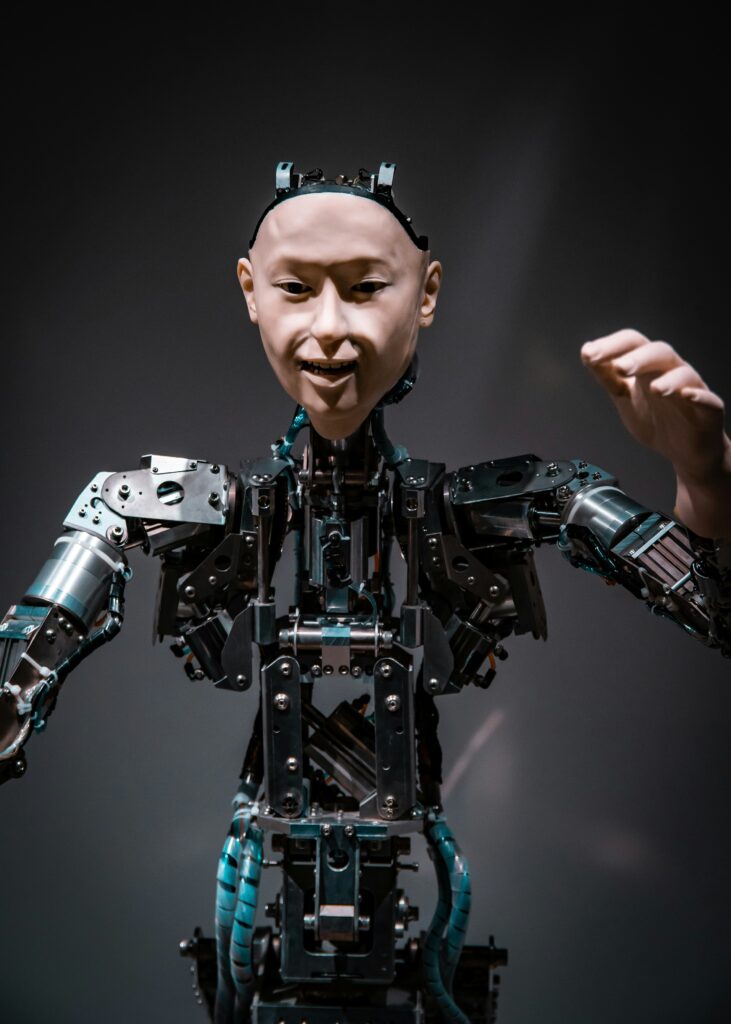
The manufacturing sector, long a backbone of global economies, is undergoing a profound metamorphosis fueled by advanced AI and machine learning. Intelligent systems are moving beyond mere automation, integrating deeply into every facet of production, logistics, and quality control to create what experts are calling ‘smart factories’ and ‘intelligent supply networks.’
The Dawn of Intelligent Factories and Predictive Power
Recent advancements have seen AI algorithms seamlessly integrated with IoT devices, robotics, and advanced sensors on factory floors. This synergy enables machines to not only perform tasks but also to learn, adapt, and make real-time decisions. A key application is predictive maintenance, where AI models analyze sensor data from machinery to forecast potential failures before they occur. This proactive approach drastically reduces downtime, extends equipment lifespan, and slashes maintenance costs. For instance, a report from Deloitte highlighted that companies implementing AI-driven predictive maintenance can see a 20-30% reduction in maintenance costs and a 10-20% increase in productivity.
Furthermore, AI is revolutionizing quality control. Computer vision systems powered by deep learning can detect minuscule defects on production lines at speeds and accuracies impossible for the human eye, ensuring consistent product quality and minimizing waste. From automotive assembly lines to electronics manufacturing, these AI-driven inspection systems are setting new benchmarks for operational excellence.
Revolutionizing Supply Chains and Logistics with AI
Beyond the factory gates, AI’s impact on supply chain management is equally transformative. Intelligent systems are optimizing every stage, from raw material procurement to last-mile delivery. AI algorithms can analyze vast datasets, including historical sales, weather patterns, economic indicators, and social media trends, to predict demand with remarkable accuracy. This enhanced forecasting capability helps companies manage inventory more efficiently, reduce overstocking, and prevent stockouts, leading to significant cost savings and improved customer satisfaction.
In logistics, AI is empowering dynamic route optimization, considering real-time traffic, delivery schedules, and even vehicle capacity to determine the most efficient paths. Warehouses are becoming more autonomous with AI-powered robots handling sorting, picking, and packing, drastically increasing throughput and reducing labor-intensive tasks. According to a recent article by TechCrunch on AI in Manufacturing, companies leveraging AI in their supply chains have reported up to a 15% improvement in logistics costs and a 50% faster response time to disruptions.
Beyond Efficiency: New Business Models and Sustainability
The transformation driven by AI extends beyond mere operational efficiency. Intelligent systems are also enabling new business models, such as mass personalization and on-demand manufacturing, where products can be tailored to individual customer specifications with greater agility. This shift empowers businesses to be more customer-centric and responsive to market demands.
Moreover, AI plays a crucial role in promoting sustainability within industries. By optimizing energy consumption in factories, reducing material waste through precise manufacturing, and streamlining logistics to lower carbon emissions, AI helps companies achieve their environmental goals. For example, AI-driven energy management systems can monitor and adjust energy usage in real-time, identifying inefficiencies and suggesting improvements that lead to substantial reductions in energy footprints.
Challenges and the Path Forward
While the benefits are clear, the widespread adoption of industrial AI isn’t without its challenges. Data privacy and security remain paramount, especially as more sensitive operational data is collected and analyzed. Furthermore, the need for a skilled workforce capable of deploying, managing, and maintaining AI systems is growing rapidly, necessitating significant investment in upskilling and reskilling programs. Ethical considerations surrounding AI’s decision-making processes and potential job displacement also require careful attention and robust frameworks.
Looking ahead, industry experts predict that AI’s integration will only deepen, leading to fully autonomous factories that operate with minimal human intervention. The convergence of AI with other emerging technologies like quantum computing and advanced robotics promises even more transformative capabilities, pushing the boundaries of what intelligent systems can achieve in industrial settings. The focus will increasingly shift towards creating more resilient, adaptive, and sustainable industrial ecosystems.
Conclusion
The embrace of next-gen AI in manufacturing and supply chain management marks a revolutionary pivot. Intelligent systems are not just tools; they are becoming integral partners in driving efficiency, fostering innovation, and building more sustainable industrial futures. As these technologies continue to evolve, their impact will undoubtedly reshape global industries, delivering benefits that ripple across economies and improve our daily lives in countless ways.