
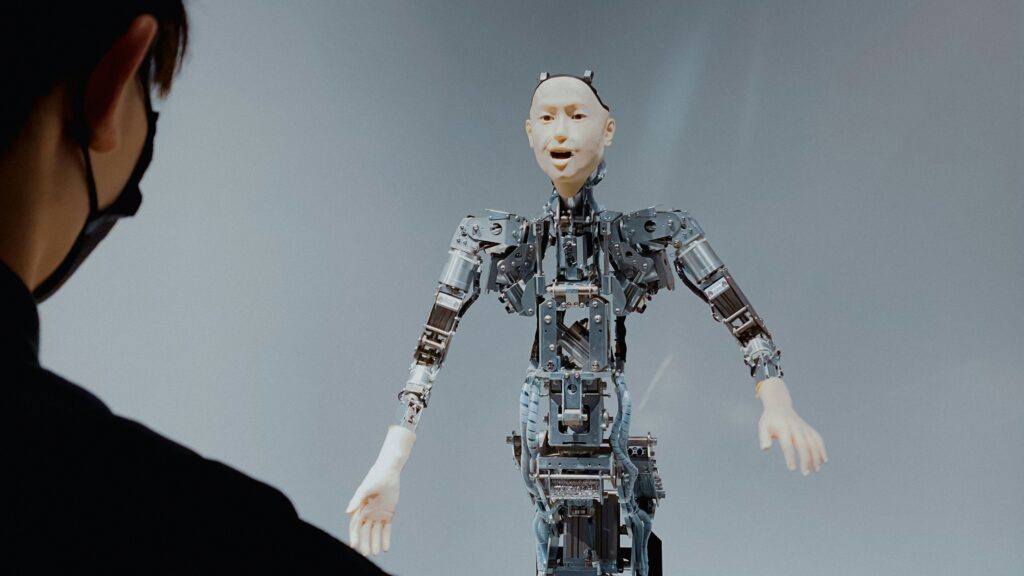
The landscape of creativity is undergoing an unprecedented evolution, driven by the rapid advancements in Generative Artificial Intelligence. These intelligent systems, capable of producing original content—be it text, images, video, or code—are no longer confined to the realm of science fiction. They are actively integrated into professional workflows, significantly altering how businesses approach content creation, design, and marketing strategies.
The Dawn of a New Creative Era
In late 2023 and early 2024, the capabilities of Generative AI models have seen exponential growth. Tools like OpenAI’s DALL-E 3 and Midjourney V6 are generating photorealistic images and intricate art with simple text prompts, while advanced language models such as GPT-4, Google’s Gemini, and Anthropic’s Claude 3 are crafting compelling articles, scripts, and even entire marketing campaigns. These intelligent systems now automate what once required significant human effort and specialized skills, acting as powerful co-pilots for human creators and accelerating production timelines.
This surge in capability means that repetitive and time-consuming tasks, from drafting initial content outlines to creating multiple design variations, can now be handled by AI, freeing up human professionals to focus on strategic thinking, ethical oversight, and adding unique creative flair that only human intuition can provide.
Data-Driven Transformation and Market Impact
The economic impact of Generative AI on creative industries is substantial and growing. According to a recent report by Accenture, the global Generative AI market in creative and content industries is projected to reach approximately $150 billion by 2030, with an estimated increase of 30-50% in content production efficiency across sectors. This data underscores the profound shift occurring, as businesses worldwide invest heavily in AI tools to gain a competitive edge.
Moreover, Generative AI is democratizing creativity, enabling smaller businesses and individual creators to produce high-quality, professional-grade content without extensive resources or large budgets. This levels the playing field, fostering innovation and allowing diverse voices to reach wider audiences. The rapid adoption of these tools is evident in the increasing number of AI-powered design platforms and content creation suites available today.
For more insights into the broader market shift, explore how Generative AI is profoundly reshaping creative sectors worldwide.
Reshaping Roles and Workflows
The Rise of AI-Assisted Professionals
The integration of Generative AI is fundamentally reshaping professional roles. We are witnessing the emergence of new specializations, such as ‘prompt engineers’—individuals skilled in crafting precise instructions to guide AI models effectively. Existing roles like graphic designers, copywriters, and marketers are evolving; professionals are now expected to be adept at utilizing AI tools, focusing their expertise on refining AI outputs, ensuring brand consistency, and providing strategic direction rather than manual execution.
This shift emphasizes collaboration between humans and intelligent systems, where human creativity, critical thinking, and ethical judgment remain paramount, augmented by AI’s speed and scale.
Personalization at Scale
One of Generative AI’s most impactful applications is its ability to enable hyper-personalized marketing campaigns and content at an unprecedented scale. AI can analyze vast amounts of user data to generate tailored messages, product recommendations, and visual content that resonate with individual preferences, improving engagement rates dramatically. This level of personalization was previously labor-intensive and cost-prohibitive for most organizations. For a deeper dive into how AI is revolutionizing targeted messaging, read about AI-Driven Personalization: The Future of Marketing.
Navigating Challenges and Ethical Considerations
While the opportunities presented by Generative AI are immense, its rapid deployment also brings forth significant challenges. Concerns regarding copyright infringement, data privacy, the potential for misinformation, and the displacement of certain job functions are valid and demand careful consideration. Ethical AI development, robust regulatory frameworks, and responsible usage guidelines are crucial to ensure that these intelligent systems serve humanity positively and sustainably.
The Future of Human-AI Collaboration
The future of creative industries will undoubtedly be defined by a seamless and evolving collaboration between human ingenuity and artificial intelligence. Experts like Dr. Anya Sharma, lead AI ethicist at InnoTech Labs, predict that ‘the most impactful innovations will stem from seamless human-AI collaboration, where each augments the other’s strengths, leading to entirely new forms of artistic expression and problem-solving.’ This ongoing evolution of intelligent systems will continue to challenge and expand our understanding of creativity, automation, and the very nature of work itself.
Conclusion: Embrace the Creative Revolution
Generative AI is not merely a tool; it’s a transformative force that is fundamentally reshaping how creative industries operate. For businesses and professionals, embracing these intelligent systems means unlocking unparalleled efficiency, fostering boundless innovation, and achieving levels of personalization previously unattainable. As we move forward, adaptability and a commitment to ethical AI practices will be key to harnessing the full potential of this revolutionary technology.