
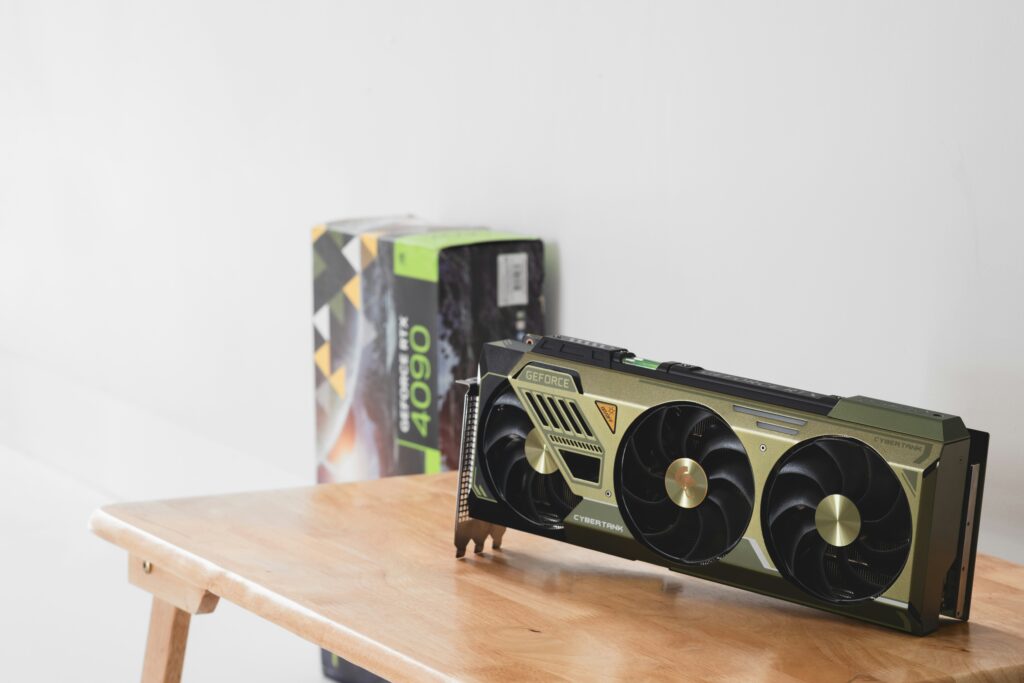
The Rumor Mill: What We Know About the NVIDIA RTX 5090
The tech sphere is currently captivated by a flurry of leaks and speculation surrounding NVIDIA’s purported next-generation flagship GPU, the RTX 5090. Renowned hardware leakers, particularly those active on platforms like X (formerly Twitter), have been consistently teasing details that paint a picture of an extraordinarily powerful graphics card. While NVIDIA itself remains tight-lipped, these credible sources suggest the RTX 5090 will be based on the highly anticipated Blackwell architecture, which has already made waves in the enterprise AI sector.
Key rumors point to a significant increase in CUDA cores, potentially utilizing an even wider memory bus (e.g., 512-bit) than its predecessors, and a substantial boost in GDDR7 memory. This combination would translate into unprecedented bandwidth, crucial for handling the massive data loads of modern gaming and professional applications. Current speculation places the release window for the 50-series, spearheaded by the **NVIDIA RTX 5090**, in late 2024 or early 2025, aligning with NVIDIA’s typical two-year refresh cycle for its high-end consumer GPUs.
A Glimpse into Blackwell: Architectural Advancements
The foundation of the upcoming RTX 50-series is expected to be NVIDIA’s Blackwell architecture, a successor to the current Ada Lovelace. While Blackwell initially launched for data centers and AI supercomputing with the GB200, its principles are expected to trickle down into consumer GPUs. This means the RTX 5090 could feature enhanced Streaming Multiprocessors (SMs), next-generation RT Cores for superior ray tracing performance, and upgraded Tensor Cores designed for even faster AI acceleration.
Reports suggest Blackwell will leverage advanced manufacturing processes, likely TSMC’s 3nm or a refined 4nm node, enabling greater transistor density and improved power efficiency. This technological leap allows NVIDIA to pack more processing units into a smaller die area while maintaining or even reducing power consumption per unit of performance. For the end-user, this translates into a GPU that is not only faster but also more efficient, generating less heat and potentially offering better overclocking headroom.
Redefining Gaming and Creative Workflows
Unprecedented Gaming Experiences
The arrival of the **NVIDIA RTX 5090** is poised to be a game-changer for the enthusiast gaming community. With expected performance gains of 50-70% over the current RTX 4090, gamers can look forward to truly uncompromised experiences at 4K and even 8K resolutions. This power will make highly demanding titles with full path tracing playable at smooth, high frame rates, pushing the boundaries of visual fidelity. Furthermore, the enhanced raw power and improved RT cores will revolutionize virtual reality (VR) and augmented reality (AR) experiences, enabling developers to create more immersive and detailed digital worlds.
Boosting Professional Productivity
Beyond gaming, the RTX 5090 will be a boon for professionals in various fields. Content creators, 3D artists, and video editors will see dramatic reductions in rendering times, allowing for more iterations and faster project completion. Engineers and designers working with complex simulations will benefit from the accelerated computational power. Moreover, the enhanced Tensor Cores will significantly boost local AI inference capabilities, empowering data scientists and developers to run more sophisticated machine learning models directly on their workstations, opening new avenues for creativity and research. This evolution continues the trend of GPUs becoming indispensable tools for a broader range of professional tasks, as highlighted in articles discussing future-proofing your gaming PC to handle such demanding applications.
Market Impact and the Competitive Landscape
The launch of the RTX 5090 will undoubtedly send ripples through the entire GPU market. NVIDIA’s strong market position will be further solidified, but it will also intensify competition. AMD and Intel are actively developing their next-gen architectures, and the performance of the 5090 will set a new benchmark they will strive to meet or exceed. This competition ultimately benefits consumers through innovation and potentially more diverse product offerings.
Pricing will be another critical aspect. Given the ongoing demand for high-performance GPUs, particularly with the surging interest in AI, the RTX 5090 is expected to command a premium price, potentially even higher than its predecessors. Supply chain dynamics, global economic conditions, and the continuous growth of AI inference on consumer hardware could all play a role in its final cost and availability. Industry analysts will be closely watching how NVIDIA balances performance, price, and production to meet both enthusiast and professional demand, as Tom’s Hardware’s coverage often speculates.
The Future of PC Hardware: Beyond the 5090
The journey of GPU development doesn’t end with the RTX 5090. This upcoming flagship is a testament to the relentless pace of innovation in hardware. We are witnessing a convergence where gaming, professional content creation, and local AI capabilities are increasingly intertwined, driving the demand for more versatile and powerful hardware. The future of PC hardware will likely involve deeper integration of specialized AI accelerators, more efficient power delivery, and potentially modular designs that allow for easier upgrades. The RTX 5090 is not just a new graphics card; it’s a stepping stone towards a computing future where intelligent systems and immersive experiences are powered by ever-evolving silicon.
As the tech world holds its breath for official announcements, the rumors surrounding the **NVIDIA RTX 5090** paint a thrilling picture of what’s to come. This next-gen GPU promises to be a monumental leap forward, reshaping our expectations for graphical performance and computational power. The anticipation is palpable, and for good reason: the future of high-end PC hardware looks incredibly bright.