brno.adhi.krisna.d@gmail.com

OpenAI O1 Unveiled: The Future of Reasoning in Intelligent Systems

OpenAI o1 introduces a ‘chain-of-thought’ reasoning process for complex problem solving. The model represents a shift from rapid generative text to deep, analytical cognitive processing. Enterprises can leverage these systems to improve accuracy in coding, research, and technical troubleshooting. The future of intelligent systems lies in autonomous agents capable of managing entire operational workflows.

OpenAI O1 Unveiled: The Future of Reasoning in Intelligent Systems Read More »
Nvidia Blackwell Architecture: A Revolutionary Game-Changer for AI Data Centers

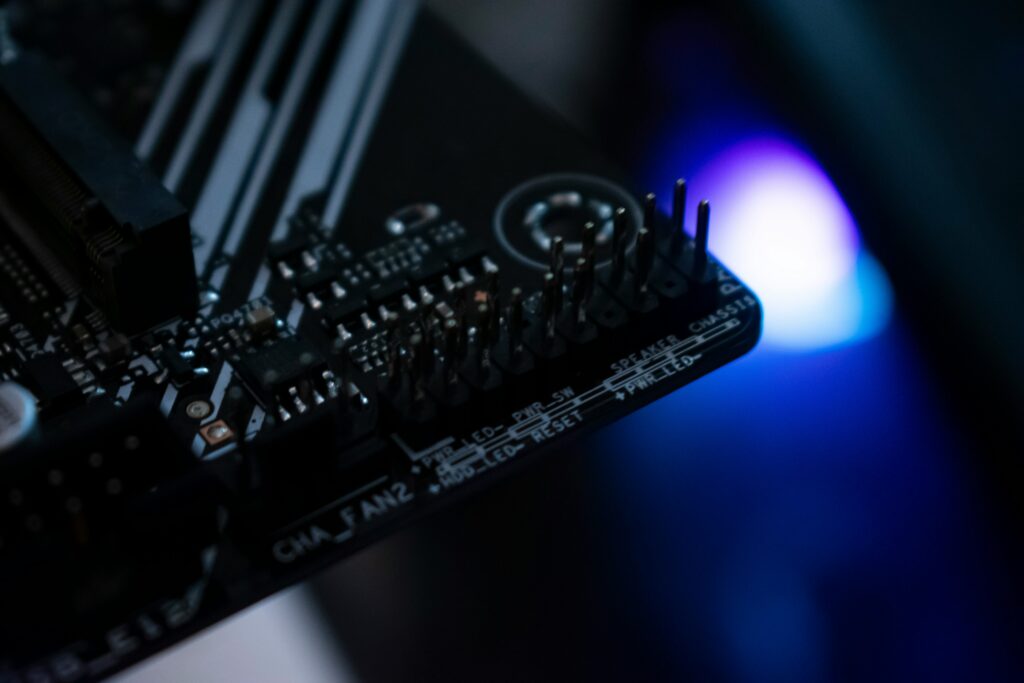
Nvidia’s Blackwell architecture utilizes a multi-die design to solve throughput bottlenecks. The second-generation Transformer Engine significantly accelerates training for trillion-parameter models. Improved energy-to-performance ratios allow for more sustainable and scalable AI data center operations. Blackwell is set to lower the cost-per-token for enterprise-grade generative AI deployments. Hardware modularity is the new standard for the next generation of high-performance computing.

Nvidia Blackwell Architecture: A Revolutionary Game-Changer for AI Data Centers Read More »

OpenAI O1 Unveiled: The Future of Reasoning in Intelligent Systems

OpenAI o1 introduces advanced reasoning capabilities that simulate human-like ‘thought processes.’ The model shows exceptional performance in complex STEM fields compared to previous LLMs. Enterprises can leverage these reasoning models to handle high-stakes, multi-step automation workflows. The industry is shifting from pure generative AI to reasoning-first, logic-based intelligent systems.

OpenAI O1 Unveiled: The Future of Reasoning in Intelligent Systems Read More »

OpenAI O1 Unveiled: The Reasoning Revolution in Intelligent Systems

OpenAI o1 introduces a novel chain-of-thought reasoning process for LLMs. The model excels in complex tasks including advanced mathematics, coding, and scientific research. Enterprises can leverage these reasoning capabilities to enhance the reliability of automated workflows. The transition toward ‘slow-thinking’ AI reduces the frequency of hallucinations in high-stakes technical environments. Adoption should focus on pilot programs that verify logical accuracy against business-specific requirements.

OpenAI O1 Unveiled: The Reasoning Revolution in Intelligent Systems Read More »

OpenAI’s Operator: A Revolutionary Shift in Autonomous AI Agents

OpenAI is developing ‘Operator,’ an AI agent capable of controlling web browsers to perform multi-step tasks. The technology is designed to move beyond generative text to active, autonomous goal execution. Agentic AI is positioned to significantly increase operational efficiency by handling complex cross-platform workflows. Security and governance are expected to be the primary considerations for enterprises adopting agentic systems in 2025.

OpenAI’s Operator: A Revolutionary Shift in Autonomous AI Agents Read More »

Microsoft 365 Copilot Agents: A Revolutionary Leap in Workflow Automation

Microsoft has introduced autonomous agents for Microsoft 365 to handle complex business processes without constant human intervention. The agents integrate across major enterprise platforms like SAP and Salesforce, reducing departmental data silos. These tools represent a transition from productivity support to active process orchestration. Organizations should focus on setting clear guardrails and supervision strategies to maximize ROI from agentic workflows.

Microsoft 365 Copilot Agents: A Revolutionary Leap in Workflow Automation Read More »

Nvidia Blackwell GPU: A Revolutionary Leap in Next-Gen Data Center Hardware

Nvidia Blackwell represents a significant leap in hardware density and computational performance. New infrastructure requirements, including advanced liquid cooling, are necessary for these high-power chips. The transition to Blackwell will force businesses to re-evaluate their reliance on on-premise hardware versus cloud-based scalability. Hardware efficiency is the new focal point for competitive advantage in data-heavy industries.

Nvidia Blackwell GPU: A Revolutionary Leap in Next-Gen Data Center Hardware Read More »

OpenAI’s Operator: A Revolutionary Shift in Autonomous AI Agents

OpenAI’s ‘Operator’ aims to transition AI from text generation to active browser-based execution. Autonomous agents will likely disrupt traditional RPA by handling complex, dynamic digital tasks. Security and ‘human-in-the-loop’ verification will remain critical pillars for enterprise adoption. The shift towards agency-driven workflows will prioritize operational velocity in 2025.

OpenAI’s Operator: A Revolutionary Shift in Autonomous AI Agents Read More »

NVIDIA Blackwell GPU: The Next-Gen Hardware Powering Future Workflows

The Blackwell GPU architecture marks a significant leap in computational density and energy efficiency for data centers. Dual-die design facilitates high-speed interconnects, reducing latency in complex automation processes. Strategic hardware upgrades are essential for maintaining a competitive edge in high-performance computing environments. Enterprises should focus on workflow alignment with new silicon to maximize ROI on hardware investments.

NVIDIA Blackwell GPU: The Next-Gen Hardware Powering Future Workflows Read More »

OpenAI’s Operator: A Revolutionary Shift in Autonomous AI Agents

OpenAI is developing ‘Operator,’ an autonomous agent designed to execute tasks directly in a web browser. The industry is shifting from generative chatbots to action-oriented agents capable of complex workflows. Security and human oversight remain critical considerations for the enterprise adoption of autonomous systems. The future of work will prioritize orchestration and workflow design over manual execution.

OpenAI’s Operator: A Revolutionary Shift in Autonomous AI Agents Read More »