brno.adhi.krisna.d@gmail.com

Revolutionary AI Agents: Game-Changing Workflow Automation

AI agents are advanced intelligent systems capable of autonomous, objective-driven task execution, powered by LLMs. They are significantly transforming industries like finance, healthcare, and customer service by automating complex workflows. These intelligent systems are predicted to unlock trillions in economic value by automating a large percentage of current tasks. Key challenges include addressing ethical concerns, ensuring data security, and seamless integration with existing IT infrastructure. The future points towards a human-AI symbiotic relationship, where AI agents augment human capabilities and drive innovation.

Revolutionary AI Agents: Game-Changing Workflow Automation Read More »
Revolutionary AI Accelerates Next-Gen Drug Discovery Efforts

AI is revolutionizing drug discovery by accelerating timelines and reducing costs. Companies like Insilico Medicine are achieving significant milestones, such as taking AI-designed drugs into clinical trials in record time. Data shows AI could generate billions in value for biopharma, improving R&D productivity and success rates. The impact extends to faster market entry for new drugs, personalized medicine, and broader scientific applications. Future predictions include AI becoming integral to the entire drug lifecycle, with challenges like data quality and interpretability being actively addressed.

Revolutionary AI Accelerates Next-Gen Drug Discovery Efforts Read More »

Unveiling Top Workflow Automation Platforms: A Game-Changer Guide

Workflow automation platforms are critical for enterprise digital transformation and efficiency. Hyperautomation, integrating AI and RPA, is a major trend in 2024, driving demand for comprehensive solutions. Leading platforms like ServiceNow, UiPath, Microsoft Power Automate, and Zapier offer diverse capabilities for various business needs. Key selection criteria include scalability, integration, ease of use, AI features, security, and cost. Automation frees employees for strategic tasks, boosting productivity and innovation across industries. The future promises more intelligent, proactive, and context-aware automation with generative AI integration.

Unveiling Top Workflow Automation Platforms: A Game-Changer Guide Read More »

Unveiling Next-Gen GPU Architecture: A Leap for Gaming & AI

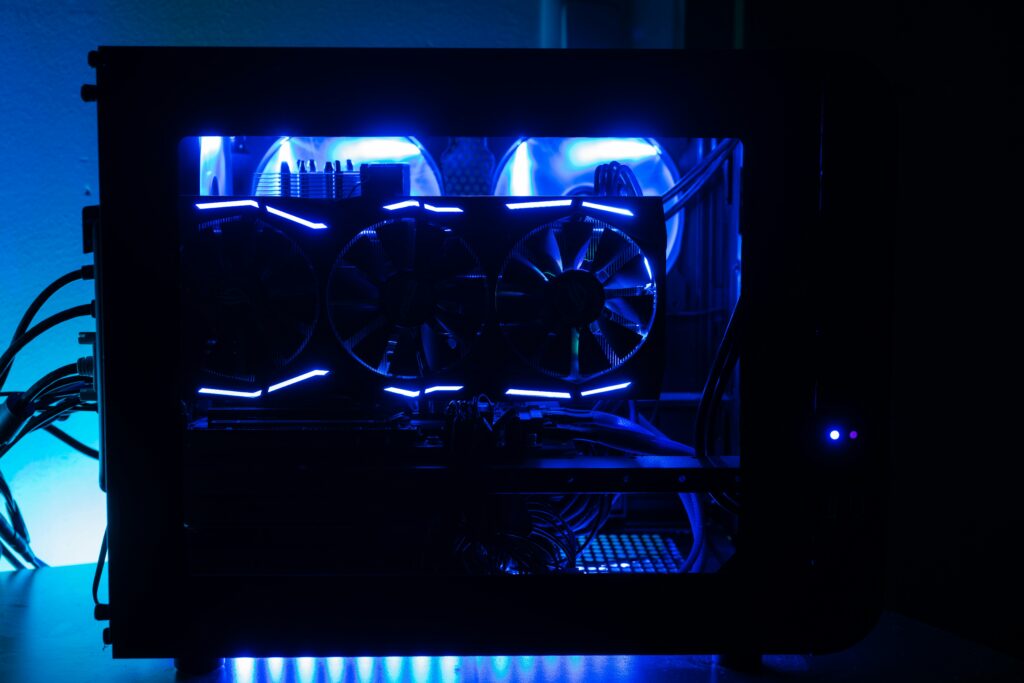
Next-Gen GPU Architecture from NVIDIA (Blackwell) and AMD (RDNA 4) are expected to launch in late 2024/early 2025. Anticipate significant performance gains (2x+) over current-gen, driven by advanced manufacturing (3nm/4nm) and GDDR7 memory. Deep integration of AI accelerators will enhance gaming (DLSS/FSR) and professional applications like AI training and content creation. Transformative impact on gaming fidelity, VR/AR experiences, and scientific computing. Expect higher power consumption, advanced cooling requirements, and premium pricing for these revolutionary GPUs.

Unveiling Next-Gen GPU Architecture: A Leap for Gaming & AI Read More »

Samsung Galaxy Ring: The Next-Gen Wearable Game-Changer

The Samsung Galaxy Ring was unveiled at Unpacked 2024 and MWC 2024, signaling Samsung’s entry into the smart ring market. It offers advanced health tracking, including heart rate, sleep analysis, and activity monitoring, integrated with Samsung Health. The discreet, comfortable ring form factor provides advantages for consistent and accurate data collection, especially for sleep. Samsung’s entry is set to disrupt the wearable market, fostering innovation and competition among specialist smart ring brands. Future possibilities include payments, gesture controls, and further advanced biometric sensors, expanding its utility.

Samsung Galaxy Ring: The Next-Gen Wearable Game-Changer Read More »

Revolutionary Shifts: Decoding the Future of Tech Startup Funding

The tech startup funding landscape is shifting towards strategic, impact-driven investments. Investors are increasingly prioritizing profitability, sustainable business models, and strong unit economics over hyper-growth. Key sectors like AI infrastructure, cybersecurity, and sustainable technology continue to attract robust capital. Founders are adapting by operating with greater fiscal discipline, emphasizing lean operations, and exploring alternative funding models. The market trend suggests a focus on niche dominance, technological specialization, and potential M&A for exits.

Revolutionary Shifts: Decoding the Future of Tech Startup Funding Read More »

Unveiling Top Workflow Automation Platforms: A Smart Comparison Guide

Workflow automation is critical for modern business efficiency, with the market projected for significant growth. Leading platforms like Zapier, Make, Microsoft Power Automate, and UiPath offer diverse capabilities for various business needs. Zapier excels in simple app integrations, while Make provides visual, complex workflow building. Microsoft Power Automate integrates deeply with Microsoft services, offering enterprise-grade RPA. UiPath leads in dedicated RPA for high-volume, complex task automation. Effective automation leads to improved efficiency, reduced errors, and enhanced employee satisfaction. The future of workflow automation is moving towards AI-driven hyperautomation and more accessible low-code/no-code tools.

Unveiling Top Workflow Automation Platforms: A Smart Comparison Guide Read More »

NVIDIA’s Next-Gen RTX 5000: A Game-Changing Leap in PC Gaming?

NVIDIA’s next-gen RTX 5000 series, based on Blackwell architecture, is highly anticipated. Rumors suggest a significant performance boost (potentially 50-70% over RTX 4090) and enhanced ray tracing. Expected launch in late 2024 or early 2025 will redefine PC gaming and content creation benchmarks. The Blackwell architecture promises improved power efficiency and compute density. This launch will intensify competition with AMD and drive further innovation in the tech industry.

NVIDIA’s Next-Gen RTX 5000: A Game-Changing Leap in PC Gaming? Read More »

Future of Workflow: Choosing Top Low-Code Platforms

Low-code platforms are experiencing significant growth, projected to reach $30.3 billion in 2024, driven by the need for faster digital transformation. These platforms democratize app development, enabling businesses to build and deploy applications rapidly without extensive coding. Key benefits include accelerated innovation, reduced IT bottlenecks, enhanced business agility, and improved cost efficiency. For workflow automation, low-code tools streamline processes, ensure consistency, and provide valuable operational insights. Choosing a platform requires evaluating scalability, integration, ease of use, security, cost, and potential vendor lock-in. Future trends suggest deeper integration of low-code with AI and machine learning, creating smarter, more adaptive systems.

Future of Workflow: Choosing Top Low-Code Platforms Read More »

Unveiling Next-Gen Productivity: The Future of Workflow Platforms

Next-gen workflow platforms are unifying disparate tools to combat fragmentation and boost efficiency. Key features include smart integrations, no-code/low-code automation, robust collaboration tools, and adaptive UI/UX. These platforms significantly reduce context switching, improve data consistency, and accelerate project delivery. Expert predictions point to further feature consolidation, enhanced intelligent automation, and hyper-personalization. Adopting these integrated solutions is crucial for businesses aiming for agility, innovation, and sustained growth in modern work environments.

Unveiling Next-Gen Productivity: The Future of Workflow Platforms Read More »