
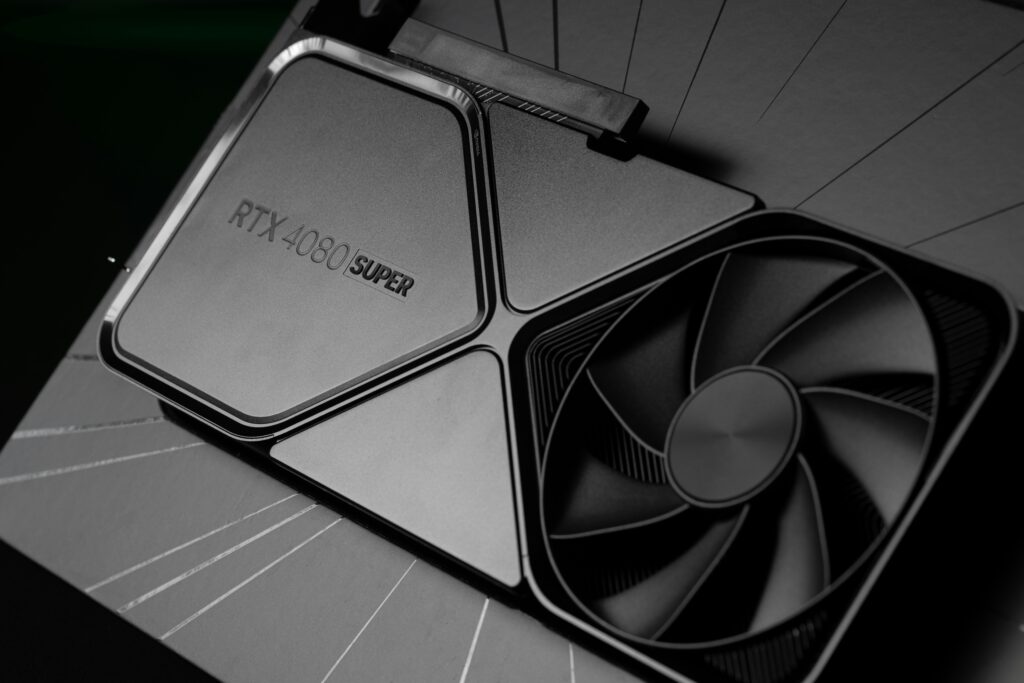
The Dawn of the Blackwell Era
In mid-2024, Nvidia confirmed the initial shipments of its Blackwell architecture, a breakthrough designed specifically to power the next wave of generative AI. Building upon the success of the Hopper architecture, the new platform introduces significant improvements in training and inference performance. According to Nvidia’s official technical documentation, Blackwell-based GPUs feature 208 billion transistors, manufactured using a custom-built 4NP TSMC process. This engineering milestone allows for faster communication between massive GPU clusters, effectively removing the latency bottlenecks that have historically plagued large-scale model training.
Data-Driven Performance Metrics
Data from recent benchmarks suggests that Blackwell can deliver up to 30x the performance of the H100 GPU for real-time generative AI inference. This is achieved through the second-generation Transformer Engine, which supports new 4-bit floating-point AI inference capabilities. For enterprise consultants and CTOs, this implies a radical reduction in energy consumption and cost per query. When evaluating infrastructure investments, optimizing your existing cloud infrastructure becomes far more efficient when leveraging the latest hardware advancements that support high-density compute environments.
Industry Impact: Beyond Speed
The impact of this technology extends far beyond simple speed improvements. The integration of high-bandwidth memory (HBM3e) allows for the seamless processing of complex, multi-modal data streams. Industries ranging from healthcare diagnostics to automated logistics are set to benefit. As noted in a recent report by The Verge, the shift toward ‘AI factories’ is a core component of Nvidia’s long-term vision, transforming raw data into actionable intelligence at an unprecedented scale.
Expert Opinions and Future Outlook
Industry analysts emphasize that while Blackwell offers superior compute density, organizations must prepare their data pipelines to support such hardware. The ‘bottleneck’ has shifted from the hardware itself to the quality and organization of input data. Looking toward 2025, we predict that companies that prioritize modular, hardware-agnostic software architectures will be the best positioned to capitalize on Blackwell’s performance gains without falling into vendor lock-in traps. The future is not just about having the fastest chip; it is about how effectively your automation workflows utilize that power.
Conclusion
Nvidia’s Blackwell is undeniably a game-changer. By aligning your technological roadmap with these advancements, you ensure that your enterprise remains resilient and capable of scaling. The transition to this level of computational power is significant, but for businesses ready to embrace it, the efficiency gains are substantial.