
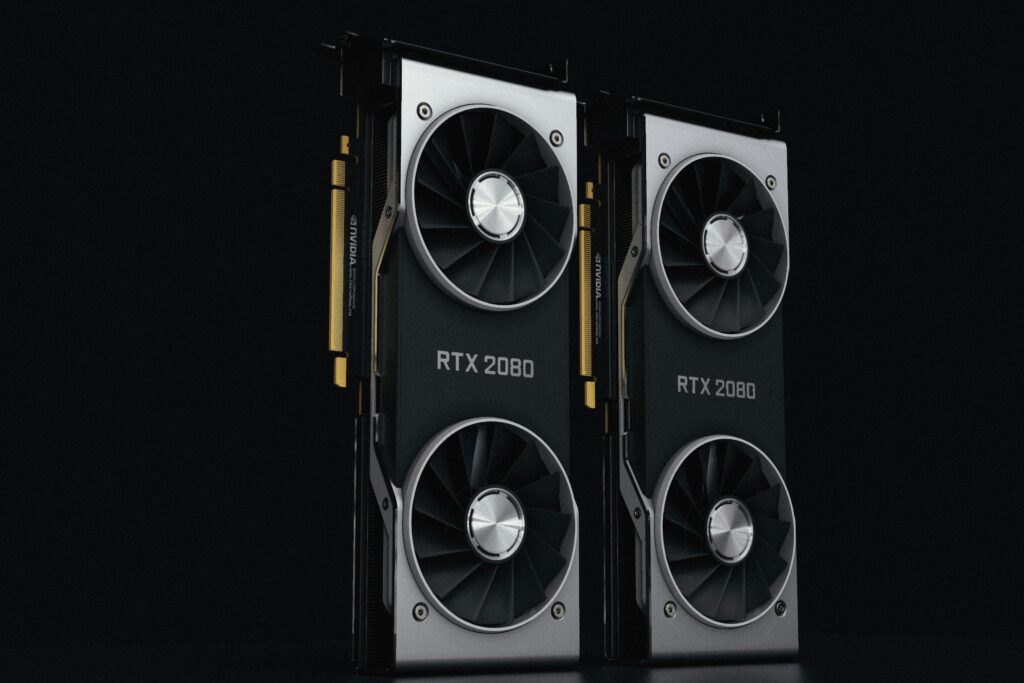
The Emergence of the Nvidia Blackwell Architecture
In recent weeks, Nvidia has provided deeper insights into its Blackwell platform, confirming its status as the most ambitious hardware project in the company’s recent history. Announced to address the escalating demands of complex simulations and large-scale data processing, the Blackwell GPU architecture incorporates a multi-die design that redefines thermal and power management. Unlike previous generations, this architecture focuses on massive interconnect bandwidth, allowing for seamless communication between GPUs, which is critical for scaling enterprise infrastructure.
Technical Prowess and Performance Metrics
Official technical documentation indicates that Blackwell achieves significant performance gains compared to the Hopper architecture. By utilizing a custom-built 4NP TSMC process, Nvidia has effectively doubled the transistor count, reaching 208 billion transistors on a single package. This hardware marvel enables businesses to run intensive workloads with significantly lower latency. As noted by The Verge in their latest coverage, the integration of second-generation Transformer Engine technology allows for more efficient handling of neural network models, which translates to tangible speed advantages in real-world application environments.
Impact on Enterprise Workflow Optimization
For organizations, the deployment of Blackwell-enabled systems represents a fundamental change in how alur kerja (workflows) are structured. By offloading resource-heavy computations to specialized hardware, firms can reallocate their engineering talent toward innovation rather than infrastructure maintenance. Our team at ByteTechScope has previously explored how such hardware advancements serve as the backbone for automated, high-efficiency business systems. The scalability offered by these GPUs ensures that as enterprise needs grow, the underlying hardware remains a robust foundation.
Future Predictions and Industry Stance
Industry analysts expect that the widespread adoption of Blackwell will trigger a race toward more energy-efficient data centers. While the initial costs of deploying such cutting-edge hardware are significant, the long-term ROI is found in decreased processing time and higher computational density. We anticipate that by mid-2025, a large portion of top-tier cloud service providers will have completed the transition to this architecture. It is an exciting time for tech leaders, though prudent planning is required to integrate such advanced hardware into legacy environments successfully.
Final Thoughts on Hardware Evolution
Innovation of this magnitude proves that we are entering a new era of raw computing power. Whether you are a CTO overseeing digital transformation or an IT manager scaling server capacity, keeping a pulse on Nvidia’s hardware trajectory is essential for staying competitive in a rapidly evolving market.