
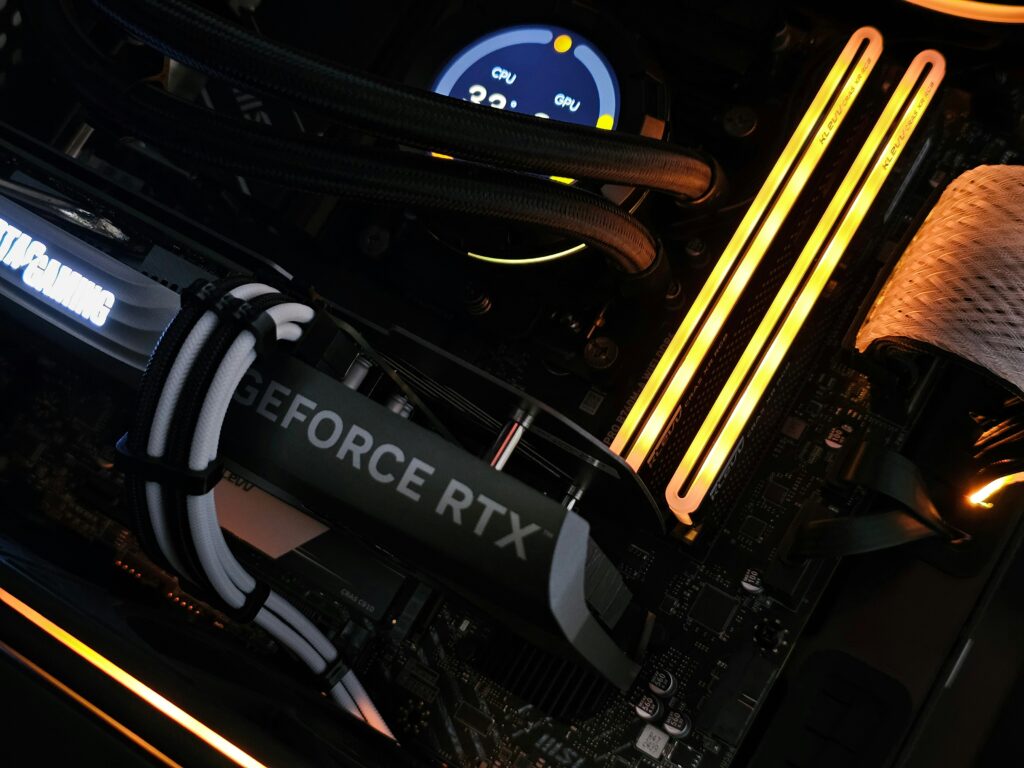
The Dawn of the Blackwell Era
On March 18, 2024, Nvidia officially detailed its Blackwell architecture, setting a new benchmark for accelerated computing. Unlike its predecessor, the Hopper architecture, Blackwell is built specifically to address the massive training requirements of large language models (LLMs) and complex generative AI applications. By leveraging a multi-die design that acts as a single unified GPU, Nvidia has managed to push the boundaries of what was previously considered physically possible in semiconductor manufacturing.
Unprecedented Performance Metrics
According to The Verge, the Blackwell B200 GPU features an staggering 208 billion transistors. This sheer density allows for 20 petaflops of FP4 compute performance. For businesses, this translates to faster model training times and more efficient real-time inference, which are critical for companies looking to maintain a competitive edge in automation.
Impact on Industrial Workflow Automation
For organizations already utilizing advanced AI-driven workflow optimization, Blackwell offers a tangible path to reducing operational latency. The architecture introduces a second-generation Transformer Engine that scales compute and memory to handle models with trillions of parameters. This means that processes which once took weeks to train can now be completed in a fraction of the time, effectively lowering the barrier to entry for enterprise-grade autonomous agents.
Expert Predictions and Industry Outlook
Industry analysts suggest that we are moving toward a “compute-first” economy. While current deployments are largely focused on cloud hyperscalers, the eventual trickle-down to private on-premise data centers will be the real inflection point. We predict that within the next 24 months, businesses that adopt GPU-accelerated architectures will achieve a 3x to 5x increase in operational efficiency compared to those relying on legacy CPU-heavy stacks.
Conclusion
While the initial cost of integrating such high-end hardware is significant, the long-term ROI in terms of energy efficiency and computational throughput makes Blackwell a prudent investment for technology-forward companies. As the landscape continues to evolve, staying informed on these hardware leaps will be the difference between leading the market and playing catch-up.