
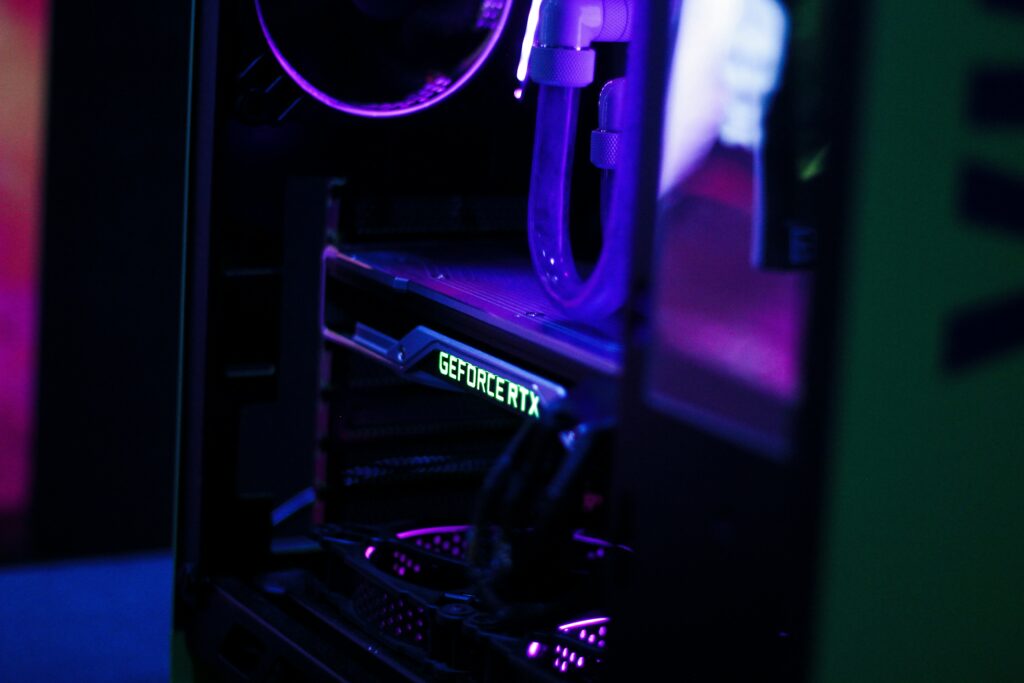
The Dawn of the Blackwell Era
In mid-March 2024, Nvidia officially introduced the Blackwell GPU architecture, marking what CEO Jensen Huang describes as the ‘engine of the new industrial revolution.’ Designed specifically to address the massive scaling requirements of large language models (LLMs) and generative AI, the architecture is not merely an incremental upgrade over the Hopper series; it is a fundamental shift in how silicon handles trillions of parameters.
According to official reports from The Verge, the B200 GPU utilizes 208 billion transistors, manufactured via a custom 4NP TSMC process. This density allows for unprecedented interconnect speeds, effectively bridging the gap between raw compute power and memory bandwidth limitations that have historically bottlenecked AI training processes.
Why Architecture Matters for Enterprise Automation
For organizations operating in the consultancy and workflow automation space, hardware constraints are a silent killer of efficiency. The integration of Blackwell-based systems into data centers directly correlates to reduced training times and lower inference latency. When we discuss optimizing business processes, we are essentially talking about the speed of information processing. Blackwell facilitates real-time data analysis at a scale that was previously restricted to research laboratories.
The Technical Leap: Efficiency Meets Performance
Nvidia’s commitment to energy efficiency is a central pillar of the Blackwell announcement. By utilizing second-generation Transformer Engine technology, the hardware dynamically adjusts precision to optimize throughput without sacrificing accuracy. This is critical for businesses looking to adopt sustainable AI practices while maintaining high-performance output. Industry experts suggest that this architecture will allow firms to deploy more sophisticated autonomous agents that require less power to operate, significantly reducing the Total Cost of Ownership (TCO) for massive cloud deployments.
The Industry Outlook
We are entering a phase where hardware capability dictates the ceiling of software innovation. With Blackwell, the industry is moving toward ‘trillion-parameter’ model support. For companies aiming to integrate automated workflows, this means the ability to run proprietary, high-context AI models locally or in secure private clouds becomes much more feasible. We predict that over the next 18 months, the adoption of Blackwell-based systems will become the hallmark of tech-forward enterprises aiming to decouple their growth from hardware resource constraints.
Ultimately, the transition to Blackwell is less about the specs on a datasheet and more about the expansion of the ‘possible.’ As we move forward, leaders in the tech consultancy space will be those who can harness this raw power to build, scale, and automate with greater intelligence and speed than ever before.