
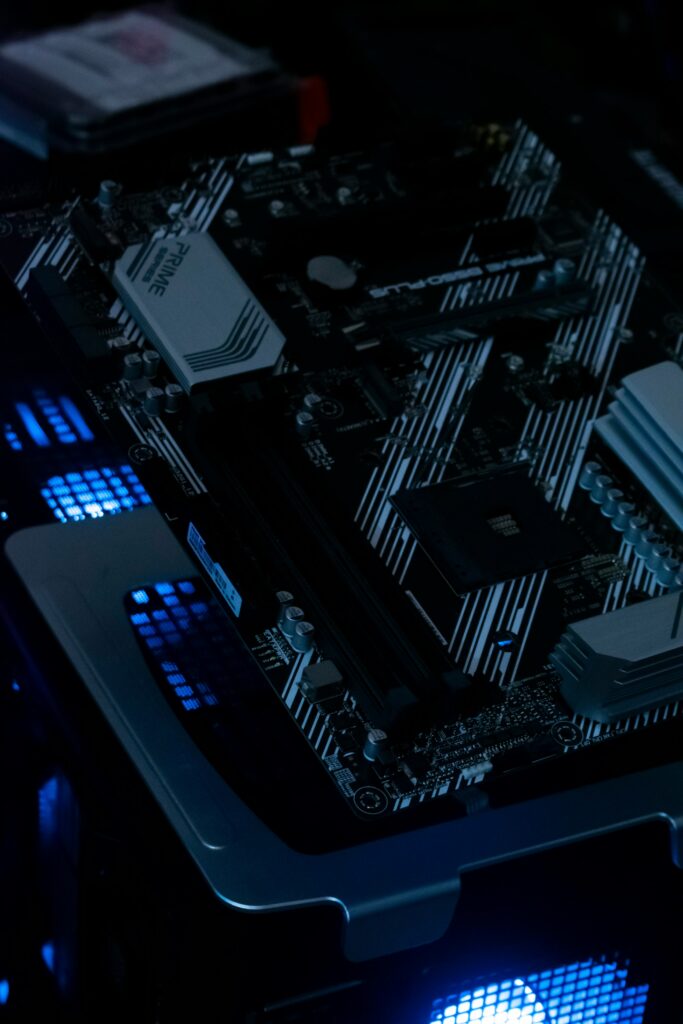
The Dawn of the Blackwell Era
Announced officially in March, Nvidia’s Blackwell architecture represents the most significant leap in GPU technology in recent years. Named after David Harold Blackwell, the first African American scholar inducted into the National Academy of Sciences, this platform is engineered specifically to handle the trillions-of-parameters language models that define modern AI. While previous architectures focused on general-purpose acceleration, Blackwell is purpose-built for the unique demands of high-performance computing.
Technical Prowess and Performance Metrics
At the heart of the Blackwell platform lies the B200 GPU, a marvel of engineering featuring 208 billion transistors. According to The Verge, this processor is manufactured using a customized 4NP TSMC process, allowing for unprecedented efficiency. For firms currently optimizing their internal workflow automation, the implications are clear: the ability to process training data at vastly higher speeds means shorter iteration cycles and faster time-to-market for proprietary AI applications.
Industry Impact: Beyond Speed
The transition to Blackwell is not just about raw power; it is about energy consumption and scalability. Nvidia has integrated a second-generation Transformer Engine that supports new 4-bit floating-point precision, effectively doubling the AI inference capability while maintaining accuracy. For large enterprises, this translates to lower operational costs and the ability to host more complex models on-premises, reducing dependency on external cloud providers for sensitive data processing.
Expert Predictions and Market Outlook
Industry analysts suggest that we are entering an era of ‘sovereign AI,’ where nations and large corporations will prioritize their own computing hardware. The Blackwell architecture is the foundation for this shift. By simplifying the interconnectivity of hundreds of GPUs through the NVLink Switch System, Nvidia is essentially creating a ‘single massive GPU’ capable of unprecedented tasks. We expect that by late 2025, companies leveraging these architectures will see a measurable competitive advantage in predictive analytics and generative content production.
Conclusion
The Blackwell architecture is a testament to how far silicon engineering has come. For stakeholders in the technology sector, the move toward such specialized hardware is not optional—it is a strategic necessity. Whether you are scaling an existing machine learning pipeline or just beginning your journey into enterprise AI, keeping a pulse on these hardware developments is critical for long-term growth.