
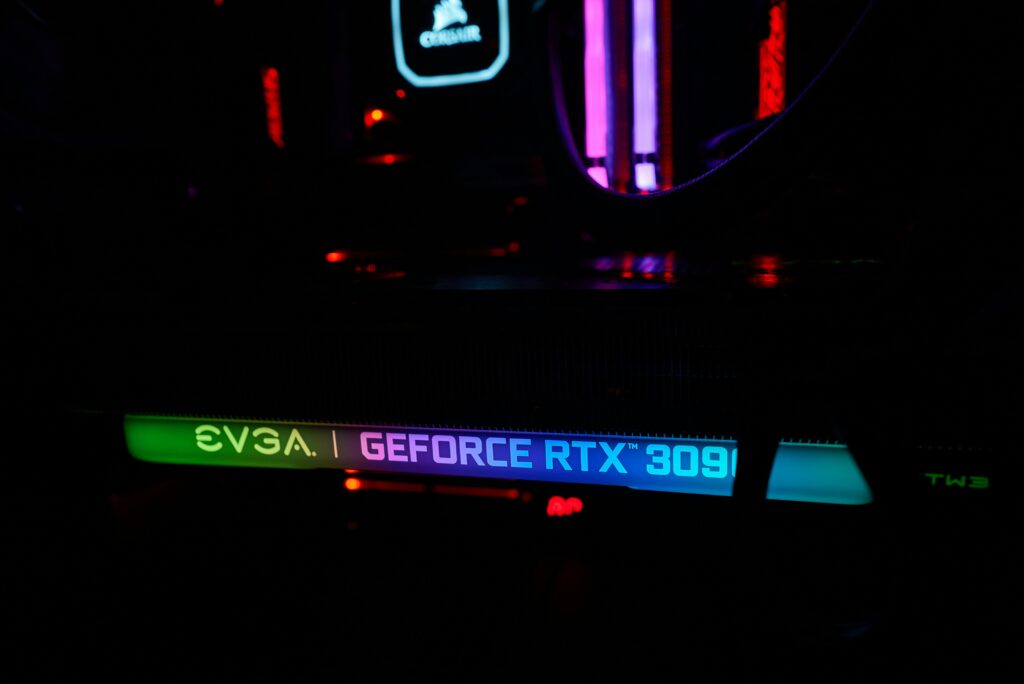
The Dawn of the Blackwell Era
Announced as the engine for the next wave of accelerated computing, the NVIDIA Blackwell B200 GPU is designed to handle the astronomical demands of trillion-parameter models. Since its broader deployment started surfacing in enterprise reports this month, engineering teams have begun benchmarking the architecture against the industry-standard H100. The consensus is clear: we are looking at a hardware evolution that prioritizes interconnection speed and memory bandwidth above all else.
Engineering Marvels Under the Hood
At the core of the B200 is its second-generation Transformer Engine. This innovation allows the GPU to adjust precision dynamically, significantly accelerating training times for Large Language Models (LLMs) without sacrificing output quality. According to official specs from The Verge, the architecture combines two reticle-limited dies into a single chip, connected by a 10 TB/s link. This design effectively doubles the throughput capability for distributed systems, solving the bottleneck issues that have plagued large-scale data center operators for the past two years.
Impact on Industrial Workflow Automation
For firms focused on workflow automation, the Blackwell architecture implies more than just faster render times. It enables real-time inferencing at a scale previously reserved for massive server farms. Companies can now deploy localized, high-performance automated agents that process sensitive data on-premise rather than relying on public cloud APIs. This transition is essential for industries with strict compliance requirements, such as finance and healthcare, where data sovereignty remains a top priority. Our previous analysis on optimizing enterprise workflows highlights why hardware-level efficiency is the missing piece in most automation strategies.
Future Predictions: The Efficiency Shift
Industry analysts expect that the B200 will force a complete re-architecture of data center cooling and power management. As density increases, the heat dissipation requirements will likely push enterprises toward liquid cooling solutions as standard rather than experimental. Furthermore, the reliance on high-bandwidth memory (HBM3e) will likely trigger supply chain shifts, making memory availability the primary bottleneck for AI infrastructure in late 2024 and 2025.
Conclusion
The NVIDIA Blackwell B200 is undeniably a massive step forward for high-performance computing. While the cost of entry remains high, the sheer efficiency gains suggest that for companies training proprietary models, the investment will yield significant long-term returns. As we observe the rollout, one thing is certain: the gap between those using modern accelerated hardware and those relying on legacy systems is widening rapidly.