
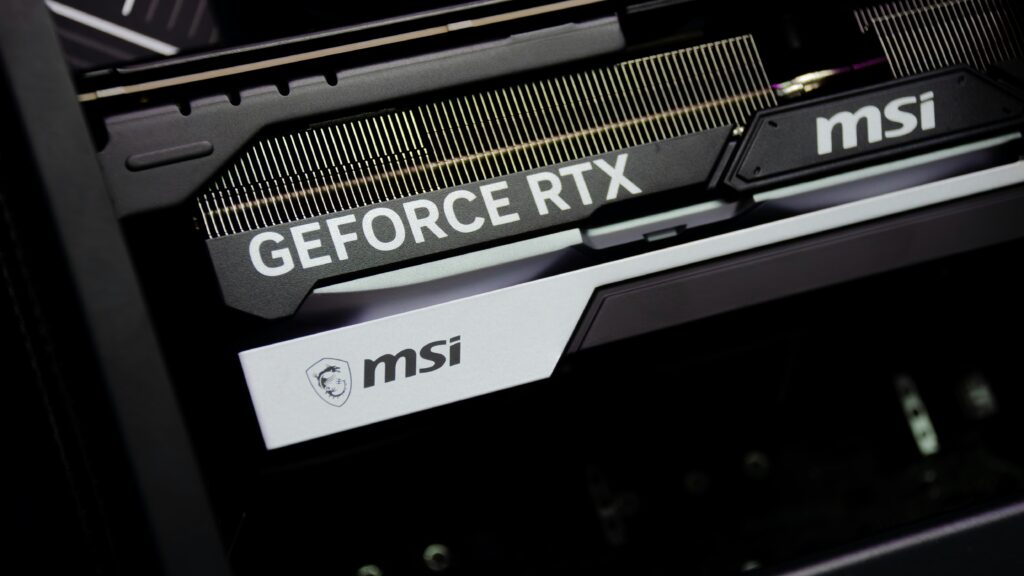
In mid-2024, Nvidia solidified its dominance in the hardware sector by shipping its highly anticipated Blackwell GPUs. Unlike the Hopper architecture that preceded it, Blackwell is built specifically to address the inefficiencies found in large-scale machine learning training and inference. By utilizing a dual-die chiplet design, Nvidia has managed to double the performance-per-watt efficiency compared to its previous iterations, marking a significant milestone in semiconductor engineering.
The Engineering Behind the Blackwell Architecture
At the core of this hardware breakthrough is the Blackwell B200, which leverages 208 billion transistors manufactured on a custom TSMC 4NP process. According to official reports from The Verge, the architecture introduces a second-generation Transformer Engine that scales compute and memory bandwidth to unprecedented levels. This is critical for businesses that rely on real-time data processing and complex automation workflows.
Impact on Enterprise Workflow Efficiency
For consultants and CTOs, the introduction of Blackwell means that latency—a major bottleneck in enterprise-grade AI deployment—is being aggressively minimized. The ability to run models with higher parameter counts while maintaining cost-effective energy consumption is a major win for data center operations. For a deeper look at how such hardware informs our approach to system infrastructure, refer to our guide on optimizing cloud infrastructure for modern enterprise needs.
The Market Outlook and Future Predictions
While demand continues to outstrip supply, industry analysts predict that the true value of Blackwell will manifest in the ‘sovereign AI’ movement, where individual nations and massive corporations build localized cloud environments. We anticipate that as this hardware becomes the standard, the competitive moat for companies leveraging these systems will widen, forcing laggards to reconsider their reliance on aging, less efficient silicon.
Ultimately, investing in the right hardware foundation is no longer optional for firms scaling their tech stack. Whether it is reducing the time-to-market for software products or accelerating data analytics, the Blackwell generation serves as the bedrock upon which the next decade of industrial computing will be built.