
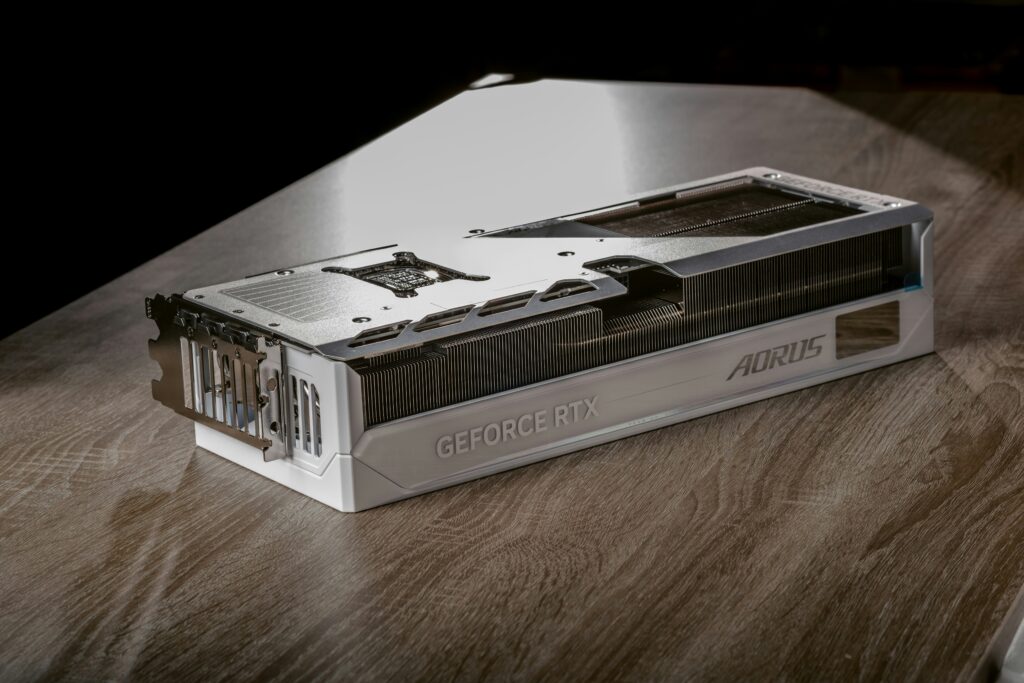
The Dawn of the Blackwell Era
In mid-2024, Nvidia officially detailed its Blackwell architecture, promising a massive leap in performance-per-watt and total throughput compared to the previous Hopper generation. Named after David Blackwell, the first African American scholar inducted into the National Academy of Sciences, this architecture is specifically engineered to handle the trillions of parameters required by today’s most advanced computational models.
Technical Innovations and Data Processing
At the heart of the Blackwell platform is the GB200 Grace Blackwell Superchip. This unit connects two Blackwell GPUs to a single Grace CPU via a 900GB/s ultra-low-power chip-to-chip interconnect. According to The Verge, this hardware is designed to deliver up to 30x the performance for large-scale model inference compared to the H100, fundamentally altering the economics of data processing.
For businesses currently evaluating their hardware roadmap, it is crucial to recognize that this isn’t merely a speed increase. The architecture includes a second-generation Transformer Engine that uses micro-tensor scaling to handle complex data formats more efficiently, significantly reducing the overhead associated with large-scale simulation and analytics workflows.
Industry Impact: Beyond Just Hardware
What does this mean for the enterprise? As we explore in our guide on optimizing cloud infrastructure, the adoption of specialized silicon is becoming a differentiator for organizations managing heavy automation pipelines. By reducing the time-to-market for complex models, companies can iterate faster and deploy more sophisticated logic in their workflows. The Blackwell architecture enables real-time processing that was previously constrained by latency and power limitations.
Future Outlook and Expert Analysis
Industry analysts expect that the deployment of Blackwell-based systems will set a new standard for sustainable computing. Because the platform offers greater computational efficiency, it allows data centers to do more with less energy, addressing one of the biggest bottlenecks in modern tech infrastructure. We anticipate that by early 2025, early adopters who integrate these units will see a distinct advantage in their predictive analytics and operational automation capabilities. While supply chain and rollout remain the biggest variables, the architectural leap is undeniable.