
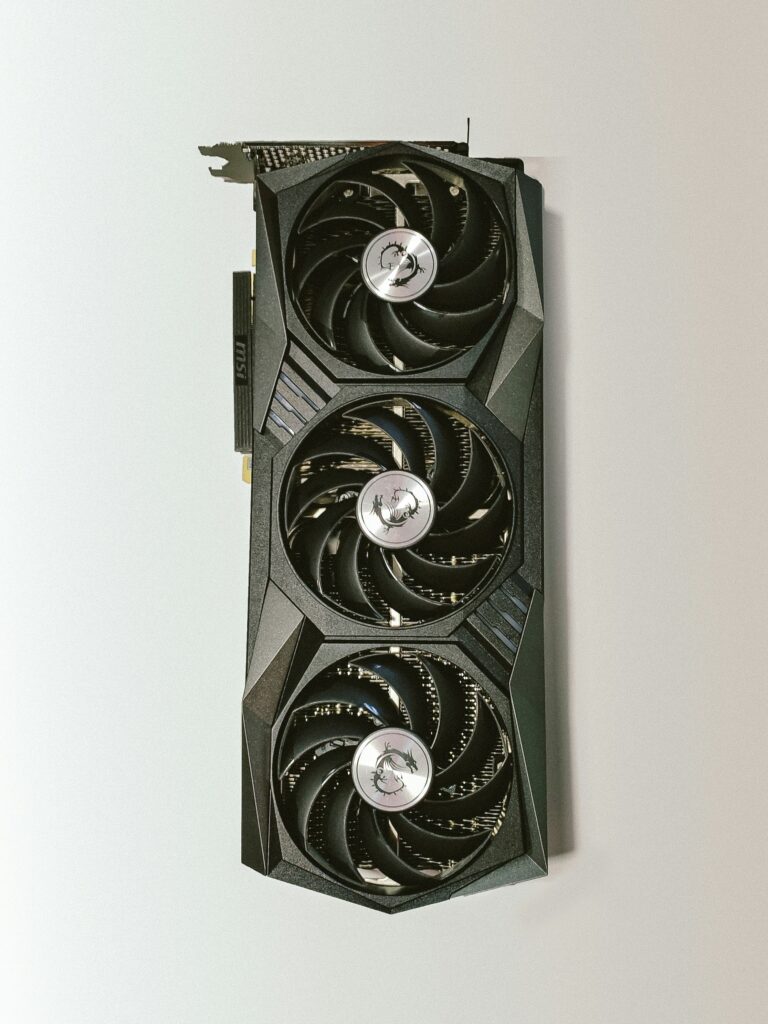
On March 18, 2024, at GTC, Nvidia officially unveiled the Blackwell architecture, a successor to the powerful Hopper platform. Over the past week, reports from major suppliers and Nvidia’s management have confirmed that the company is moving toward full-scale production. This hardware is not merely an incremental update; it is a fundamental redesign aimed at the specific bottlenecks currently limiting large-scale enterprise workflows.
The Architecture Behind the Power
At the core of the Blackwell B200 GPU is a staggering 208 billion transistors, manufactured using a customized 4NP TSMC process. What makes this hardware a game-changer is the dual-die design that acts as a single unified GPU. This configuration addresses the physical limitations of reticle size, allowing for massive memory bandwidth and processing throughput.
According to official announcements reported by The Verge, the Blackwell architecture is designed to reduce the cost and energy consumption of training large models by up to 25 times compared to the previous generation. This is achieved through second-generation Transformer Engine technology, which supports lower-precision computation without sacrificing accuracy.
Impact on Enterprise Workflow Efficiency
For industries relying on intensive data processing—such as logistics, pharmaceutical research, and financial modeling—the Blackwell platform offers a tangible path to operational efficiency. By shortening the time-to-market for complex AI-driven workflows, organizations can leverage real-time analytics to drive decision-making.
We have previously discussed how automating data pipelines serves as the backbone of modern business. With the introduction of Blackwell-grade hardware, these automated systems can now process significantly larger datasets, enabling predictive models that were previously too slow to deploy effectively.
Expert Insights and Market Predictions
Industry analysts are largely in agreement that Blackwell will dictate the hardware standard for the next 24 months. While supply chain constraints remain a concern for mid-sized enterprises, the focus on ‘inference-first’ capabilities ensures that companies can deploy high-performance applications at a lower total cost of ownership (TCO).
Looking ahead, we anticipate that the competition in the high-performance GPU space will intensify. While AMD and Intel continue to iterate on their respective data center chips, Nvidia’s ecosystem—specifically the software-hardware integration—remains the industry benchmark. Experts suggest that the next phase of the industry will move away from pure ‘raw power’ metrics toward ‘efficiency per watt,’ where Blackwell currently holds a distinct advantage.
In summary, the Nvidia Blackwell rollout represents a critical inflection point. For enterprises, the investment in such infrastructure is no longer just about keeping up with trends; it is about establishing a robust foundation for the next decade of digital transformation.