
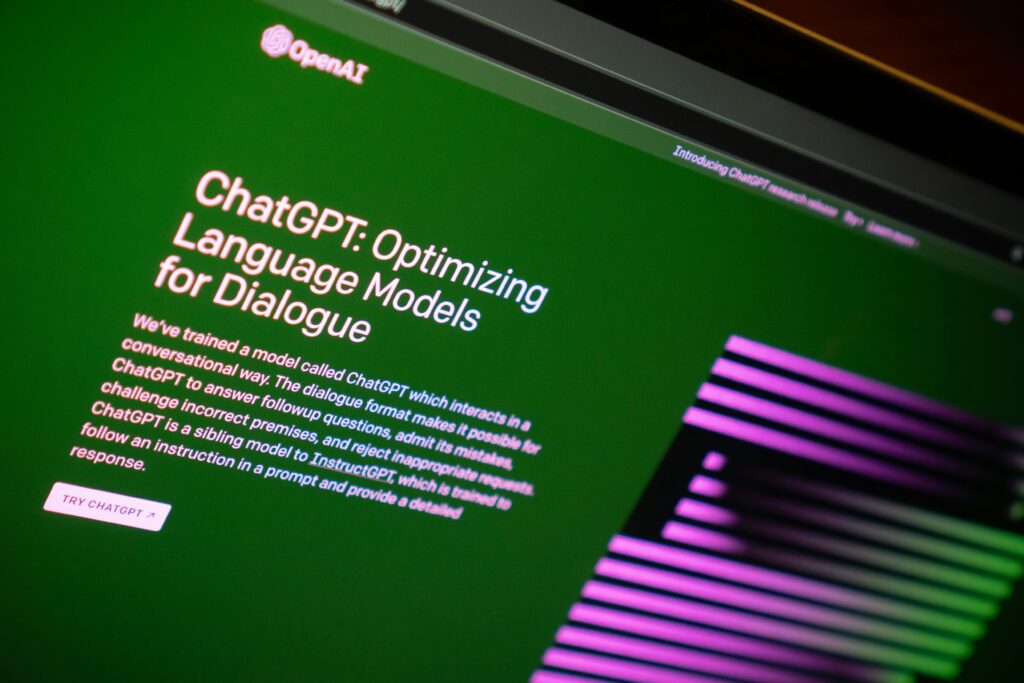
OpenAI Unveils GPT-4o: A New Era for App Interaction
On May 13, 2024, OpenAI announced GPT-4o, its latest multimodal model, marking a pivotal moment in the advancement of interactive software. The ‘o’ in GPT-4o stands for ‘omni,’ signifying its capability to process and generate content across text, audio, and visual modalities seamlessly. This integrated approach allows for more natural and intuitive human-computer interaction, moving beyond the traditional sequential processing of different data types. Unlike previous models that might chain separate components for speech-to-text, text-to-model, and model-to-speech, GPT-4o processes all inputs and outputs within a single neural network, resulting in significantly faster response times and a more coherent conversational experience. This fundamental architectural change has immense implications for applications ranging from customer service bots to creative tools and educational platforms.
Technical Prowess and Official Statements Behind GPT-4o
According to OpenAI’s official blog post, GPT-4o matches GPT-4 Turbo’s performance on text in English and code, with notable improvements in non-English languages. More impressively, it’s significantly faster and 50% cheaper in the API. What truly sets GPT-4o apart are its audio capabilities. The model can respond to audio inputs in as little as 232 milliseconds, with an average of 320 milliseconds, which is comparable to human response times in conversation. It can also interpret nuances in voice, such as emotion and tone, and respond with a range of expressive vocal styles. This real-time, emotionally aware interaction capability was vividly demonstrated during OpenAI’s Spring Update event, showcasing its ability to sing, tell stories, and even assist with real-time language translation, all while maintaining a highly responsive dialogue. This level of multimodal integration positions GPT-4o not just as an incremental update, but as a foundational shift for developers building truly interactive applications. The ability to switch between modalities fluidly, understanding context across them, opens up new design paradigms for user interfaces and experiences that were previously unattainable.
Beyond audio, GPT-4o also exhibits strong visual understanding. It can comprehend images and video inputs, allowing users to share visual information and receive immediate, relevant feedback. For instance, a user could show GPT-4o a math problem on a whiteboard, and the model could verbally guide them through the solution step-by-step. Or, a developer could show it a piece of code and ask for improvements. This capability extends the model’s utility far beyond simple text generation, embedding it deeply into visual workflow applications, from design to diagnostics. The unified architecture ensures that the context from one modality seamlessly informs responses in another, creating a truly holistic understanding and interaction experience. This is critical for industries that rely heavily on visual data, such as healthcare, engineering, and creative design, where precise interpretation of images and diagrams is paramount.
Impact on Industry and User Workflows
The introduction of GPT-4o is poised to revolutionize multiple industries by enabling advanced automation and enhancing human-computer collaboration. For the customer service sector, the model’s ability to handle complex, multimodal queries in real-time with human-like responsiveness could transform call centers. Companies can deploy more sophisticated virtual assistants that understand customer emotions, provide immediate solutions, and even guide users visually through troubleshooting steps, significantly improving customer satisfaction and operational efficiency. Imagine a virtual assistant not only understanding your spoken complaint but also analyzing a screenshot of an error message you provide, then verbally guiding you to resolve it. This depth of interaction drastically reduces resolution times and boosts the quality of support.
In the realm of education and personal productivity, GPT-4o can act as a highly effective tutor or assistant. Students can verbally ask questions about complex topics, show diagrams, and receive explanations that adapt to their learning style. For professionals, it can streamline tasks like transcription, content creation, and data analysis by offering real-time insights and assistance. For example, a user could record a meeting, and GPT-4o could not only transcribe it but also summarize key decisions, identify action items, and even draft follow-up emails, demonstrating a true **GPT-4o Workflow Transformation**. This level of contextual understanding and proactive assistance is invaluable for individuals and teams seeking to optimize their daily operations.
Developers are perhaps the biggest beneficiaries of this advancement. With GPT-4o available through an API, innovators can integrate these multimodal capabilities into their own applications, building next-generation tools that were previously in the realm of science fiction. Imagine creating a mobile app that allows users to converse naturally with an AI, showing it objects in their environment and receiving real-time information or assistance. Or a creative suite that takes spoken descriptions and visual sketches to generate initial design concepts. The lowered API cost also makes these advanced capabilities more accessible to a broader range of developers and startups, fostering a new wave of innovation. For more insights on how these models are shaping development, you might find our article on The Evolution of AI in Productivity Tools insightful.
Future Predictions and Expert Opinions
Industry experts predict that GPT-4o will accelerate the trend towards ubiquitous, ambient intelligence. The future of software is likely to involve more conversational interfaces, where users interact with applications not through clicks and menus, but through natural language, gestures, and visual cues. This shift will make technology more accessible and intuitive for a wider demographic, blurring the lines between digital and physical interaction. According to The Verge’s coverage, GPT-4o is seen as a stepping stone towards building more personalized and proactive digital companions that understand our intentions and anticipate our needs before we explicitly state them. This vision extends to smart environments where devices communicate seamlessly with each other and with us, orchestrated by powerful models like GPT-4o.
The rise of multimodal models also poses new challenges and opportunities for consultancy firms specializing in technology and automation. Businesses will increasingly seek expert guidance on how to integrate these advanced capabilities into their existing infrastructure, redesign workflows, and train their workforce to leverage these tools effectively. The need for strategic implementation, ethical considerations, and robust security frameworks around these powerful models will become paramount. Companies that can harness the full potential of GPT-4o and similar models will gain a significant competitive advantage, driving efficiencies and unlocking new revenue streams through innovative service offerings. This is not just about adopting new technology; it’s about fundamentally rethinking how business processes are designed and executed with intelligent systems at their core.
A New Horizon for Application Development
GPT-4o represents a significant advancement in the journey towards more intelligent, natural, and powerful applications. Its ability to handle multimodal input and output at human-like speeds will unlock unprecedented possibilities for developers and end-users. From enhancing customer experiences to revolutionizing educational tools and automating complex professional workflows, the impact of this model is far-reaching. As businesses look to stay competitive in an increasingly digital world, understanding and integrating such cutting-edge models will be crucial for success. The **GPT-4o Workflow Transformation** is not merely a buzzword; it’s a tangible shift that will reshape our interaction with technology.