
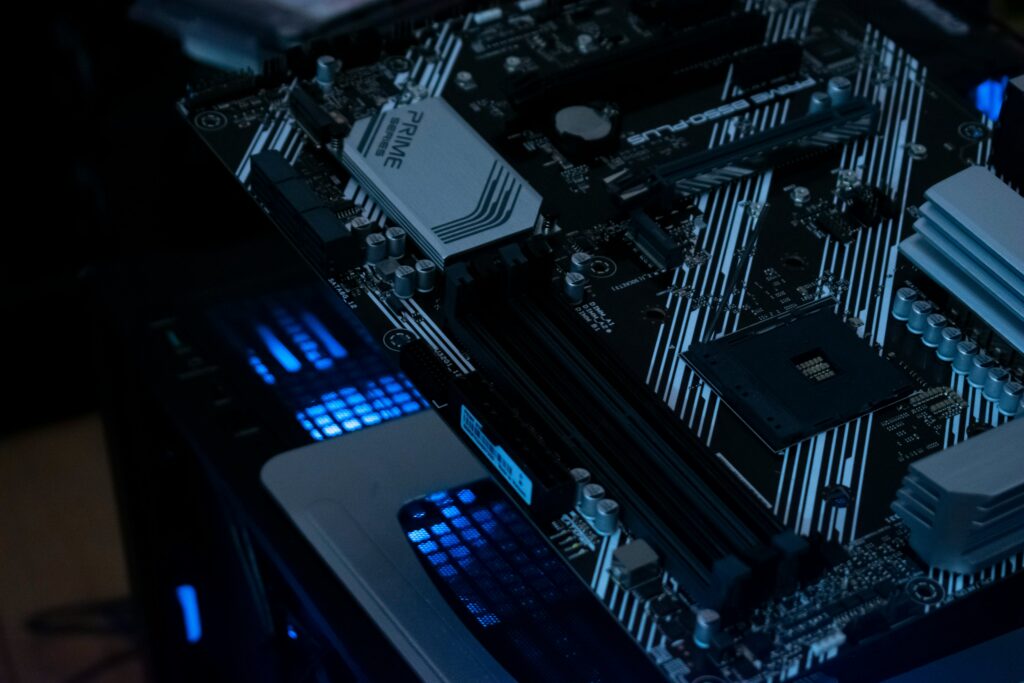
In a highly anticipated reveal at Computex 2024, AMD officially pulled back the curtain on its next-generation desktop processors: the Ryzen 9000 Series. Spearheaded by the flagship Ryzen 9 9950X, these CPUs are powered by the groundbreaking Zen 5 microarchitecture, promising substantial performance uplifts across a wide array of demanding applications. This announcement, made on June 3rd, 2024, immediately set a new benchmark for what users can expect from their desktop systems, reinforcing AMD’s commitment to pushing the boundaries of silicon innovation.
Dr. Lisa Su, AMD’s Chair and CEO, highlighted the Zen 5 architecture’s focus on delivering superior performance per watt and significant instructions per cycle (IPC) improvements. While detailed benchmarks are still emerging from independent testing, AMD’s initial projections showcased impressive gains, particularly in gaming, content creation, and productivity tasks. The Ryzen 9 9950X, for instance, is positioned as the ‘world’s fastest consumer CPU’ for various workloads, boasting 16 cores and 32 threads, a boost clock of up to 5.7 GHz, and a 170W TDP. This performance leap is attributed to a completely redesigned front-end, wider pipelines, and enhanced branch prediction accuracy within the Zen 5 core, resulting in a claimed 16% average IPC uplift compared to its Zen 4 predecessor.
Impact on Industries and Users
The introduction of the AMD Ryzen 9000 Series has profound implications across various industries and for individual users who rely on high-performance computing. For the gaming community, the promise of higher frame rates and smoother gameplay experiences, especially in CPU-bound titles, is a significant draw. The enhanced IPC combined with high clock speeds means games will run more efficiently, allowing companion GPUs to deliver their full potential.
However, the impact extends far beyond gaming. For professionals in fields like digital content creation, architectural design, engineering, and scientific research, these new processors are a game-changer. Video editors will experience faster rendering times, 3D artists will see quicker scene compilations, and software developers will benefit from accelerated compilation processes. Data scientists and machine learning engineers, particularly those leveraging CPU-based inference or training smaller models locally, will find the increased processing power invaluable. The Zen 5 architecture’s improvements in parallel processing and cache hierarchy contribute directly to these gains, making complex computational tasks less time-consuming and more efficient.
Furthermore, for enterprises and small businesses requiring robust workstations for demanding applications, the Ryzen 9000 Series offers a compelling upgrade path. It enables better multitasking, faster data processing, and improved responsiveness, directly translating into enhanced productivity and operational efficiency. As businesses increasingly adopt AI and data-intensive solutions, the underlying hardware infrastructure becomes critical, and these new CPUs provide a powerful foundation for such initiatives. For a deeper dive into optimizing your hardware for cutting-edge tasks, consider reading our article on Optimizing Workstation Performance for AI and Data Science.
Future Predictions and Expert Opinions
The arrival of the Ryzen 9000 Series with its Zen 5 architecture sets a strong precedent for future CPU developments. Industry experts widely predict that this launch will intensify competition in the high-end desktop market, pushing both AMD and Intel to innovate even faster. This competitive drive ultimately benefits consumers and businesses by accelerating technological advancements and potentially leading to more competitive pricing.
Many analysts anticipate that the Zen 5 architecture will not only power desktop PCs but will also form the basis for future server CPUs (EPYC ‘Turin’) and mobile processors, extending its impact across the entire computing spectrum. This strategic move by AMD solidifies its position as a leader in processor technology, especially as the demand for powerful and efficient computing solutions continues to surge with the proliferation of AI and complex data workloads. The improvements in power efficiency, alongside raw performance, are crucial for both desktop and server environments, where operational costs and environmental footprints are increasingly scrutinized. As reported by The Verge, this launch is a clear statement of intent from AMD regarding its desktop CPU dominance.
In conclusion, the AMD Ryzen 9000 Series processors are more than just a generational update; they represent a significant leap forward in desktop computing performance. With its Zen 5 architecture, AMD is delivering on its promise of powerful, efficient, and versatile CPUs that will empower users across a vast range of applications. This innovation not only elevates the standard for personal computing but also provides a robust platform for future technological advancements, particularly in the burgeoning fields of AI and advanced data processing.