
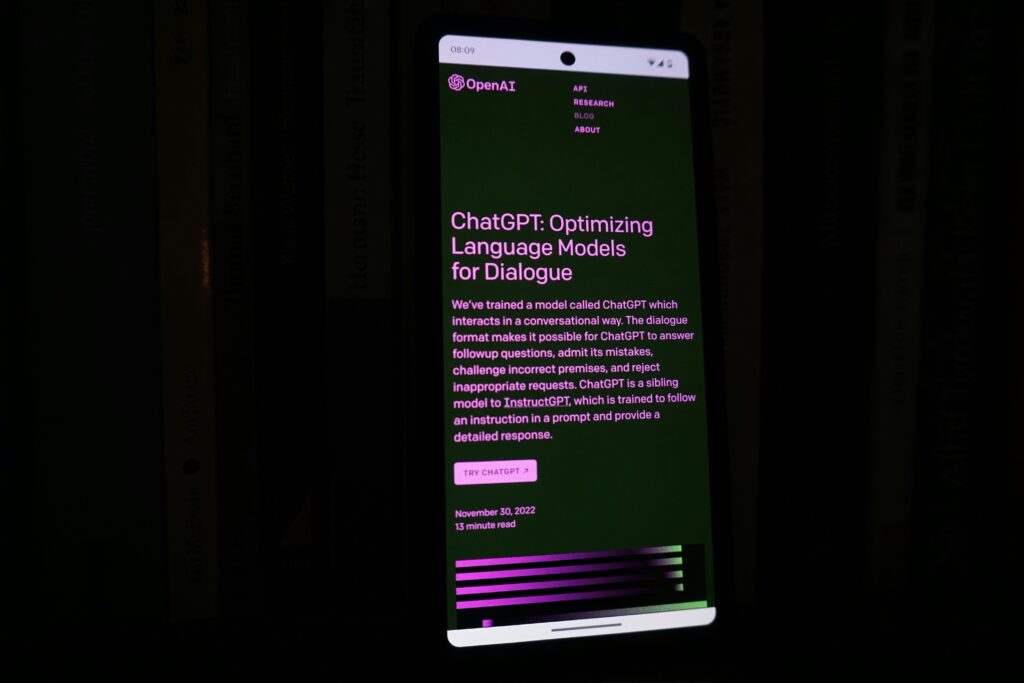
In a groundbreaking move that captivated the global tech community, OpenAI officially introduced GPT-4o (the ‘o’ standing for ‘omni’) on May 13, 2024. This latest iteration of their large language model family represents a significant advancement in multimodal AI, capable of processing and generating content seamlessly across text, audio, and visual inputs in real time. Unlike previous models that might chain together different specialized AIs for various modalities, GPT-4o is inherently multimodal, built from the ground up to understand and produce all these forms of data in a unified manner. This ‘omni’ capability means the model can perceive nuances in tone, emotion, and visual cues, leading to a far more natural and human-like interaction experience.
The Technical Leap: Unpacking GPT-4o’s Capabilities
GPT-4o distinguishes itself by its native multimodal architecture. Previous models often involved separate processing stages for different data types. For example, an audio input would first be transcribed by an audio-to-text model, then processed by a text-based LLM, and finally synthesized back into audio. This sequential process introduced latency and often lost crucial contextual information. GPT-4o, however, processes all these inputs simultaneously as a single neural network, drastically reducing response times to as little as 232 milliseconds, with an average of 320 milliseconds – comparable to human conversation speed. This speed, combined with its enhanced understanding of emotional cues and intonation in audio, and the ability to interpret complex visual scenes, sets a new benchmark for conversational AI.
During the live demonstration, OpenAI showcased GPT-4o’s ability to engage in dynamic conversations, understand real-time video feeds, solve mathematical problems presented visually, and even adapt its voice output to convey emotion or sing. The model’s improved vision capabilities allow it to interpret intricate diagrams, code, and even facial expressions, opening up new possibilities for accessibility and complex problem-solving. This integrated approach not only improves efficiency but also enhances the richness and accuracy of AI’s understanding, leading to more contextually aware and helpful responses.
Impact Across Industries: A Transformative Shift
The **GPT-4o impact** is poised to reverberate across numerous industries, fundamentally altering workflows and creating unprecedented opportunities for innovation. For the consulting industry, especially in technology and workflow automation, this presents a monumental shift. Consultants can leverage GPT-4o for enhanced data analysis, generating insights from complex reports, visual data, and even audio transcripts from meetings. Imagine an AI assistant that not only summarizes stakeholder interviews but also identifies key emotional trends or unspoken concerns from vocal inflections, offering a richer, more nuanced understanding of client needs.
In customer service, GPT-4o can power next-generation virtual assistants capable of handling a wider range of queries with human-like empathy and efficiency. From understanding frustrated tones to visually guiding users through troubleshooting steps via live video, the potential for improved customer experience and reduced operational costs is immense. Education stands to benefit from personalized tutoring systems that can explain concepts visually, audibly, and textually, adapting to individual learning styles in real time. Healthcare providers could utilize it for real-time transcription and analysis of patient interactions, assisting with diagnosis support, and simplifying administrative tasks, though ethical considerations around data privacy and accuracy remain paramount.
Even creative industries are set to be transformed. Artists and designers could collaborate with GPT-4o to generate ideas, refine concepts, and even produce early drafts of visual or audio content based on spoken prompts or visual references. The ability to switch seamlessly between modalities means a designer could sketch an idea, describe modifications, and receive instant, refined visual feedback from the AI.
For further insights into how multimodal AI is shaping the future of interaction, you might find our article on The Rise of Multimodal AI: Shaping the Next Generation of Interaction particularly insightful.
Expert Opinions and Future Predictions
Industry analysts and experts are overwhelmingly positive about GPT-4o’s potential, though cautious about the implementation challenges. Sam Altman, OpenAI’s CEO, emphasized that the model aims to make advanced AI accessible and intuitive for everyone, democratizing complex AI capabilities. The rapid adoption of previous OpenAI models suggests that GPT-4o will quickly find its way into enterprise applications. As The Verge reported, the demonstrations highlight not just improved performance but a fundamental shift in how we perceive AI’s role – moving from a tool that responds to explicit commands to a more proactive and adaptive partner.
Looking ahead, the evolution of models like GPT-4o will likely push the boundaries of human-computer interaction even further. We can anticipate more specialized versions tailored for specific industry needs, deeper integration into operating systems and everyday devices, and an accelerated development of AI-powered agents capable of autonomous task execution. The ethical implications, including job displacement, bias in AI responses, and data security, will undoubtedly become more prominent discussion points, necessitating robust regulatory frameworks and responsible AI development practices.
The future may see AI becoming an almost invisible yet indispensable layer across all digital interactions. Imagine AI assistants acting as personal executive coaches, providing real-time feedback on presentation skills based on vocal delivery and body language, or as a co-pilot for complex engineering projects, flagging potential design flaws through visual analysis of schematics. The potential for augmented human capabilities is immense, leading to greater productivity, deeper insights, and innovative solutions to previously intractable problems.
A New Era of Interaction
OpenAI’s GPT-4o is more than just another AI model; it’s a harbinger of a new era in human-computer interaction. Its seamless multimodal capabilities promise to unlock unparalleled levels of efficiency, creativity, and understanding across virtually every sector. For businesses looking to stay ahead, embracing and strategically integrating such advanced AI technologies will not merely be an option but a necessity for competitive advantage. The journey towards truly intelligent systems that profoundly change industries has just accelerated.