
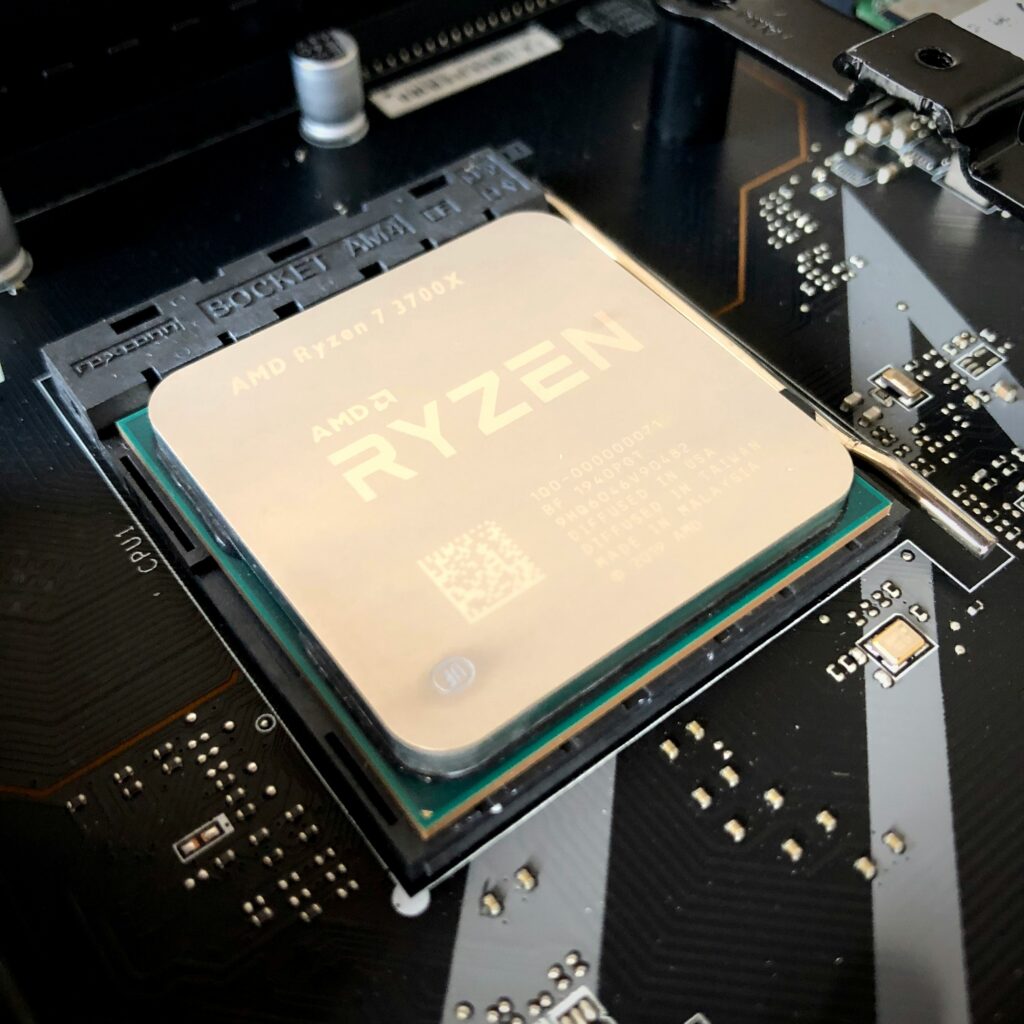
Computex 2024 served as the stage for AMD’s highly anticipated reveal of its Ryzen 9000 Series desktop processors, based on the innovative Zen 5 architecture. Dr. Lisa Su, AMD’s CEO, introduced the new lineup on June 3, 2024, highlighting their significant performance enhancements. Headlining the series is the Ryzen 9 9950X, a 16-core, 32-thread powerhouse positioned as the world’s fastest consumer desktop CPU for gaming and content creation.
The Zen 5 architecture, codenamed ‘Nirvana’, represents a complete redesign over its Zen 4 predecessor. AMD has officially stated that Zen 5 delivers an average 16% uplift in instructions per cycle (IPC) compared to Zen 4. This substantial gain is attributed to a host of architectural improvements, including optimized branch prediction, higher throughput, and wider pipelines. These enhancements are critical for accelerating complex computational tasks, making the Ryzen 9000 Series particularly appealing for demanding applications.
Beyond raw IPC, the Zen 5 architecture also features improved cache hierarchies and enhanced AI acceleration capabilities, although not dedicated NPUs like those found in its mobile counterparts (Strix Point/Zen 5c). For desktop users, this means not only faster gaming and content creation but also more efficient handling of general-purpose computing tasks and certain AI-driven applications that leverage CPU power. The initial lineup includes the Ryzen 9 9950X, Ryzen 9 9900X, Ryzen 7 9700X, and Ryzen 5 9600X, catering to various segments of the enthusiast and professional markets.
According to official AMD benchmarks shared at Computex, the Ryzen 9 9950X consistently outperforms Intel’s flagship Core i9-14900K across a wide range of benchmarks, including gaming and productivity applications like Blender, Adobe Premiere Pro, and Cinebench R23. These preliminary figures underscore AMD’s aggressive push to reclaim and solidify its leadership in the desktop CPU space. While detailed third-party reviews are pending the official launch, AMD’s initial claims paint a promising picture for the Zen 5 architecture’s capabilities.
Impact on Industries and Users
The introduction of the Ryzen 9000 Series Zen 5 processors has far-reaching implications beyond just PC enthusiasts. For the creative industries, encompassing video editing, 3D rendering, and graphic design, the enhanced multi-core performance and IPC gains mean significantly faster project completion times. Architects, engineers, and researchers can expect quicker simulations, data processing, and complex model computations, translating into improved efficiency and innovation cycles.
In the gaming sector, the Zen 5 architecture promises higher frame rates and smoother gameplay, especially in CPU-intensive titles. This development pushes the boundaries for game developers, enabling them to create more immersive and complex virtual worlds without being bottlenecked by processor limitations. For professional gamers and esports, this provides a tangible competitive edge.
From a business and enterprise perspective, the Ryzen 9000 Series strengthens the appeal of high-performance workstations and client computing solutions. Companies engaged in data analytics, financial modeling, or AI development – even those without dedicated AI accelerators – can leverage the raw power of these CPUs for faster processing and more responsive applications. This directly impacts ByteTechScope’s clients, who often seek cutting-edge hardware to optimize their complex workflows and gain a competitive advantage in a fast-evolving digital landscape. Optimizing AI Workloads with Next-Gen Hardware, for instance, highlights how critical processor choice is.
Moreover, the energy efficiency improvements inherent in new architectures like Zen 5 are crucial for modern IT infrastructure. While the focus is on performance, AMD has also emphasized efficiency, which can lead to lower operational costs for businesses running large fleets of powerful machines, reducing both power consumption and heat output.
Future Predictions and Expert Opinions
The launch of the Ryzen 9000 Series marks a pivotal moment in the ongoing CPU rivalry between AMD and Intel, and increasingly, with ARM-based solutions like Qualcomm’s Snapdragon X Elite. Industry analysts anticipate that Zen 5 will compel Intel to accelerate its own roadmap, particularly with upcoming Lunar Lake and Arrow Lake architectures, fostering a highly competitive environment that ultimately benefits consumers and businesses through innovation and potentially better pricing.
Experts like Patrick Moorhead, principal analyst at Moor Insights & Strategy, often highlight how AMD’s consistent execution on its roadmap has transformed the CPU market. The Zen 5 architecture is seen as a testament to AMD’s long-term vision, pushing boundaries not just in traditional computing but also laying groundwork for hybrid architectures that seamlessly integrate CPU, GPU, and NPU elements. This strategic approach ensures AMD remains a strong contender in the evolving landscape of AI PCs and high-performance server solutions.
Looking ahead, the success of the Ryzen 9000 Series will likely influence AMD’s future product strategy, potentially leading to faster integration of Zen 5 into mobile platforms, servers, and potentially custom chips for specific industrial applications. The emphasis on high IPC and efficient core design suggests that AMD is well-positioned to address the growing demand for powerful yet flexible computing solutions across various segments, from edge devices to cloud data centers. The Verge’s coverage of the Computex announcement further elaborates on the technical details and market implications.
Ultimately, the Ryzen 9000 Series Zen 5 processors are not just another product refresh; they represent a significant step forward in CPU design, offering tangible benefits for a broad spectrum of users and industries. Their performance capabilities will empower new levels of productivity, creativity, and technological advancement, setting a new benchmark for what’s achievable with desktop computing.
In conclusion, AMD’s Zen 5 architecture and the Ryzen 9000 Series processors are poised to redefine high-performance computing. With substantial IPC gains and a robust core design, these CPUs offer a compelling solution for demanding workloads, from intricate gaming to professional content creation and complex enterprise applications. This launch reinforces AMD’s position as a leader in processor innovation and promises to accelerate technological progress across various sectors.