
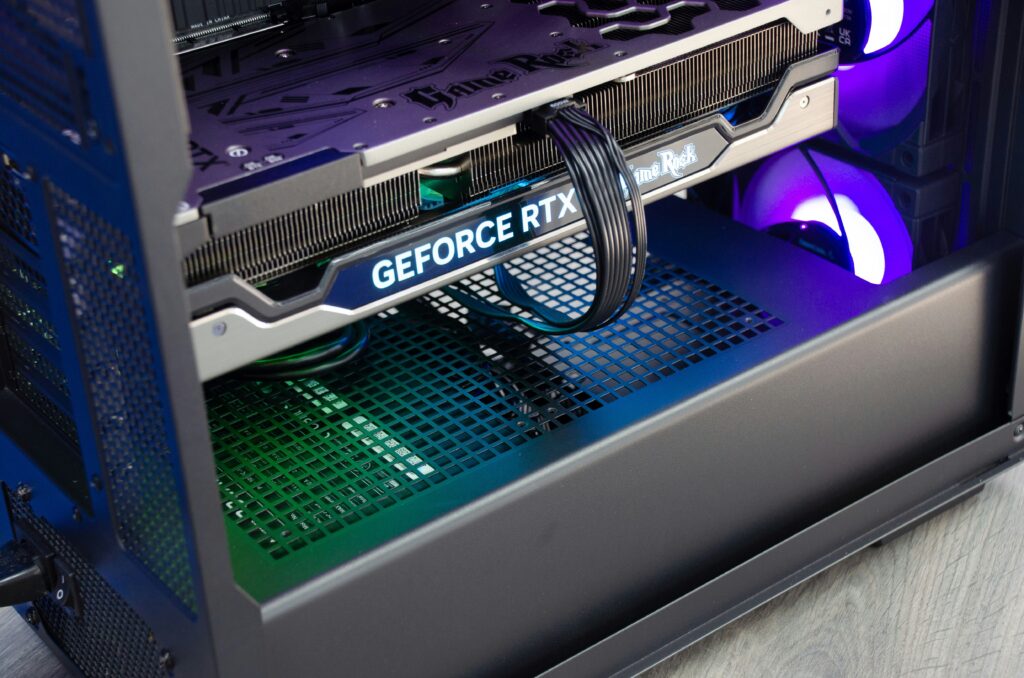
Nvidia has consistently pushed the boundaries of what’s possible with graphics processing units, and their latest revelation, the Blackwell architecture, marks another significant milestone. Named after the pioneering mathematician David Blackwell, this architecture is not merely an iterative upgrade but a comprehensive redesign intended to handle the most demanding computational tasks, particularly in the realm of artificial intelligence and scientific simulation. While the initial deployment of Blackwell is focused on the professional sector with platforms like the GB200 Grace Blackwell Superchip, the foundational technologies and architectural advancements have profound implications for the next generation of consumer GPUs, widely anticipated as the RTX 50 series.
The Core Innovations of Blackwell Architecture
At the heart of the Blackwell architecture lie several key innovations that collectively contribute to its staggering performance potential. Nvidia’s official announcements, particularly from their GTC conferences, highlight a multi-chip module (MCM) design, a significant departure for Nvidia’s high-end GPUs. This allows for greater scalability and more transistors per package, pushing past the traditional reticle limits of monolithic dies.
One of the most talked-about advancements is the introduction of the second-generation Transformer Engine. This engine is specifically optimized for accelerating large language models (LLMs) and other generative AI workloads, offering capabilities like FP4 and FP6 data formats, which significantly reduce memory and computation requirements without substantial loss of accuracy. For consumer GPUs, this translates to vastly improved performance for local AI applications, such as AI-powered image editing, advanced NPC behaviors in games, and even personal AI assistants running directly on your PC.
Furthermore, Blackwell introduces enhanced Tensor Cores and new Streaming Multiprocessors (SMs), designed for superior ray tracing performance and traditional rasterization. Nvidia’s commitment to improving ray tracing has been unwavering, and Blackwell is expected to deliver substantial generational leaps in this area, making hyper-realistic lighting and reflections more accessible and performant than ever before. This is crucial for maintaining Nvidia’s leadership in gaming graphics, as more titles incorporate advanced rendering techniques.
Data, Research, and Official Statements
Nvidia’s CEO, Jensen Huang, has repeatedly emphasized Blackwell’s role as the foundation for a new era of computing. During official keynotes, Huang detailed the GB200 Grace Blackwell Superchip, showcasing its ability to deliver 20 petaflops of FP4 AI performance and connect 576 GPUs into a single, cohesive unit. These numbers, while mind-boggling for consumer applications, illustrate the sheer power efficiency and processing capability inherent in the architecture. For instance, the GB200 is stated to deliver up to 30x performance improvement for LLM inference workloads while being 25x more power-efficient compared to its predecessor, Hopper.
Industry analysts and publications like TechCrunch have extensively covered these announcements, noting the shift towards a more modular and AI-centric GPU design. The move to an MCM design is a strategic response to the physical limitations of single-die fabrication, allowing Nvidia to pack more computational units and achieve higher yields. This approach ensures that future GPUs can continue to scale in performance as the demands for computing power grow exponentially.
Impact on the Industry and End-Users
The arrival of Blackwell-based consumer GPUs, even if some time away, promises to be a game-changer across several fronts. For gamers, the potential for significantly improved performance in ray-traced titles, coupled with more efficient DLSS (Deep Learning Super Sampling) powered by advanced Tensor Cores, means a more immersive and visually stunning gaming experience. Imagine games running at higher resolutions and frame rates with full path tracing becoming a standard, rather than a niche, high-end feature.
Beyond gaming, the impact on professionals and creators will be substantial. Artists, designers, and engineers relying on GPU acceleration for rendering, simulation, and data analysis will see dramatic reductions in processing times. Video editors will benefit from faster encoding and real-time effects. The enhanced AI capabilities of Blackwell will empower a new generation of creative tools, enabling features like generative design, intelligent content creation, and accelerated machine learning model training directly on professional workstations.
Moreover, the rise of on-device AI processing will change the consumer computing landscape. Laptops and desktops equipped with Blackwell-derived GPUs will be far more capable of handling complex AI tasks locally, improving privacy and reducing reliance on cloud services. This could lead to a proliferation of sophisticated AI features in everyday software, from smarter operating system functionalities to advanced cybersecurity tools.
Future Predictions and Expert Opinions
While Nvidia has not officially detailed consumer GPUs based on Blackwell, industry speculation is rife about the upcoming RTX 50 series. It is widely anticipated that these consumer cards will inherit many of the architectural advantages seen in the enterprise Blackwell chips, albeit scaled for the consumer market and cost-effectiveness. Analysts predict that we could see the first consumer Blackwell GPUs towards late 2024 or early 2025, potentially offering substantial performance gains over the current generation, particularly in ray tracing and AI acceleration.
Experts like Jon Peddie, a veteran analyst in the graphics industry, often highlight the cyclical nature of GPU innovation but emphasize that architectural shifts like Blackwell represent true generational leaps. The focus on AI acceleration isn’t just a marketing ploy; it’s a fundamental recognition of where computing is headed. The ability of these GPUs to handle vast amounts of data with high efficiency will be critical for everything from scientific research to personalized digital experiences.
The modular design of Blackwell also opens up possibilities for future scalability, allowing Nvidia to potentially offer a wider range of performance tiers with greater flexibility. This could lead to more optimized GPUs for specific use cases, further tailoring hardware to evolving software demands. The integration of advanced power management features is also expected to ensure that these powerful chips remain efficient, a crucial factor for both desktop PCs and future high-performance laptops.
For a deeper dive into how GPU technology is shaping AI, check out our article on Unleashing the Power of AI with Next-Gen GPUs.
Conclusion
Nvidia’s Blackwell architecture represents a bold vision for the future of computing. From its modular design and advanced AI acceleration capabilities to its potential impact on consumer gaming and professional applications, Blackwell is poised to be a foundational technology for the next decade. While we await the official unveiling of consumer-oriented GPUs based on this architecture, the signals are clear: a new era of unprecedented performance, efficiency, and intelligence is on the horizon, promising to transform how we create, play, and innovate.