
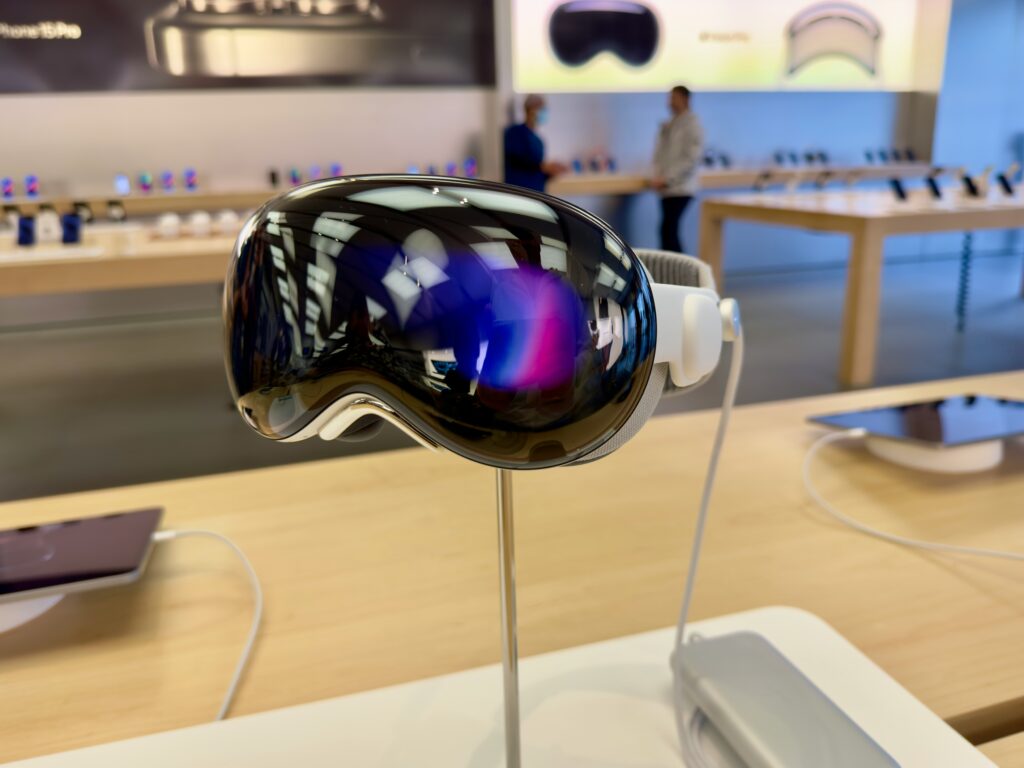
On February 2, 2024, Apple officially launched the Apple Vision Pro in the United States, marking a significant milestone in personal computing. First unveiled at WWDC 2023, this device is not just another VR headset; Apple positions it as a “spatial computer” that seamlessly blends digital content with the physical world. Powered by visionOS, a new operating system built on the foundations of iOS and iPadOS, the Vision Pro introduces an intuitive input system controlled entirely by a user’s eyes, hands, and voice. Its sophisticated hardware, including custom micro-OLED displays providing over 23 million pixels per eye, combined with advanced spatial audio, creates an unprecedented immersive experience.
Initial reviews and market analyses have painted a complex picture. While critics lauded its unparalleled display quality, impressive passthrough video, and intuitive user interface—often described as feeling “magical”—concerns were raised regarding its weight, battery life (a two-hour external battery pack), and high price point ($3,499). According to a report by Bloomberg, early sales were robust, driven by Apple enthusiasts and developers eager to explore the new platform, though the pace of sustained adoption remains a key point of observation. Industry analysts, including those from Counterpoint Research, highlighted the Vision Pro’s potential to catalyze the broader spatial computing market, despite its initial niche appeal.
The impact of Apple Vision Pro on various industries and users is already becoming apparent. For developers, it opens up an entirely new canvas for creating immersive applications, from productivity tools that leverage multiple virtual displays to entertainment experiences that redefine storytelling. Enterprise sectors, particularly in design, engineering, and healthcare, are exploring its potential for collaborative work, remote assistance, and advanced training simulations. For the average user, it promises a future where screens are no longer boundaries, offering new ways to consume media, engage in video calls, and interact with information. This shift towards spatial computing could fundamentally alter how we work, learn, and socialize, similar to how the iPhone transformed mobile computing. To understand the broader context of such immersive technologies, delve into ByteTechScope’s insights on the metaverse and its business potential.
Looking ahead, expert opinions widely anticipate that future iterations of the Apple Vision Pro will address current limitations, such as reducing its form factor, enhancing battery performance, and lowering the price point to achieve broader consumer appeal. Analysts at firms like JP Morgan predict a significant expansion of the visionOS ecosystem, attracting more developers and leading to a richer array of applications that showcase the device’s full capabilities. The long-term vision involves seamlessly integrating spatial computing into daily life, moving beyond specialized use cases to become an indispensable tool. As reported by The Verge in their comprehensive review, the Vision Pro, despite its current state, lays a foundational brick for an entirely new computing paradigm.
In conclusion, the Apple Vision Pro represents more than just a new gadget; it is a bold statement about the future of technology. While its journey to mainstream adoption will undoubtedly face challenges, its innovative approach to spatial computing, unparalleled hardware, and the potential to spawn a new ecosystem position it as a truly revolutionary device. It serves as a powerful testament to Apple’s commitment to pushing technological boundaries and offers a tantalizing glimpse into how we might interact with the digital world in the decades to come.