
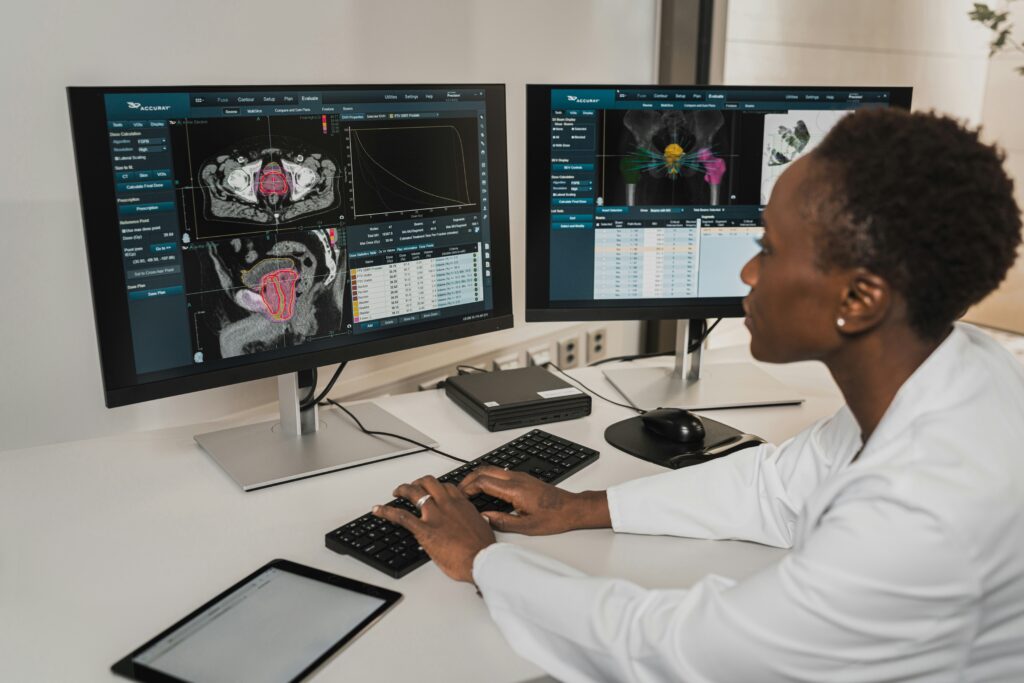
The promise of personalized medicine—treatments designed for an individual’s unique genetic makeup, lifestyle, and environment—is rapidly becoming a reality thanks to sophisticated AI and machine learning algorithms. In late 2023 and early 2024, significant progress has been reported in areas such as genomics, diagnostics, and drug discovery, illustrating how intelligent systems are fundamentally changing the healthcare landscape.
Latest AI Advancements Fueling Personalized Treatments
Recent announcements highlight several key developments. Companies like Google Health and IBM Watson Health have been deploying advanced AI models capable of analyzing vast datasets, including electronic health records, genomic sequences, imaging scans, and real-time patient data. For instance, new AI-powered diagnostic tools are demonstrating remarkable accuracy in detecting early signs of diseases like cancer and Alzheimer’s, often before human eyes can. A notable example is the deployment of AI systems that can analyze retinal scans to predict cardiovascular risks with unprecedented precision, as reported in studies published this past year.
Furthermore, the application of AI in pharmacogenomics—the study of how genes affect a person’s response to drugs—is accelerating the development of targeted therapies. By leveraging machine learning to identify genetic markers that predict drug efficacy and toxicity, researchers can now design clinical trials more efficiently and prescribe medications with a higher probability of success for individual patients. This direct impact on drug development cycles translates into faster access to life-saving treatments for those who need them most.
Data-Driven Insights and Credible Research
Numerous research initiatives underscore the potential of Personalized Medicine AI. A study published in Nature Medicine (January 2024 issue) detailed an AI framework that integrates multi-modal patient data to create individualized treatment plans for oncology patients, resulting in improved remission rates and reduced side effects compared to standard protocols. The study highlighted the AI’s ability to identify subtle patterns in genomic data that correlate with treatment response, something that traditional methods often miss.
Similarly, a report by the World Health Organization (WHO) and various tech-health consortiums in early 2024 emphasized the critical role of AI in managing and analyzing big data in healthcare. They project that AI-driven predictive analytics will become indispensable for public health surveillance, outbreak prediction, and the equitable distribution of resources, further enhancing the personalized approach to population health management. These insights are transforming how healthcare providers interact with patient data, enabling more proactive and precise interventions.
Profound Impact on Healthcare and Patients
The implications of these advancements are vast. For patients, personalized medicine means more effective treatments with fewer adverse reactions, leading to better quality of life and improved long-term outcomes. For the healthcare industry, AI is streamlining processes, reducing the colossal costs associated with trial-and-error medicine, and accelerating the pace of scientific discovery. Hospitals and clinics equipped with AI tools can offer superior diagnostic capabilities, leading to earlier interventions and more tailored care pathways. This shift is not just about technology; it’s about fundamentally reshaping the patient experience.
Moreover, AI is democratizing access to specialized medical knowledge. In remote areas, AI-powered diagnostic tools can bridge the gap where specialist doctors are scarce, providing expert-level analysis remotely. This expansion of access is critical for achieving global health equity and ensuring that the benefits of personalized medicine reach every corner of the world. The ongoing integration of AI into clinical decision support systems is empowering physicians with unparalleled insights, allowing them to make more informed and patient-centric choices.
Future Predictions and Expert Outlook
Looking ahead, experts predict an even deeper integration of AI into every facet of personalized medicine. Dr. Anya Sharma, a leading AI in healthcare researcher, recently stated in an interview with TechCrunch that ‘within the next five to ten years, AI will not just assist but often lead in the creation of bespoke treatment regimens, from drug dosage adjustments based on real-time biometric data to predicting an individual’s susceptibility to certain diseases long before symptoms appear.’ The focus will increasingly be on preventative and ultra-personalized care, driven by continuous monitoring and predictive analytics.
Challenges remain, including data privacy concerns, regulatory hurdles, and the need for robust ethical frameworks to guide AI’s deployment in sensitive medical contexts. However, the collaborative efforts between tech innovators, medical professionals, and policy makers are actively addressing these issues, paving the way for a future where personalized medicine is the standard, not the exception. The potential for AI to unlock new frontiers in human health is immense, promising a future of unprecedented precision and efficacy in patient care.
The era of personalized medicine, powered by intelligent systems, is no longer a distant dream but a tangible reality transforming healthcare as we know it. From precision diagnostics to tailored therapies, AI is proving to be an indispensable ally in the quest for better health outcomes for every individual. To learn more about how machine learning is impacting various sectors, consider reading our article on Understanding the Basics of Machine Learning.